
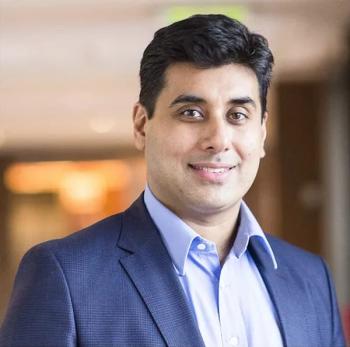
“Cardiovascular assessment should begin when the patient is being selected for treatment, not after the toxicity emerges,” said Faisal Mehmud, MD, MRCP.
Mohamed Adam, MD, discusses switching from open to robotic Whipple procedures and the impending integration of AI-driven navigation in surgical oncology.
The robotic Whipple surgery, or the robotic pancreaticoduodenectomy, is one of the most complex surgeries in oncology, according to Mohamed Adam, MD. He sat down for a conversation with CancerNetwork® after completing over 80 robotic Whipple surgeries.
Adam, an assistant professor in the Division of Hepatobiliary and Pancreatic Surgery, as well as the director of Robotic Hepatopancreatobiliary (HPB) surgery at University of California, San Francisco (UCSF), discussed the learning curve for complex robotic procedures, the importance of multidisciplinary care for patients with cancer, and the growing role of artificial intelligence (AI) in surgical decision-making.
Adam: A Whipple surgery is one of the most complicated surgical procedures. It is mainly performed for cancer of the pancreas or cancer in the areas around the pancreas. In this procedure, we remove 40% of the pancreas, which is the head of the pancreas and a foot of small intestine, which is the duodenum, the bile duct, and the gallbladder if it is still there. We then redo the plumbing, including 10% of the stomach.
It is well documented that the traditional open Whipple operation is one of the most complex surgical procedures, with high potential for morbidity and mortality. Performing this operation robotically is even more challenging. In fact, we were the first to publish in 2015 that minimally invasive Whipple procedures, including robotic and laparoscopic, were associated with increased mortality, particularly when the procedure is performed by less experienced surgeons or done at a low-volume hospital setting.1 I was fortunate to receive dedicated training in the robotic Whipple procedure at the University of Pittsburgh, which provided a strong foundation for starting the program at UCSF. Even with this background, we remained very cautious and focused on safety during our first 20 cases. As the program grew, we became more efficient and shifted toward refining and standardizing the procedure.
We have now performed over 80 robotic Whipple procedures with favorable outcomes. Our postoperative complications, mainly pancreatic fistula or leak rate—which is the most important outcome after the procedure—is in the single digits. It is less than 10%, which is lower than the national average of 12% to 15%. This is important, as outcomes from the procedure hinge around the presence or absence of a leak. Our patients now have an average hospital stay of 4 to 5 days, and we have achieved that even in older patients, including those older than 80 years. In fact, patient number 80 is older than 80 years. At this point, the operation at UCSF is not just feasible robotically; it is reproducible.
To fast forward on that, there is a clinical trial that just came out recently. It's called the DIPLOMA-2 trial [ISRCTN27483786], and it showed that robotic or laparoscopic Whipples were associated with improved outcomes when done by experienced surgeons, mirroring the outcome that you see here.2
At UCSF, we view the vast majority of patients with resectable pancreatic or peripancreatic cancers as candidates for the robotic Whipple approach. We are more cautious in cases where there is extensive vascular involvement, when the vein or the artery is involved, or when there are extensive adhesions that prevent a safe minimally invasive dissection. That said, as experience grows, the boundaries of what can be done robotically continue to expand. As a matter of fact, we were able to perform the robotic Whipple on a patient who had an open liver transplant surgery 10 years ago at UCSF. That patient was immunosuppressed and only stayed about 4 days in the hospital with no complications.
We know that patients tend to recover faster with less pain and fewer complications with the robotic or minimally invasive approach. This has been well documented. Anecdotally, we have seen our patients make timely recoveries, which may translate into a timely initiation of systemic therapy. However, we need data to confirm that. There are many barriers, including logistics and the current understanding that chemotherapy has to be started within a set time, but I can tell you that when patients recover, they are ready to be given chemotherapy in 2 to 3 weeks after surgery.
We are increasingly using predictive models or algorithms to identify factors that are associated with increased morbidity or complications afterward so that we can refine our patient selection. We have developed our own model at UCSF that is completely based on preoperative factors. Knowing these factors before surgery is very important. This allows us to tailor intraoperative decisions and postoperative management, such as drain placement, early imaging, and closer monitoring. It enhances proactive rather than reactive care.
Currently, AI plays more of a decision support role rather than providing real-time intraoperative guidance. It helps with preoperative planning, risk stratification, outcomes tracking, and quality improvement. Over time, we expect to have deeper integration into intraoperative navigation and performance analytics. Currently, we have ongoing collaborations to incorporate some of these intraoperative navigation methodologies.
That is an advantage of coming to a high-volume place where there is a multidisciplinary team. The vast majority of the time, these patients are seeing multiple providers on the same day, including a medical oncologist and a surgeon. We communicate about the cases and present them at a tumor board. Multidisciplinary decision-making is vital and needs to happen in a timely fashion. Even when a tumor board is scheduled 2 weeks away, we try to reach out to our colleagues to ensure we are making a decision in a timely fashion so that we are not compromising patient safety from a cancer perspective.
Any high-volume robotic program requires a highly specialized and consistent team. Surgical assistants have an important role regarding robotic instrumentation and troubleshooting; this becomes essential as the misfiring of an instrument or energy device in the operating room can lead to intraoperative death if you do not have trained staff. Obviously, the surgeon is leading the team and must play multiple parts, but having a team makes things consistent and safer. Having nurses and anesthesiologists who are familiar with the process is [instrumental] to having good outcomes. The entire perioperative team becomes more protocol driven, data focused, and aligned to achieve outcomes.
The way that I see them, they are totally different operations—the open and the robotic [procedures]. Experience in open surgery is a prerequisite; however, doing an open Whipple does not mean that translates into a robotic Whipple. Time must be given to achieve proficiency on the robotic platform. There was a trial from Europe called the EUROPA trial [DRKS00020407] that showed outcomes were worse with the robotic approach, but that speaks to proficiency.3 It highlights that surgeons, even if they are experienced open surgeons, need to be proficient and receive training on the robotic Whipple procedure specifically, not just the robotic platform in general. I was fortunate enough to have dedicated training on this procedure at the University of Pittsburgh. We are now training our residents using specific bio-tissue modules. These are lifelike tissues that simulate the procedure so the residents can practice on them rather than on patients. These models are well validated and can be used to train other surgeons. I also have the pleasure of training other surgeons as they transition into their robotic HPB practice.
We are at an inflection point. There are now over 50 companies developing surgical robotic platforms. There are many companies, including those that have made robotic platforms, that are fully functional in Asia and Europe. The field is likely to change significantly over the next 5 years with increasing integration of AI into surgical techniques, including preoperative planning and intraoperative navigation. This is an exciting time for the field. Our residents are more facile now than how we were trained because they have the guidance of those who pioneered these procedures. I believe they are going to be much more equipped than we were when we started.
Training and experience are the biggest limitations from a safety perspective. There is also a persistent barrier of limited awareness regarding the benefit of the robotic Whipple approach. We now have the DIPLOMA-2 trial, which is a multicenter European trial that provided level 1 evidence demonstrating the oncologic safety of the robotic pancreaticoduodenectomy. It showed that in addition to oncologic safety, it comes with improved outcomes. In that trial, nearly 290 patients were randomly assigned 2:1 for minimally invasive Whipple vs open [surgery]—90% of [operations in] the minimally invasive group were performed robotically. The trial showed oncologic safety and that the postoperative pancreatic fistula rate was less than 13%. The length of stay decreased, and there was improvement in shortening the time to recovery after surgery. This is fantastic for these patients who are already dealing with a lot, including the recovery from chemotherapy and a cancer diagnosis.
If there are no complications, the expected trajectory is fantastic. Especially when dealing with [older] patients, they are much more comfortable. For [older] patients, I only put them on acetaminophen [Tylenol] starting from the second day of surgery. This is amazing because these patients are vulnerable to complications from narcotics; if they are taking opioids, their outcomes could be drastically different. I see these patients go home in 4 to 5 days, even [older] patients. Their recovery is much faster. I have had patients who were so eager to get back to normalcy. I had a middle-aged patient who underwent a robotic Whipple and was discharged 5 days after surgery. I called him a week after the date of surgery, which was 2 days after discharge, and he told me that he went to Walmart to get some groceries. Although I told him not to do that, he felt he was able to do it, and it was fine. I am not endorsing that approach, but anecdotally, I can tell that patients are much more comfortable with the robotic approach because I do the open approach as well.
Robotic surgery is going to dominate what we do. We will be doing most open surgery robotically because we are training surgeons to be familiar with this approach. The technology is going to be much better. There will be AI-based navigation systems, sort of like GPS navigation, so you can understand the anatomy and the lay of the land. When you operate on the pancreas and the liver, you will be much faster and safer because everything will be labeled for you. It is an exciting time.

![“[E]ven if patients relapse following an allogeneic transplant, donor lymphocyte infusions can be incredibly helpful,” said Mary Jo Lechowicz, MD.](https://cdn.sanity.io/images/0vv8moc6/cancernetwork/06df696db42b151710c58727b1333ee098de6453-1200x800.jpg?w=350&fit=crop&auto=format)
!["Patients [with cancer] and physicians would rather have a fixed-duration treatment, if possible," said Julie M. Vose, MD, MBA, at SOHO 2026.](https://cdn.sanity.io/images/0vv8moc6/cancernetwork/1cfb57db416943d8f8690afb0bc0d13aa3d90683-400x400.jpg?w=350&fit=crop&auto=format)