Nikolai Strusberg, MD, explained the clinical hypothyroidism endpoint and how thyroid dose should guide proton vs photon choice in breast cancer.
The rising incidence of colorectal cancer among younger populations may be due to environmental factors, according to Marc Greenwald, MD.
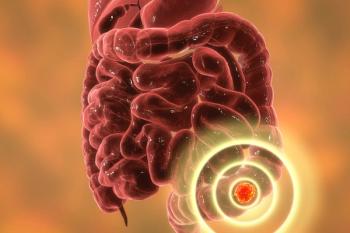
The incidence of early-onset colorectal cancer (CRC) in the US has been rising among younger patients. This highlights a critical shift in oncology demographics, primarily driven by environmental and lifestyle factors rather than hereditary predisposition, according to Marc Lehrer Greenwald, MD. In an interview with CancerNetwork®, Greenwald posited that the proinflammatory nature of modern Western living is altering the risk profile of younger populations.
Greenwald identified processed foods as a universal detriment to organ health, noting that although healthy habits benefit every system, processed ingredients act as a systemic catalyst for disease. A central clinical concern in this demographic is the impact of obesity, which Greenwald characterized as the nation’s primary health challenge. From an oncological perspective, obesity is not merely a weight issue but a proinflammatory condition. Furthermore, the lack of consistent exercise in younger cohorts removes a vital protective mechanism, as physical activity is known to decrease CRC risk.
Greenwald emphasized that the origins of this trend often begin in childhood, shaped by parental choices and upbringing. To illustrate the environmental nature of the problem, he referenced historical migration that contrasted Western societies with rural or agrarian populations.
As the medical community adapts to this rising incidence, Greenwald suggested that a 2-pronged approach—improving lifestyle habits from the start and increasing screening for younger individuals as new mechanisms become available—is essential.
Greenwald is the chief of colorectal clinical services and surgeon in chief at North Shore University Hospital.
Transcript:
There's a lot published out there about it. We really think it's environmental. We do know that all the healthy habits are good for every organ system. Processed foods are bad for everything. Obesity, which is the No. 1 health problem in the country, is a proinflammatory condition, which increases the risk of a variety of medical conditions, and cancer is certainly one of them. We do know that exercise improves your risk…. Because we're seeing it in young people, it's about lifestyle. That starts with what their parents are feeding them and how they're brought up. That's probably it. When I talk to patients about this, I discuss some of the studies that were done years ago when they looked at populations in rural and agrarian societies who were unaffected by Western living. If they studied these populations, the incidence of colorectal cancer was considerably lower than in Western society. Those populations don't really exist anymore, but if you follow those groups of people, once they emigrated to a Western country and then you followed them for some generations, they soon developed the same incidence of colorectal cancer that the other people in their neighborhood did. It clearly is an environmental problem. We have to live healthier. We have to live healthier from the start. Hopefully, that will help, and potentially increasing screening for younger people [will help] as well as some of these new screening mechanisms come on board.
Siegel RL, Wagle NS, Star J, Kratzer TB, Smith RA, Jemal A. Colorectal cancer statistics, 2026. CA Cancer J Clin. 2026;76(2):e70067. doi:10.3322/caac.70067