

Patients with positive images may benefit from additional therapy not directed at the androgen receptor; however, prospective validation is required.
Patients with positive images may benefit from additional therapy not directed at the androgen receptor; however, prospective validation is required.

A second expansion phase assessing HC-7366/belzutifan in locally advanced/metastatic renal cell carcinoma is ongoing.

Among 78 responders to ADT plus ARPI treatment who underwent a treatment suspension, 57.7% remained treatment free for 18 months.

The safety of the IMvigor011 regimen among patients with MIBC was consistent with the established profile of atezolizumab monotherapy.

Efficacy with carboplatin-based induction-concurrent chemotherapy was noninferior to cisplatin, representing a viable alternative for patients with LA-NPC.

No dose-limiting toxicities, TEAE-related discontinuations, or deaths were observed in this pretreated lymphoma population.

According to the study authors, 177Lu-edotreotide represents a valuable treatment option, offering superior efficacy and HRQOL vs everolimus in GEP-NETs.

Matthew Matasar, MD, of Rutgers Cancer Institute, spoke about upcoming trials in lymphoma to look out for at the ASCO 2026 Meeting.

Data from the phase 3 POTOMAC trial supported the FDA approval of durvalumab plus BCG in this non-muscle invasive bladder cancer population.

Enrollment for the WATER IV study evaluating aquablation vs radical prostatectomy has concluded, with primary end point results planned by spring 2027.

Orelabrutinib is now available in Australia for patients with relapsed/refractory mantle cell lymphoma.

Event-free survival, overall survival, and pathologic complete rate data from the phase 3 KEYNOTE-905 trial support the agency’s decision.
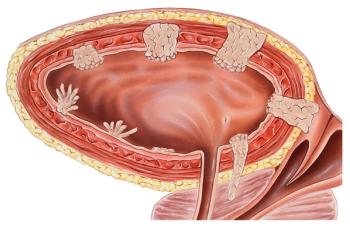
The investigational BCG-containing regimen conferred a weighted anytime CR rate of 69.7% vs 53.4% with nadofaragene firadenovec in this NMIBC group.
Investigators evaluated how tisagenlecleucel and cilta-cel altered adverse effect timelines for patients treated for hematologic malignancies.

The incidence rate of occlusions per 1000 central line days was 10.68 in the pre-EBP change cohort and 21.00 in the post-EBP change cohort.
Phase 1/2 findings from the BGB-11417-201 trial support the FDA approval of sonrotoclax in relapsed/refractory mantle cell lymphoma.
The 36-month DOR rate was 64.5% among patients who achieved a 3-month CR with mitomycin for low-grade, intermediate-risk non–muscle-invasive bladder cancer.

Grade 3 or higher TRAEs occurred in 14% of patients treated with NDI-101150, including 1 incidence of grade 4 aplastic anemia across all comers in the study.

According to the developers, the agency’s decision could accelerate and expand the registration pathway for JNJ-1900 in head and neck cancer.

Hematologic oncologists discussed long-term survival data from the SEQUOIA and ALPINE trials exploring zanubrutinib in frontline and R/R CLL/SLL.

Based on the clinical efficacy, ODAC members collectively voted to support the sNDA for capivasertib in this PTEN-deficient HSPC population.

The simlukafusp alfa–containing triplet displayed a profile comparable to the safety of each individual drug in this RCC population.

A data monitoring committee recommended the halt for futility of the phase 3 FLASH2 trial evaluating synthetic hypericin in cutaneous T-cell lymphoma.
A total of 48.0% of patients treated with duvelisib experienced a response, 33.3% of whom experienced a complete response.
The safety profile of zocilurtatug pelitecan among patients with extrapulmonary neuroendocrine carcinomas was consistent with prior reports in SCLC.

Recently, conservative management has grown in popularity, especially among older patients and those with higher neighborhood-level socioeconomic status.

Patrick A. Kenney, MD; and David A. Braun, MD, PhD, discussed parameters they use to determine a patient’s eligibility for cytoreductive nephrectomy.
The safety profiles of the pembrolizumab-based combination regimens were consistent with those observed in previously reported studies.

The panel discussed key considerations in the relapsed/refractory setting, including toxicity management and sequencing strategies for targeted agents.

Findings from the phase 3 EV-304 trial support the supplemental biologics license application for enfortumab vedotin/pembrolizumab in patients with MIBC.