




Lymphoma
Latest News
Advertisement
Latest Videos



























































Advertisement
More News
A positive overall response rate was achieved when patients with relapsed/refractory peripheral T-cell lymphoma were treated with duvelisib plus romidespin.
Patients with large B-cell lymphoma who were previously excluded from investigations experienced increased efficacy with the use of axicabtagene ciloleucel.
Patients with relapsed or refractory aggressive B-cell non-Hodgkin lymphoma did not benefit in terms of event-free survival when treated with the CAR T-cell therapy tisagenlecleucel vs standard-of-care chemotherapy and transplant.
Glofitamab monotherapy or in combination with obinutuzumab led to strong response rates for patients with multiple relapsed or refractory follicular lymphoma.
Treatment with lisocabtagene maraleucel resulted in long-lasting responses in patients with relapsed/refractory large B-cell lymphomas.
Treatment with naratuximab emtansine and rituximab appeared to be well-tolerated with efficacious responses in a population of patients with B-cell non-Hodgkin lymphomas who were ineligible for stem cell transplant or CAR-T cell therapy.
The ZUMA-7 trial demonstrated an event-free survival improvement in patients with relapsed or refractory large B-cell lymphoma treated with axicabtagene ciloleucel.
Patients with relapsed or refractory follicular lymphoma or marginal zone lymphoma had high rates of response and overall survival with axicabtagene ciloleucel at an updated analysis of the ZUMA-5 trial.

Preclinical data show promise for the novel non-covalent Bruton tyrosine kinase inhibitor pirtobrutinib in mantle cell lymphoma with resistance to both ibrutinib and venetoclax.
A quality-of-life analysis from the phase 3 ZUMA-7 trial of axicabtagene ciloleucel in patients with relapsed or refractory large B-cell lymphoma shows favorability of the CAR T-cell therapy over standard options.

Treatment with the CAR T-cell therapy tisagenlecleucel for relapsed or refractory diffuse large B-cell lymphoma or high-grade B-cell lymphoma was favorable in both the pivotal clinical trial and the real-world setting, according to new data made available during 2021 ASH.
Data presented at 2021 ASH indicate that 2-year progression-free survival rates were improved when ibrutinib was added to rituximab plus mini-CHOP in an elderly cohort of patients with previously untreated diffuse large B-cell lymphoma.

Sattva S. Neelapu, MD, spoke about the ZUMA-5 trial and the long-term follow-up results seen with axicabtagene ciloleucel in patients with relapsed or refractory indolent non-Hodgkin lymphoma.
Tafasitamab and Lenalidomide Combo Yields Higher OS vs Standard Options in Relapsed/Refractory DLBCL
Patients with autologous stem cell transplant–ineligible relapsed/refractory diffuse large B-cell lymphoma appear to benefit from treatment with tafasitamab and lenalidomide.

Patients with relapsed or refractory follicular lymphoma who had been given 2 or more prior lines of therapy and received tisagenlecleucel saw positive efficacy responses.

Loncastuximab Tesirine Plus Ibrutinib in Relapsed DLBCL Trends Favorably at LOTIS-3 Interim Analysis
Anti-tumor activity coupled with a manageable safety profile was noted with the combination of ibrutinib plus loncastuximab tesirine for patients with relapsed/refractory (R/R) diffuse large B-cell lymphoma at an interim analysis of the LOTIS-3 trial presented at 2021 ASH.
Durable clinical responses were demonstrated with the use of parsaclisib in patients with relapsed or refractory marginal zone lymphoma.
Mosunetuzumab given to patients with heavily pretreated patients with relapsed or refractory follicular lymphoma demonstrated an effective response.
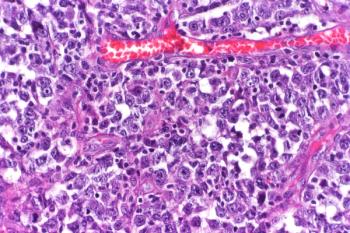
Second-line treatment with liscocabtagene maraleucel improved survival compared with the standard of care for patients with relapsed or refractory large B-cell lymphoma.
A United States indication for duvelisib in previously treated relapsed/refractory follicular lymphoma has been voluntarily withdrawn by developer Secura Bio following an assessment of the drug and subsequent consultation with the FDA.
Researchers utilized the European Organization for Research and Treatment of Cancer Quality of Life Questionnaire to examine the prognostic impact on survival of pre-treatment health-related quality of life parameters for patients with newly diagnosed mantle cell lymphoma.

The FDA has approved rituximab plus chemotherapy for previously untreated pediatric CD20-postive diffuse large B-cell lymphoma, Burkitt lymphoma, Burkitt-like lymphoma, and mature B-cell acute leukemia following results from the phase 3 Inter-B-NHL Ritux 2010 study.
Phase 3 data suggest that concurrent treatment with ibrutinib and venetoclax yielded promising efficacy for patients with relapsed/refractory mantle cell lymphoma.

In this CancerNetwork® OncView™ program, faculty panelist Connie Batlevi, MD, PhD, explains the treatment options in this disease space and discusses a recent drug approval.
The FDA granted priority review to a new drug application for parsaclisib in patients with mantle cell lymphoma and other non-Hodgkin lymphomas.
Advertisement
Advertisement
Trending on CancerNetwork
1
Neoadjuvant Radiation May Improve Tolerability in Cholangiocarcinoma
2
Distal Extrahepatic Cholangiocarcinoma May Gain From Neoadjuvant Radiation
3
Hydrogel Spacer Receives FDA 510(k) Clearance for Prostate Cancer Radiotherapy
4
How Oncologists Can Navigate Patient Requests for Medical Aid in Dying
5