



Lymphoma
Latest News
Advertisement
Latest Videos





























































Advertisement
More News

The recommended dose of ceritinib once daily with food demonstrated promising preliminary clinical activity in patients with ALK-positive relapsed/recurrent inflammatory myofibroblastic tumors and anaplastic large cell lymphoma, and certain subsets of relapsed/refractory neuroblastoma.
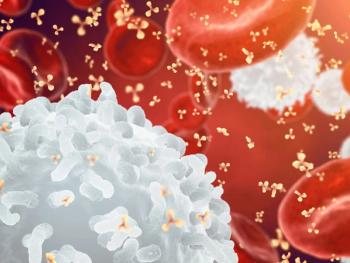
The CD19-directed CAR T-cell therapy lisocabtagene maraleucel was granted priority review by the FDA following an application for its use in patients with relapsed or refractory large B-cell lymphoma receiving therapy in the second-line setting.

Jonathan R. Day, MD, PharmD, and Brian K. Link, MD, give their perspective on emerging treatments for follicular lymphoma.
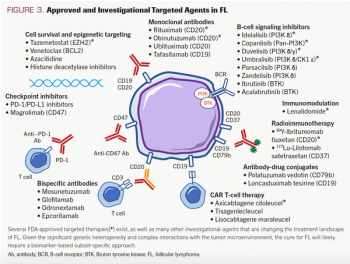
This review article written by Kirk E. Cahill, MD, and Sonali M. Smith, MD, discusses standard and emerging therapies for the treatment of follicular lymphoma.
Amitkumar Mehta, MD, detailed encouraging data presented at the 63rd ASH Annual Meeting for treating mantle cell lymphoma.
Michael R. Bishop, MD, discussed how he thinks the results from phase 3 BELINDA study may impact the treatment landscape in B-cell lymphomas moving forward.
Research from a 2-part, phase 2 trial found that ibrutinib and rituximab followed by hyper-fractionated cyclophosphamide, vincristine, doxorubicin, and dexamethasone produced positive response data and a manageable safety profile for younger patients with mantle cell lymphoma.
Umbralisib is currently under investigation by the FDA regarding a potentially increased risk of death in patients with lymphomas following data from an ongoing trial investigating its use in chronic lymphocytic leukemia.
Michael R. Bishop, MD, discussed details from the ZUMA-7 and TRANSFORM trials that were presented at the 63rd ASH Annual Meeting.
Michael R. Bishop, MD, highlighted the population of patients with relapsed/refractory B-cell non-Hodgkin lymphoma who were enrolled on the phase 3 BELINDA study and treated with tisagenlecleucel.
Parsaclisib New Drug Application Withdrawn for Relapsed/Refractory MCL, MZL, and Follicular Lymphoma
A new drug application for parsaclisib to treat relapsed/refractory mantle cell lymphoma, marginal zone lymphoma, and follicular lymphoma has been withdrawn.
Amitkumar Mehta, MD, discusses overall response rates from the CITADEL-205 study looking at parsaclisib for patients with relapsed/refractory mantle cell lymphoma.
Amitkumar Mehta, MD, discusses the role of parsaclisib and how it fits into the treatment landscape of relapsed/refractory mantle cell lymphoma.
Sponsored by Atlantic Health System
An upcoming program from Atlantic Health System physicians apprising key data from the American Society of Hematology Annual Meeting & Exposition brings in faculty from top programs to share research updates.
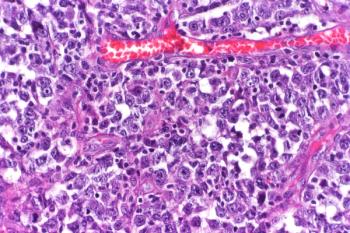
This review article discusses which frontline treatment are best for diffuse large B-cell lymphoma.
Sugemalimab showed promise in the phase 2 GEMSTONE-201 trial in a group of patients with extranodal natural killer/T-cell lymphoma; developer CStone is set to submit a new drug application for the treatment to the National Medical Products Administration of China.
Gilead Sciences has announced the voluntary withdrawal of idelisib from the United States market in several indications including follicular lymphoma and small lymphocytic leukemia.

A bi-specific anti-CD19/CD20 CAR T-cell therapy, C-CAR039, received a regenerative medicine advanced therapy designation and fast track designation from the FDA for treating patients with relapsed/refractory diffuse large B cell lymphoma.
Patients with mantle cell lymphoma treated in academic facilities appeared to have a longer overall survival compared those treated at with non-academic centers.
A design for the phase 3 ZILO-301 clinical trial, assessing the efficacy of zilovertamab plus ibrutinib for patients with mantle cell lymphoma, has been selected
Early relapsed appears to be an important predictor of survival among patients with mantle cell lymphoma.
Steven Devine, MD, spoke about which abstracts he found most interesting at ASH 2021.
Sattva S. Neelapu, MD, spoke about continuing to look at results from the ZUMA-5 trial to determine if axicabtagene ciloleucel can cure patients with relapsed or refractory indolent non-Hodgkin lymphoma
In an interview with ONCOLOGY®, Keith Hecht, PharmD, offers a comprehensive review of real-world treatment considerations of loncastuximab tesirine as therapy for patients with diffuse large B-cell lymphoma.
Second-line treatment of lisocabtagene maraleucel demonstrated improved quality of life in patients with large B-cell lymphoma.
Advertisement
Advertisement
Trending on CancerNetwork
1
Neoadjuvant Radiation May Improve Tolerability in Cholangiocarcinoma
2
Distal Extrahepatic Cholangiocarcinoma May Gain From Neoadjuvant Radiation
3
Hydrogel Spacer Receives FDA 510(k) Clearance for Prostate Cancer Radiotherapy
4
How Oncologists Can Navigate Patient Requests for Medical Aid in Dying
5