



Lymphoma
Latest News
Advertisement
Latest Videos


























































Advertisement
More News
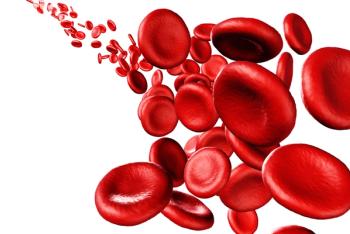
Polatuzumab vedotin-piiq plus R-CHP was found to produce clinical efficacy in phase 3 POLARIX trial in patients with previously untreated diffuse large B-cell lymphoma, leading to an 11-to-2 vote from the FDA’s Oncologic Drug Advisory Committee.
Data from a prospective pilot study indicate that circulating tumor DNA may be a valuable prognostic biomarker in early-stage follicular lymphoma.
Findings from a multicenter analysis indicate that tumor lysis syndrome is a notable risk in patients with mantle cell lymphoma receiving treatment with venetoclax.
Julia Dai, MD, and Madeleine Duvic, MD, present a comprehensive review of the current state of research and treatment in cutaneous T-cell lymphoma.
A qualitative, interview-based analysis identified 7 distinct roles played by hematologists relating to shared decision making for patients with advanced lymphoma or leukemia.
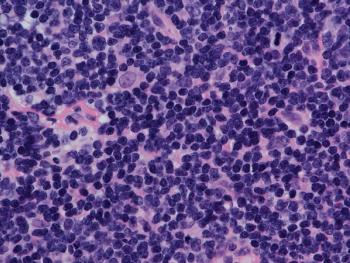
Prior exposure to recent bendamustine and having tumor-intrinsic features were associated with inferior efficacy outcomes following treatment with brexucabtagene autoleucel in relapsed or refractory mantle cell lymphoma.
The FDA states that the refusal to file letter for SGX301 in early-stage cutaneous T-cell lymphoma was because the new drug application was insufficient for permit substantive review.
Real-world findings from an observational study indicate that bendamustine plus rituximab appears to be well tolerated by elderly patients with transplant-ineligible mantle cell lymphoma and indolent non-Hodgkin lymphoma.

Combining bispecific antibodies with other agents such as R-CHOP and R-CHP for various subtypes of lymphoma has the potential to produce exciting results, according to an expert from Dana-Farber Cancer Institute.

The approval for pirtobrutinib in the treatment of patients with relapsed or refractory mantle cell lymphoma was based on data from the phase 1/2 BRUIN trial.

Hun Ju Lee, MD, reviews results from part C of the phase 2 SGN35-27 trial for patients with early-stage classical Hodgkin lymphoma treated with brentuximab vedotin plus nivolumab, doxorubicin, and dacarbazine.
An expert from The University of Texas, MD Anderson Cancer Center says that a brentuximab vedotin–based combination was well-tolerated in patients with advanced-stage Hodgkin lymphoma, according to results presented at 2022 ASH.

An expert from Rutgers Cancer Institute discusses ongoing research for mosunetuzumab in relapsed/refractory follicular lymphoma, as well as the importance of deploying the agent in the community setting.
An expert from Rutgers Cancer Institute indicates that mosunetuzumab may limit unmet needs commonly associated with CAR T-cell therapy such as cost, tolerability, and access.
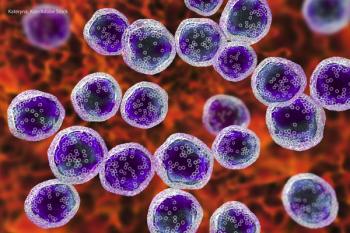
LP-284, which now has orphan drug designation from the FDA for mantle cell lymphoma, yielded positive preclinical data at the 2022 American Society of Hematology Annual Meeting and Exposition.
An expert from Rutgers Cancer Institute reviews data that lead to the approval of mosunetuzumab for patients with relapsed/refractory follicular lymphoma.
In a population of patients with patients with mantle cell lymphoma and follicular lymphoma, zandelisib plus zanubrutinib did not increase the rate or severity of class-related adverse effects.
Lenalidomide plus rituximab consolidation therapy prior to bendamustine/rituximab induction did not significantly improve progression-free survival in patients with mantle cell lymphoma in the phase 2 NCTN E1411 trial.
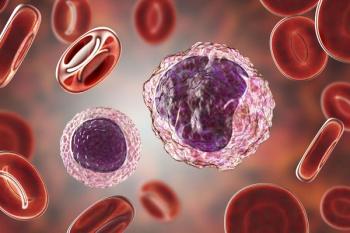
The biologic license application for glofitamab for managing relapsed or refractory large B-cell lymphoma is supported by findings from the phase 1/2 NP30179 study.
Japanese patients with relapsed/refractory large B-cell lymphoma can now receive treatment with axicabtagene ciloleucel following its approval.

Treatment with the BTK inhibitor ibrutinib plus the CAR-T cell therapy tisagenlecleucel produced a high rate of durable responses in patients with relapsed/refractory mantle cell lymphoma after they stopped treatment at 6 months, according to early data from the TARMAC trial.

Bradford S. Hoppe, MD, MPH, and Omran Saifi, MD, offer a peer perspective on research by Gavin Jones, MD, and colleagues into radiation therapy in diffuse large B-cell lymphoma.
Acalabrutinib produced promising response rates in combination with lenalidomide and rituximab in previously untreated patients with mantle cell lymphoma.

Expert hematologist-oncologists discuess the E7438-G000-101 clinical trial and consider the EZH2 inhibitor tazemetostat as a treatment for relapsed/refractory follicular lymphoma.

The FDA’s decision to approve mosunetuzumab marks the first bispecific antibody approved to treat follicular lymphoma.
Advertisement
Advertisement
Trending on CancerNetwork
1
Neoadjuvant Radiation May Improve Tolerability in Cholangiocarcinoma
2
Distal Extrahepatic Cholangiocarcinoma May Gain From Neoadjuvant Radiation
3
Hydrogel Spacer Receives FDA 510(k) Clearance for Prostate Cancer Radiotherapy
4
How Oncologists Can Navigate Patient Requests for Medical Aid in Dying
5