



Lymphoma
Latest News
Advertisement
Latest Videos






























































Advertisement
More News
Investigators report high response rates with pirtobrutinib in those with mantle cell lymphoma and high-risk disease features in the phase 1/2 BRUIN trial.
The FDA lifts its hold on a clinical program for lacutamab in lymphoma after a fatal adverse effect in the phase 2 TELLOMAK trial is determined to be related to aggressive disease progression.
An analysis based on the phase 3 TRANSFORM and TRANSCEND trials shows an increase in cost-effectiveness, life-years, and quality-adjusted life-years compared with standard of care in patients with relapsed/refractory diffuse large B-cell lymphoma.

Overall, the findings highlight the potential of bispecific antibodies as salvage therapy post anti-CD19 CAR T cell treatment and challenges associated with allogeneic hematopoietic cell transplantation consolidation after bispecific antibodies therapy in patients with relapsed/refractory B-cell lymphomas .
DZD8586 results in favorable safety with limited grade 3 or greater treatment-emergent adverse effects in those with B-cell non-Hodgkin lymphoma, according to data from 2 ongoing phase 1 trials.
A regimen consisting of venetoclax, ibrutinib, prednisone, obinutuzumab, and lenalidomide appears safe for a population of patients diagnosed with mantle cell lymphoma, as investigators report no significant dose-limiting toxicities or tumor lysis syndrome.

The phase 2 LuminICE study shows potential for the AFM13/AB-101 combination in treating patients with relapsed or refractory CD30-positive lymphoma.
Treatment with pirtobrutinib may be a standard of care in patients with relapsed/refractory mantle cell lymphoma previously treated with a covalent BTK inhibitor, says Jonathon B. Cohen, MD, MS.
Updated safety and subgroup analyses appear consistent with previously reported results from the phase 2 ZUMA-12 study of axicabtagene ciloleucel for patients with high-risk large B-cell lymphoma.
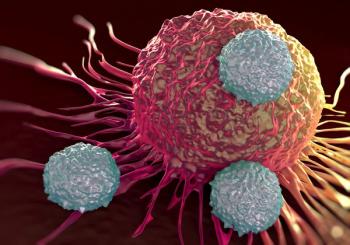
Investigators report that response-adapted trials utilizing novel combination regimens appear to be safe and feasible in a population of patients with newly diagnosed diffuse large B-cell lymphoma.

Zanubrutinib plus obinutuzumab and venetoclax appears to be well tolerated in patients with TP53-mutated mantle cell lymphoma, says Anita Kumar, MD.
The addition of venetoclax to ibrutinib yields a favorable benefit/risk profile in patients with relapsed/refractory MCL, according to data from the phase 3 SYMPATICO trial.
A first-in-human phase 1a/1b trial will evaluate the dose escalation of NX-1607 in patients with persistent lymphoma, including those with diffuse large B-cell lymphoma.
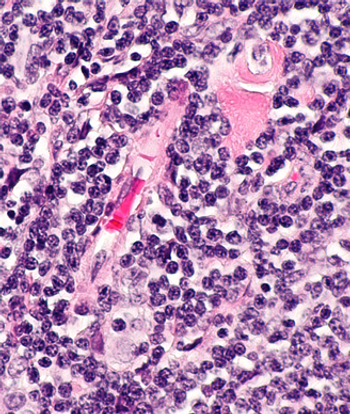
Pirtobrutinib may be a clinically meaningful option for those with relapsed/refractory follicular lymphoma, although additional data are necessary, says Nirav N. Shah, MD.
Investigators report no new safety signals in patients with relapsed/refractory follicular lymphoma following treatment with tisagenlecleucel infusion.
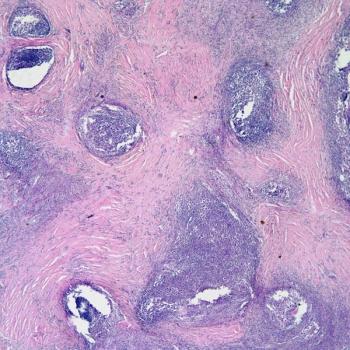
Brentuximab vedotin plus nivolumab, doxorubicin, and dacarbazine appears to be well tolerated in patients with advanced stage classical Hodgkin lymphoma, according to data from the phase 2 SGN35-027 trial.
Single-agent treatment with odronextamab continued to demonstrate encouraging clinical activity, along with a manageable safety profile, in patients with relapsed/refractory diffuse large B-cell lymphoma.
Auto-HCT results in higher overall survival compared with CAR-T cell therapy in patients with relapsed large B-cell lymphoma while they are in complete response, according to findings from a retrospective study.
Data from the ZUMA-7 trial shows that age alone should not be a barrier of consideration of administering CAR T-cell therapy to patients with large B-cell lymphoma, says Marie José Kersten, MD.
A 70% overall response rate was observed when bridging therapy was added to axi-cel for patients with relapsed/refractory large B-cell lymphoma.
The phase ZUMA-2 trial showed safe and efficacious responses for patients with relapsed/refractory mantle cell lymphoma treated with brexucabtagene autoleucel.
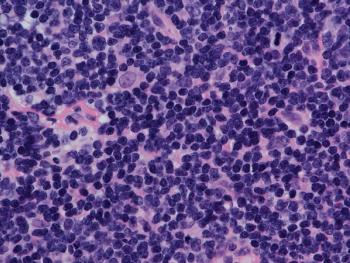
Median overall survival appears to be higher in patients who were previously treated with relapsed/refractory mantle cell lymphoma and who receive brexucabtagene autoleucel compared with standard therapy.
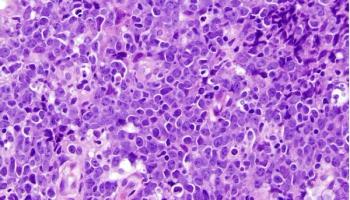
Investigators will assess LP-284 as a treatment for those with B-cell non-Hodgkin lymphoma in a phase 1 trial.
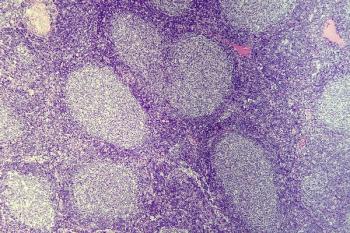
Data from the phase 1/2 EPCORE NHL-1 trial support the FDA breakthrough therapy designation for epcoritamab-bysp in patients with previously treated relapsed/refractory follicular lymphoma.
Data from the phase 3 CHRONOS-4 study highlight that copanlisib did not reach the primary end point of progression-free survival among patients with relapsed follicular lymphoma.
Advertisement
Advertisement
Trending on CancerNetwork
1
Neoadjuvant Radiation May Improve Tolerability in Cholangiocarcinoma
2
Distal Extrahepatic Cholangiocarcinoma May Gain From Neoadjuvant Radiation
3
Hydrogel Spacer Receives FDA 510(k) Clearance for Prostate Cancer Radiotherapy
4
How Oncologists Can Navigate Patient Requests for Medical Aid in Dying
5