



Lymphoma
Latest News
Advertisement
Latest Videos


























































Advertisement
More News
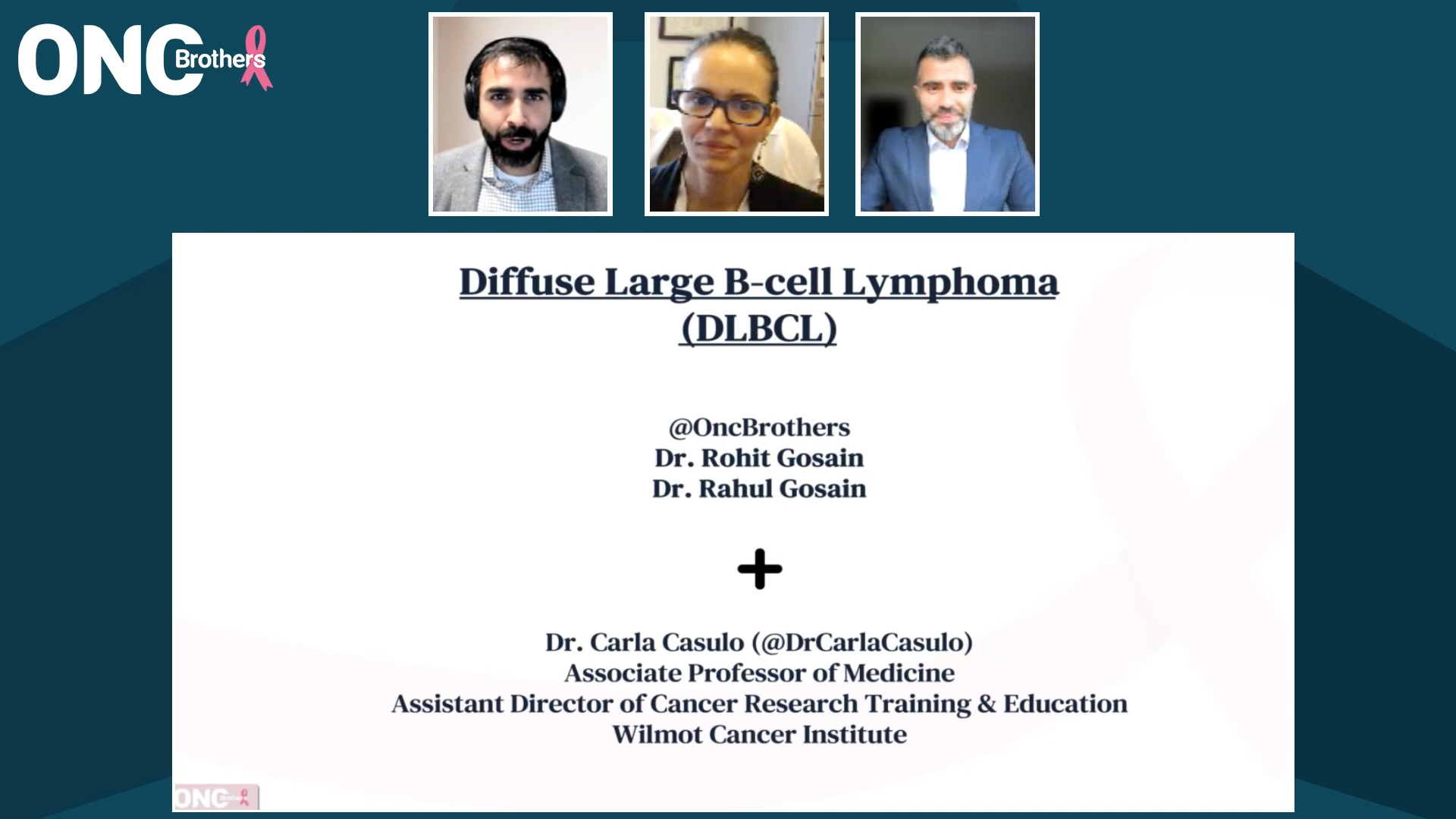
The Oncology Brothers and Carla Casulo, MD, discuss treatment practices for patients with stage III or IV diffuse large B-cell lymphoma.
A hematologist-oncologist joins the Oncology Brothers do discuss first-line treatment practices for patients with stage I or II diffuse large B-cell lymphoma.
Carla Casulo, MD, joins Rahul Gosain, MD, and Rohit Gosain, MD, to provide clinical insights on biopsy practices and discuss the importance of cell of origin in treating diffuse large B-cell lymphoma (DLBCL).

Targeting multiple survival pathways simultaneously with ViPOR may be effective in specific molecular subtypes of relapsed/refractory DLBCL.

Reduction of long-term survival following CAR T-cell therapy associated with late infections and SMN development was observed, especially in elderly patients.

After a complete response letter and a subsequent biologics license application resubmission, denileukin diftitox has been approved by the FDA.

“Sometimes you have to be a little more assertive and a little louder, and you have to step up to the front,” Julie M. Vose, MD, MBA, said.

The drug developers of tabelecleucel are seeking approval of the treatment for patients with EBV-positive post-transplant lymphoproliferative disease.

Leaders from the lymphoma space highlight the importance of mentorship in establishing their careers and impart advice to women looking to advance theirs.
Michael Wang, MD, spoke about the recent liso-cel approval in mantle cell lymphoma and the TRANSCEND trial.

The approval for epcoritamab in patients with R/R follicular lymphoma was supported by encouraging efficacy findings from the phase 1/2 EPCORE NHL-1 trial.
Bispecific antibodies including epcoritamab have “a lot of potential for upward mobility” in lymphoma, according to Tycel Phillips, MD.
Medical experts evaluate unmet needs, key insights from the Phase 3 ECHO trial, and potential obstacles in integrating the findings into existing treatment protocols.
Medical experts analyze and provide insights on safety findings from the Phase 3 ECHO trial, offering their professional interpretations of the data.
All patient populations benefitted from glofitamab in a phase 1/2 trial, but the design excluded capture of high-risk features present in similar studies.
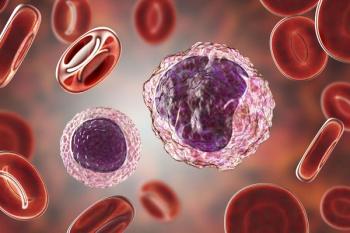
Findings from ELM-1 and ELM-2 support the positive opinion for odronextamab as a treatment for relapsed/refractory follicular lymphoma and DLBCL.
Julie M. Vose, MD, MBA, and Avyakta Kallam, MD, highlighted research advances in the lymphoma field they’ve witnessed throughout their careers.

The European Commission is expected to decide on approving epcoritamab in relapsed/refractory follicular lymphoma later in 2024.
The panelists evaluate the preliminary efficacy findings from the ECHO trial and address how the COVID-19 pandemic influenced overall survival outcomes in the study.
Key opinion leaders examine the current frontline treatment options for mantle cell lymphoma while identifying critical unmet patient needs requiring attention.
Findings from the EPCORE NHL-1 trial support the FDA approval of epcoritamab in relapsed/refractory follicular lymphoma.
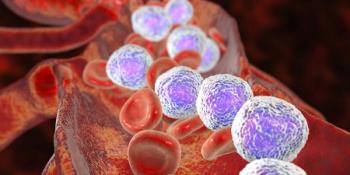
Golidocitinib monotherapy had a superior clinical benefit in patients with relapsed/refractory peripheral T-cell lymphoma vs existing treatments.
Administering CAR T-cell therapy in an outpatient setting to patients with relapsed/refractory non-Hodgkin lymphoma was deemed feasible and safe.
Brentuximab vedotin led to unprecedented progression-free survival for patients with classical Hodgkin lymphoma.
Findings from the TRANSCEND NHL 001 trial support the FDA approval of lisocabtagene maraleucel in relapsed/refractory mantle cell lymphoma.
Advertisement
Advertisement
Trending on CancerNetwork
1
Neoadjuvant Radiation May Improve Tolerability in Cholangiocarcinoma
2
Distal Extrahepatic Cholangiocarcinoma May Gain From Neoadjuvant Radiation
3
Hydrogel Spacer Receives FDA 510(k) Clearance for Prostate Cancer Radiotherapy
4
How Oncologists Can Navigate Patient Requests for Medical Aid in Dying
5