





Lymphoma
Latest News
Advertisement
Latest Videos


























































Advertisement
More News
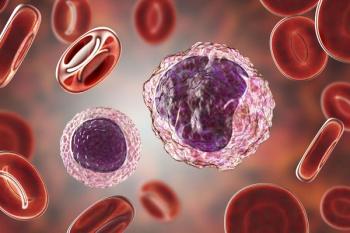
Phase 2 findings support nana-val as a promising treatment option for those with EBV-positive peripheral T-cell lymphoma.
Additional data and results from the phase 3 STARGLO trial of glofitamab for patients with relapsed/refractory diffuse large B-cell lymphoma will be presented at an upcoming medical meeting.
HR001 was found to have an efficacious response for patients with relapsed/refractory non-Hodgkin lymphoma.

The agency submits complete response letters based on the enrollment status of confirmatory trials for odronextamab in follicular lymphoma and diffuse large B-cell lymphoma.
The regulatory agency sets a Prescription Drug User Fee Act date of August 13, 2024, for denileukin diftitox in relapsed/refractory cutaneous T-cell lymphoma.

Some patients with large B-cell lymphoma may have to travel a great distance for an initial evaluation for CAR T-cell therapy.
Education is essential to referring oncologists manage toxicities associated with CAR T-cell therapy for patients with large B-cell lymphoma.
There is no absolute age cutoff where CAR T cells are contraindicated for those with large B-cell lymphoma, says David L. Porter, MD.
David L. Porter, MD, emphasizes referring patients with large B-cell lymphoma early for CAR T-cell therapy consultation.

Patients with relapsed/refractory chronic lymphocytic leukemia or small lymphocytic lymphoma can now receive lisocabtagene maraleucel after the FDA approved the drug, which was based on the phase 1/2 TRANSCEND CLL trial.
It may be applicable to administer CAR T-cell therapy to patients with large B-cell lymphoma in a community or outpatient setting.

Treatment with brentuximab vedotin, lenalidomide, and rituximab yielded a progression-free survival benefit in the phase 3 ECHELON-3 trial.

Strategies must be framed for addressing racial and geographic disparities in access for CAR T-cell and bispecific antibody therapy, according to the study authors.

Investigators plan to reinitiate enrollment of patients with non-Hodgkin lymphoma as part of the phase 1a/1b NX-2127-001 trial.
The FDA approval of zanubrutinib plus obinutuzumab showed a benefit to patients with relapsed/refractory follicular lymphoma, according to Julie Vose, MD, MBA.

Patients with relapsed/refractory follicular lymphoma can now receive zanubrutinib plus obinutuzumab based on the data from the phase 2 ROSEWOOD trial.

Data from the phase 1/2 EPCORE NHL-1 trial support the supplemental biologics license application for epcoritamab as a treatment for patients with relapsed/refractory follicular lymphoma.

More than half of the patients with relapsed/refractory B-cell lymphoma achieve a complete response with acalabrutinib plus axicabtagene ciloleucel in a phase 1/2 trial.

Data from the TRANSCEND NHL 001 trial suggest a favorable benefit/risk profile for lisocabtagene maraleucel in mantle cell lymphoma with high-risk disease features.
The FDA is expected to issue a Prescription Drug User Fee Act date for denileukin diftitox in cutaneous T-cell lymphoma within 30 days of accepting the biologics license application resubmission.
Martin Dreyling, MD, spoke about the potential use of CAR T-cell therapy in earlier treatment stages for certain patient groups with mantle cell lymphoma.
Elias Campo, MD, PhD, provides insight into biological subtyping and the tumor microenvironment relating to mantle cell lymphoma.
Michael Wang, MD, gives an overview of the progress that has been made in mantle cell lymphoma research and where research should be focused on new treatment strategies and improved understanding of the disease.
The phase 3 ALLELE trial found that using tabelecleucel for patients with relapsed/refractory Epstein-Barr Virus–positive post-transplant lymphoproliferative disease improved efficacy outcomes, specifically for those with hematopoietic stem-cell transplant.
In 2023, the Lymphoma Research Foundation hosted the Mantle Cell Lymphoma Scientific Consortium and Workshop to discuss treatment advancements in the field.
Advertisement
Advertisement
Trending on CancerNetwork
1
Neoadjuvant Radiation May Improve Tolerability in Cholangiocarcinoma
2
Distal Extrahepatic Cholangiocarcinoma May Gain From Neoadjuvant Radiation
3
Hydrogel Spacer Receives FDA 510(k) Clearance for Prostate Cancer Radiotherapy
4
How Oncologists Can Navigate Patient Requests for Medical Aid in Dying
5