






Ovarian Cancer
Latest News
Advertisement
Latest Videos


















































Advertisement
More News

A presentation from the Society of Gynecologic Oncology 2021 Virtual Annual Meeting on Women’s Cancer highlighted data investigating the combination of ixabepilone and bevacizumab compared with ixabepilone monotherapy.
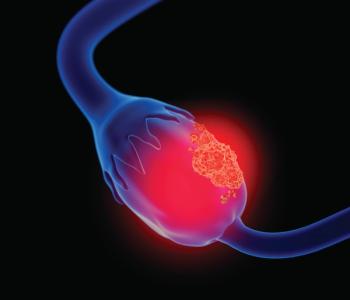
Data presented at the Society of Gynecologic Oncology 2021 Annual Meeting on Women’s Cancer found a statistically significant benefit with fuzuloparib maintenance therapy compared with placebo for patients with platinum-sensitive, recurrent ovarian cancer.

HIPEC of paclitaxel and cisplatin during surgical debulking of advanced epithelial ovarian cancer appears to be superior to cisplatin alone, according to findings from a single-institution study.

In addition to promising effects on tumor progression risk, apatinib added to doxorubicin for ovarian cancer in certain settings increased overall response rate versus single-agent doxorubicin.
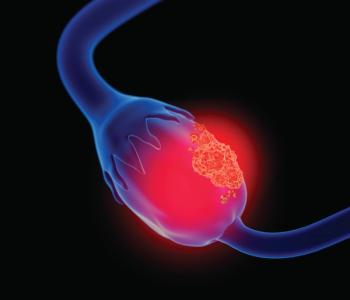
Five-year follow-up data from the SOLO-1 trial continue to show progression-free survival benefit of olaparib as maintenance therapy following platinum-based chemotherapy in the frontline setting for ovarian cancer.
Results of prospective, open-label trial of olaparib maintenance in patients with platinum-sensitive relapsed ovarian cancer continued to demonstrate efficacy of the PARP inhibitor in this setting.
PFS improvement as well as a trend to overall survival prolongation has been demonstrated with niraparib maintenance in patients with platinum-sensitive recurrent ovarian cancer with or without germline BRCA mutations.
Data from the phase 2 OVARIO study showed extended progression-free survival benefit of niraparib plus bevacizumab in patients with heavily pretreated advanced ovarian cancer.
A dostarlimab triplet combination showed promise in a phase 2 study for treatment of patients with platinum-resistant ovarian cancer, according to a presentation at the Society of Gynecologic Oncology 2021 Virtual Annual Meeting on Women’s Cancer.
An update from the phase 3 ARIEL4 trial presented at the Society of Gynecologic Oncology 2021 Virtual Annual Meeting on Women’s Cancer supports the continued use of rucaparib in patients with BRCA-mutant relapsed advanced ovarian cancer, based on progression-free survival and response data.

Patients with newly diagnosed ovarian cancer who had interval debulking surgery and visible residual disease showed promising outcomes when treated with the PARP inhibitor niraparib, according to a post hoc analysis of a phase 3 clinical trial.
A bevacizumab-plus-chemotherapy combination improved progression-free survival for a cohort of patients with recurrent platinum-sensitive ovarian cancer, suggesting the potential for a future therapeutic path in clinical practice.
A new drug application for pafolacianine sodium injection was granted priority review by the FDA for use in detecting ovarian cancer lesions during surgical procedures.
In a phase 2 study, adavosertib plus gemcitabine showed signs of activity in platinum-resistant or platinum-refractory advanced high-grade serous ovarian cancer, including rare histological subtypes of ovarian cancer.

Celsion Corporation announced that fast track designation was granted to their immunotherapy, GEN-1, to treat patients with advanced stage III or IV ovarian cancer.
Building off of findings from the phase 3 NOVA study, this study revealed that an individualized starting dose of niraparib based on baseline bodyweight and platelet count could improve the tolerability of niraparib without affecting treatment outcomes.
Data examined the prevalence, risk factors, and prognostic value of chemotherapy-associated venous thromboembolism in patients with ovarian cancer.
Data published in Data in Brief described an analysis that examined palliative care use among different racial and ethnic groups with metastatic gynecologic cancers, including ovarian, cervical, and uterine cancer.

Advertisement
Advertisement
Trending on CancerNetwork
1
The Case for Frontline Zongertinib in HER2-Mutant NSCLC
2
Acting on a HER2 Result and Navigating Access to Therapy
3
Durvalumab Plus Enfortumab Vedotin Earns FDA Priority Review in MIBC
4
Isatuximab-Based Therapy Shows “Impressive” PFS Projections in NDMM
5