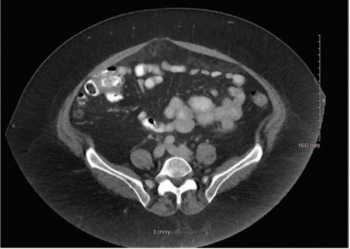
scout

ONCOLOGY Vol 35, Issue 6

NRG-GI004/SWOG-S1610: Colorectal Cancer Metastatic dMMR/MSI-H Immunotherapy (COMMIT) Study: A Randomized Phase 3 Study of mFOLFOX6/Bevacizumab/Atezolizumab Combination vs Single Agent Atezolizumab in the First-Line Treatment of Patients With Deficient DNA Mismatch Repair (dMMR)/Microsatellite Instability–High (MSI-H) Metastatic Colorectal Cancer (NCT02997228).


A nulliparous woman, age 25 years, had received a diagnosis of non-Hodgkin lymphoma and now presented with stage IIA diffuse large B-cell lymphoma. Due to potential risks of chemotherapy-induced gonadotoxicity and subsequent iatrogenic premature ovarian failure and fertility loss, the patient was referred to the reproductive medicine department for fertility preservation counseling and further management.

Approximately 270,000 women are diagnosed with breast cancer each year in the United States alone. While there is consensus among national organizations including the US Preventive Services Task Force, the American Cancer Society, and the American College of Radiology that routine mammography screening should be performed in women 50 years and older, there is debate about the benefit-to-harm ratio of routine screening in average-risk women aged between 40 and 49 years. In this review, we examine risks and benefits of routine breast cancer screening starting at age 40 at the individual level, followed by evaluation of the role of advanced imaging techniques in screening women on a population level.

In recent years, first-line therapies for metastatic renal cell carcinoma (mRCC) have shifted to a combination of immune checkpoint inhibitors or a combination of antiangiogenesis tyrosine kinase inhibitors (TKIs) and immunotherapy. This has led to a need to address standard-of-care treatment in the second-line setting.