

Patients with multiple myeloma and enduring MRD-negativity are able to achieve the deepest responses with ciltacabtagene autoleucel, according to Yi Lin, MD, PhD.
Patients with multiple myeloma and enduring MRD-negativity are able to achieve the deepest responses with ciltacabtagene autoleucel, according to Yi Lin, MD, PhD.

It may be an optimal approach to improve first-line treatment options to prevent relapse in those with T-cell acute lymphoblastic leukemia, according to Kristen O’Dwyer, MD.

Investigators report no differences in rates of graft-versus-host-disease with intensive or non-intensive consolidation chemotherapy prior to transplantation for elderly patients with acute myeloid leukemia.
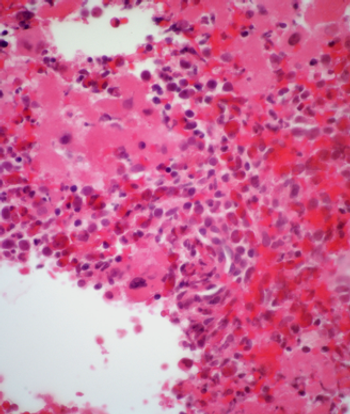
A major molecular response at 3 months appears to increase the probability of overall survival in patients treated with ponatinib for chronic-phase chronic myeloid leukemia in the phase 2 PACE trial.

Luspatercept may provide clinical benefit regardless of subgroup and baseline mutation burden in transfusion dependent patients with myelodysplastic syndrome with anemia, according to Guillermo Garcia-Manero, MD.
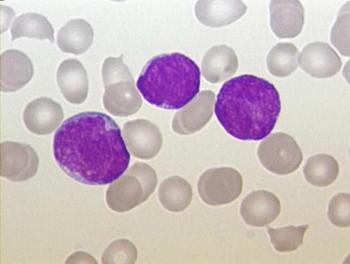
Ponatinib also produces an improvement in progression-free survival compared with imatinib among those with Philadelphia chromosome-positive acute lymphoblastic leukemia in the phase 3 PhALLCON trial.
Investigators report a higher recurrence-free survival rate for patients receiving a pediatric-inspired protocol regimen compared with an adult chemotherapy regimen in a retrospective review.
Mohammad Bakri Hammami, MD, highlights a need to address socio-racial disparities among Black and non-Black patients with primary myelofibrosis to ensure that everyone receives high-quality treatment.

A planned phase 1 trial will examine CDK12/13 inhibitor CT7439 in patients with several types of solid tumors, including breast and ovarian cancer, as well as Ewing’s sarcoma.

Marisol Miranda-Galvis, DDS, MS, PhD, highlights the importance of identifying populations of patients with hematologic cancer who are underserved and using socially targeted solutions.

Second-line end points of the TRICOTEL trial assessing atezolizumab plus vemurafenib and cobimetinib in melanoma with central nervous system metastases appear consistent with primary efficacy end points.

The FDA okayed 2 breakthrough therapy designations for fam-trastuzumab deruxtecan-nxki in HER2-positive solid tumors and colorectal cancer, which are based on data from the phase 2 DESTINY-PanTumor02 and DESTINY-CRC02 trials.

Despite seeming to elicit more pathological complete responses in patients with hormone receptor–positive, HER2-negative triple-negative breast cancer receiving neoadjuvant chemotherapy, diet and exercise did not affect relative dose intensity.
Data from the phase 3 ASCEND trial and a phase 1/2 trial support the National Medical Products Administration’s approval of acalabrutinib in China as a treatment for chronic lymphocytic leukemia.
Patients with dyserythropoiesis appear to have higher PD-L1 expression than those without in a study population of those with myelodysplastic syndromes.

Common adverse effects following treatment with lenvatinib plus pembrolizumab in the phase 3 CLEAR study include diarrhea, hypertension, and fatigue, according to Thomas E. Hutson, DO, PharmD, FACP.

Real-world data suggest that the presence of pelvic lymphadenopathy should not be viewed as a contraindication to trimodality therapy in nonmetastatic clinically node-positive bladder cancer.
The safety profile of tisotumab vedotin-tftv among those with recurrent or metastatic cervical cancer in the phase 3 innovaTV 301 trial appears to be comparable with prior reports of the agent.

Ann H. Partridge, MD, MPH, talks about how fertility preservation can positively impact the psychosocial health in patients with breast cancer.

Results from a randomized trial suggest that neoadjuvant FOLFOX may be an effective treatment for patients with locally advanced rectal cancer who are suitable to undergo sphincter-sparing surgery.

Patients with low-grade serous ovarian cancer appear to have worse survival outcomes following treatment with neoadjuvant chemotherapy.

Experts discuss the current continuum of care for patients with EGFR exon 20 non–small cell lung cancer and findings from studies including the phase 2 CHRYSALIS trial.

Findings from a real-world cohort study may support renewed attention to completing molecular genotyping before first-line therapy for patients with metastatic nonsquamous non–small cell lung cancer.

Implementing tax benefits for manufacturers who produce chemotherapy drugs may be one solution to increase drug production in the United States, according to Lucio N. Gordan, MD.
Lucio N. Gordan, MD, describes how his practice deals with increasing costs of limited chemotherapy agents to ensure that patients with cancer continue to receive treatment.

Prospective, real-world data indicate that most patients with colon or rectal cancer who undergo surgery remain independent.

Investigators assess edoxaban as part of a multicenter, open-label superiority trial in patients with active cancer and newly diagnosed isolate distal deep vein thrombosis.

Findings from the LUMINA study indicate that it may be feasible to omit radiotherapy in patients 55 years and over with T1N0, grade 1/2 luminal A breast cancer.

Investigators report no new safety signals with alectinib as a treatment for those with early-stage, ALK-positive non–small cell lung cancer in the phase 3 ALINDA study.

Jonathan Leeman, MD, indicates that the longer-follow is necessary to confirm late toxicities and disease control associated with adaptive radiotherapy in patients with prostate cancer.