WU-CART-007 was granted fast track and rare pediatric disease designation by the FDA for the treatment of patients with relapsed/refractory T-cell acute lymphoblastic leukemia and lymphoblastic lymphoma.

Your AI-Trained Oncology Knowledge Connection!


WU-CART-007 was granted fast track and rare pediatric disease designation by the FDA for the treatment of patients with relapsed/refractory T-cell acute lymphoblastic leukemia and lymphoblastic lymphoma.

Post-marketing surveillance data further confirmed carfilzomib to be a well-tolerated and promising option among patients with relapsed/refractory multiple myeloma, although investigators emphasize the importance of watching for cardiac comorbidities.

Investigators reported a reduction in racial and ethnic disparities among patients with de novo stage IV breast cancer following implementation of Medicaid expansion, and included a decreased risk of death for patients in a racial/ethnic minority compared with White patients.

European patients with unresectable or metastatic HER2-positive breast cancer are now able to receive treatment with trastuzumab deruxtecan following 1 or more previous anti-HER2 regimens.

Patients with pancreatic and extrapancreatic neuroendocrine tumors treated with atezolizumab plus bevacizumab experienced consistent clinical responses and a progression-free survival consistent with other therapies.

Patients with ERBB2-positive esophagogastric adenocarcinoma appeared to experience improved efficacy following treatment with a combination of trastuzumab and nivolumab plus leucovorin, fluorouracil, and oxaliplatin vs historical data.

Biosignatures data from the PRINCE trial show sophisticated precision approaches may be necessary to optimize chemoimmunotherapy use in pancreatic ductal adenocarcinoma.

MAOB and CDC37 gene expression appear to be 2 new promising targets in advanced colorectal cancer, according to Heinz-Josef Lenz, MD.

Long-term follow-up data continue to show that patients with lymph node–positive, HER2-positive early breast cancer at a high risk of recurrence derived notable, durable benefit from treatment with adjuvant pertuzumab, trastuzumab, and chemotherapy.

Stacy Stein, MD, and co-investigators, research omalizumab to treat oxaliplatin hypersensitivity reactions for patients with gastrointestinal cancers.

Valentina Boni, MD, PhD, spoke about the rationale behind using lurbinectedin monotherapy for pretreated BRCA1/2-associated metastatic breast cancer.

Expert panelists review key data from recent meetings on the management of multiple myeloma and consider how these can be applied to clinical practice.

Saad Z. Usmani, MD, MBA, FACP, spoke about the safety profile of standard triplet therapy with or without elotuzumab for patients with newly diagnosed, high-risk multiple myeloma in the phase 3 SWOG 1211 trial and how results of this trial may be used in future datasets to inform treatment in this setting.

C. Ola Landgren, MD, PhD, discusses progression-free survival data from the phase 3 DETERMINATION trial examining lenalidomide, bortezomib, and dexamethasone with or without autologous stem cell transplant plus continuous lenalidomide maintenance in patients with newly diagnosed multiple myeloma.

Mark Pegram, MD, discussed the highlights from ASCO 2022, regarding antibody drug conjugates.

The FDA has allowed the phase 3 FLAMINGO-01 trial assessing GLSI-100 in patients with HER2/Neu-positive breast cancer and HLA-A*02 positive to proceed following concerns related to the manufacturing and pharmacy process.

CV-01 delivery of sonodynamic therapy has been granted orphan drug designation and fast track designation by the FDA for the treatment of recurrent glioblastoma.

Kimberley R. Doucette, MD, MSC; and David H. Vesole, MD, PhD, discuss updates to frontline treatment in multiple myeloma.

Sarah A. Holstein, MD, PhD, reviews updated treatment options for patients with newly diagnosed multiple myeloma.

Patients with ALK-positive inflammatory myofibroblastic tumors can now receive treatment with crizotinib following the agent’s approval by the FDA.

Several immune-related long noncoding RNA signatures—including PCAT19 and SCARNA9—may be associated with prognosis in patients with endometrial cancer, according to the new research.

The FDA has delayed the decision to approve tislelizumab monotherapy for patients with advanced or metastatic esophageal squamous cell carcinoma following prior systemic therapy, due to COVID-19 travel restrictions.

Sheila Lahijani, MD, FACLP, gives her perspective on the need for psycho-oncologists to help patients during their cancer journeys.

Veronica B. Decker, DNP, MBA, APRN, PMHCNS-BC, and colleagues discuss how to care for patients with cancer and serious mental illness.

Howard A. Burris, MD, highlighted previous findings of the phase 3 TOPAZ-1 trial assessing durvalumab plus gemcitabine and cisplatin vs placebo plus gemcitabine and cisplatin in advanced biliary tract cancer and patient-reported outcomes data that were presented at 2022 ASCO.

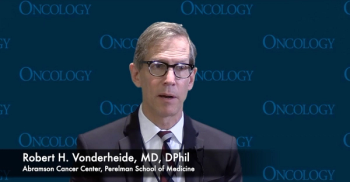
At the 2022 American Society of Clinical Oncology Annual meeting, Robert H. Vonderheide, MD, DPhil, and colleagues from the Parker Institute for Cancer Immunotherapy present research into biosignatures of survival with different chemoimmunotherapy regimens for pancreatic ductal adenocarcinoma.

At 24 months of follow-up, MRI-guided focused ultrasound focal therapy was found to be safe and effective for patients with grade group 2 or 3 prostate cancer.

“What is more gratifying than people who are alive in complete remission for years?...The therapeutics are so effective and the symptoms of myeloma can be so rapidly reversed. It’s really gratifying.”

Kirk E. Cahill, MD, and Sonali M. Smith, MD, spoke with CancerNetwork® about their review of the current management and treatment of follicular lymphoma published in the journal ONCOLOGY®.

The FDA has accepted a biologics license application for vic-trastuzumab duocarmazine for patients with HER2-positive unresectable locally advanced or metastatic breast cancer.