
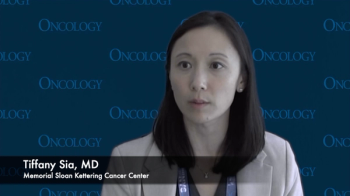
At 2022 IGCS, Tiffany Sia, MD, spoke about using procedural interventions to treat patients with gynecologic malignancies who have oligoprogression on treatment with immune checkpoint inhibitors.
At 2022 IGCS, Tiffany Sia, MD, spoke about using procedural interventions to treat patients with gynecologic malignancies who have oligoprogression on treatment with immune checkpoint inhibitors.
Results from the phase 3 ATHENA-MONO study suggest that rucaparib could serve as a promising first-line maintenance treatment option in newly diagnosed ovarian cancer.

Patients with mismatch repair deficient, microsatellite instability–high advanced/recurrent endometrial cancer may derive benefit from treatment with dostarlimab-gxly.

Results from the phase 3 CALLA trial indicated that durvalumab in combination with chemoradiotherapy did not yield a meaningful improvement in progression-free survival compared with chemoradiotherapy alone in high-risk locally advanced cervical cancer.

Results from the phase 2 IMMUCHEC trial indicated that tremelimumab with or without durvalumab did not meet the primary end point of improved objective response rate vs chemotherapy in patients with treatment-naïve biliary tract cancer.

Results from a Korean study presented at 2022 IGCS showed that the level of CA-125 at different timepoints during neoadjuvant chemotherapy may help clinicians decide which patients with high-grade serous ovarian cancer should undergo interval debulking surgery.

FORE8394, which received fast track designation by the FDA, is under ongoing evaluation in a phase 1/2a trial in patients with advanced solid and central nervous system tumors harboring BRAF alterations.

Results from the phase 3 KEYLYNK-010 study showed that treatment with pembrolizumab and olaparib did not result in a statistically significant improvement in survival despite yielding higher responses compared with novel hormonal agents in patients with previously treated prostate cancer.

The 24-month follow-up of the phase 1/2 CheckMate 358 trial found nivolumab with or without ipilimumab yielded clinically meaningful, long-lasting responses in patients with recurrent or metastatic cervical cancer.

The Oncomine Dx Target Test was granted approval by the FDA as a companion diagnostic for RET fusion–positive thyroid cancer and RET fusion–positive non–small cell lung cancer.

A new drug application for 18F-rhPSMA-7.3 was accepted by the FDA to help with diagnostic imaging in prostate cancer.

Next-generation sequencing profiling based on cell-free DNA yielded low detection rates and concordance with tumor profiling for patients with clear cell renal cell carcinoma.
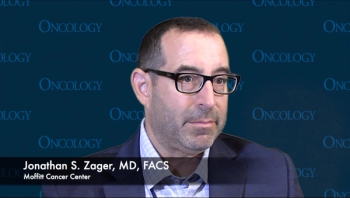
Jonathan S. Zager, MD, discussed the use of percutaneous hepatic perfusion vs best alternative care for patients with hepatic-dominant ocular melanoma analyzed in the phase 3 FOCUS trial.

Patients with locally advanced or metastatic ESR1-mutant, estrogen receptor–positive, HER2-negative breast cancer who have progressed on a CDK4/6 inhibitor may benefit from treatment with lasofoxifene and abemaciclib.

Results from a post-hoc subgroup analysis of the phase 3 TROPiCS-02 study indicated that sacituzumab govitecan improved efficacy outcomes vs physician’s choice of treatment in HER2-low and HER2 immunohistochemistry 0, hormone receptor–positive metastatic breast cancer.

An 8-to-4 vote was cast by the FDA’s Oncologic Drugs Advisory Committee against the use of duvelisib in previously treated chronic lymphocytic leukemia and small lymphocytic leukemia.

Kim Blenman, PhD, MS, discussed the promising developments in cell-counting software for predicting pathologic complete response in breast cancer.

In an interview, Kami J. Maddocks, MD, details therapies that may shake up the standard of care in lymphoma going forward.

The FDA’s Oncologic Drugs Advisory Committee voted against poziotinib as a treatment for patients with HER2 exon 20 insertion–mutated non–small cell lung cancer.
The FDA’s Oncologic Drugs Advisory Committee voted against continued use of melphalan flufenamide for the treatment of relapsed/refractory multiple myeloma.
At 2022 ASCO, Matthew Schabath, PhD, discussed the COLORS training designed to improve cultural sensitivity amongst oncologists treating patients within the LGBTQ+ community.

PARP inhibitors like rucaparib should be considered to treat all kinds of patients, including those who have deleterious mutations and HRD, according to Amit Oza, MD, MBBS, FRCPC.

Chiara Cremolini, MD, PhD, discussed results from the phase 3 TRIPLETE study of triplet chemotherapy plus panitumumab in previously untreated patients with RAS/BRAF wild-type unresectable metastatic colorectal cancer.
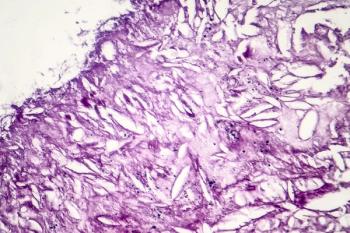
The European Commission based its approval of nivolumab/relatlimab for patients with a PD-L1 expression of less than 1% on the results of the phase 2/3 RELATIVITY-047 trial.

One of the CRESTONE investigators, Tejas Patil, MD, assistant professor of medicine–medical oncology at the University of Colorado School of Medicine in Aurora, discussed seribantumab in previously treated patients with NRG1 fusion–positive tumors.
Catherine A. Shu, MD, spoke about the most important findings from the phase 1 CHRYSALIS-2 trial for patients with previously treated EGFR-mutant non–small cell lung cancer who are administered amivantamab plus lazertinib.
PARP inhibitors such as rucaparib appear to garner the most benefit in the early maintenance setting in patients with ovarian cancer who have less advanced disease and less heterogeneity, according to Amit Oza, MD, MBBS, FRCPC.

Doris K. Hansen, MD, discussed results of an efficacy analysis examining the BCMA-directed CAR T-cell therapy idecabtagene vicleucel in real-world treatment of patients with relapsed/refractory multiple myeloma.

Olaparib and bevacizumab has been approved in China as a frontline maintenance treatment for patients with advanced homologous recombination deficiency–positive ovarian cancer based on results from the phase 3 PAOLA-1 trial.

Anne Chiang, MD, PhD, discussed results from a pilot study of biomarkers in tumors treated with ipilimumab and nivolumab in extensive-stage small cell lung cancer.