

The FDA granted priority review to a supplemental new drug application for darolutamide plus docetaxel for the treatment of metastatic hormone-sensitive prostate cancer.
The FDA granted priority review to a supplemental new drug application for darolutamide plus docetaxel for the treatment of metastatic hormone-sensitive prostate cancer.

Plans to resubmit a biologics license application for toripalimab as treatment of advanced recurrent or metastatic nasopharyngeal carcinoma have been made for midsummer 2022 following receipt of a complete response letter from the FDA.

Patients with persistent, recurrent or metastatic cervical cancer whose tumors express PD-L1 can receive treatment with pembrolizumab plus chemotherapy with or without bevacizumab following approval by the European Commission.
Ira Winer, MD, PhD, FACOG, spoke about future directions of nemvaleukin alfa plus pembrolizumab for patients with pretreated platinum resistant ovarian cancer.
In a conversation with CancerNetwork®, Nicolas Girard, MD, highlighted directions of future research with nivolumab and chemotherapy in patients with resectable non–small cell lung cancer.

Surufatinib, a treatment for patients with pancreatic and extra-pancreatic neuroendocrine tumors, received a complete response letter from the FDA.

Patients with N0 to N1 nasopharyngeal carcinoma who received upper-neck radiation vs whole-neck radiation saw similar regional control with less radiation toxicity.
At the 15th Annual Interdisciplinary Prostate Cancer Congress® and Other Genitourinary Malignancies, Daniel P. Petrylak, MD, reflects upon mentorship during his training to become an oncologist.

Trastuzumab deruxtecan has been granted breakthrough therapy designation by the FDA for the treatment for HER2-low metastatic breast cancer.

A qualitative analysis identified 4 themes that could be improved upon to help with symptom management in patients with head and neck cancer.
Gregory Riely, MD, PhD, and Tarek Mekhail, MD, detailed the use of mobocertinib of platinum-pretreated patients with metastatic non–small cell lung cancer.
At SGO 2022, Catherine Watson, MD, spoke about the 2 arms of a randomized education trial presented at the conference.
In an interview with CancerNetwork®, Nicolas Girard, MD, discussed the rationale for assessing nivolumab and chemotherapy in resectable non–small cell lung cancer and the design of the phase 3 CheckMate 816 trial.

Patients with TP53-mutant acute myeloid leukemia experienced poor overall survival following treatment with hematopoietic stem cell transplantation, suggesting a need for more careful patient selection, further clinical trial enrollment, and personalized treatment strategies.
Matthew Krebs, MB, PhD spoke about efficacy of subcutaneous amivantamab observed in the phase 1 PALOMA trial for patients with solid tumors.

Patients with platinum-resistant ovarian cancer may benefit from treatment with ofranergene obadenovec, which received fast track designation from the FDA.

Response to idecabtagene vicleucel for patients with pretreated multiple myeloma did not appear to be influenced by baseline body mass index.

JSP191 plus fludarabine and low-dose total body radiation to target CD117 was a safe strategy to induce facilitation of full donor myeloid chimerism and clear minimal residual disease in older patients with myelodysplastic syndrome and acute myeloid leukemia receiving non-myeloablative allogenic hematopoietic cell transplantation.
Stéphane Champiat, MD, PhD, spoke about the reasoning behind using the IL-2/IL-15 superagonist SOT101 and where the research is heading for patients with solid tumors.
Frederick Lock, MD, spoke about clinicians can best utilize the treatment of axicabtagene ciloleucel for patients with large B-cell lymphoma.
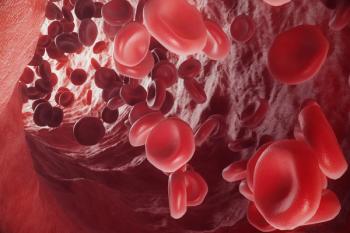
Investigators observed low enrollment of Black patients on CAR T-cell therapy clinical trials that supported FDA decisions in hematologic malignancies, especially in multiple myeloma.

Investigators reported positive topline findings from the phase 3 RATIONALE 306 trial, assessing the first-line combination of tislelizumab and chemotherapy in previously untreated unresectable, locally advanced, recurrent, or metastatic esophageal squamous cell carcinoma.

By analyzing CT scans with artificial intelligence, the development of pancreatic ductal adenocarcinoma may be predicted years before actual diagnosis.
Ursula A. Matulonis, MD, speaks to potential future uses of mirvetuximab soravtansine in ovarian cancer.
David M. O’Malley, MD, spoke about the approval of pembrolizumab for patients with advanced endometrial carcinoma that is microsatellite instability-high or mismatch repair deficient.

Patients with unresectable or metastatic gastric or gastroesophageal junction cancer that is relapsed/refractory following other approved therapies may benefit from treatment with single-agent CMG901, which was granted fast track designation by the FDA.
Patients with chronic graft-vs-host disease who were administered full series of the SARS-CoV-2 vaccine displayed varied immune responses, regardless of baseline characteristics.

Patients with hematologic cancer experienced a low incidence of chronic graft-versus-host disease after receiving a regimen consisting of myeloablative hematopoietic cell transplantation and total body irradiation plus prophylactic post-transplant cyclophosphamide, tacrolimus, and mycophenolate mofetil.

Investigators highlight key findings from an early cost analysis of phase 1/2 trials examining Burton tyrosine kinase inhibitors in patients with relapsed/refractory mantle cell lymphoma.
Sam Klempner, MD, spoke about clinical management and ctDNA for gastrointestinal cancers.