
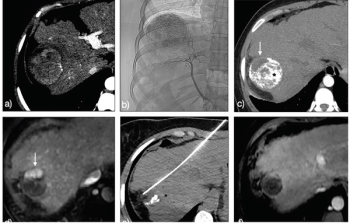
A thought-provoking installment of Clinical Quandaries is presented by Alejandro Gabutti, MD; and Tommaso Cascella, MD, of a 36-year-old patient with hepatitis C virus-related cirrhosis and a subsequent diagnosis of hepatocellular carcinoma.
A thought-provoking installment of Clinical Quandaries is presented by Alejandro Gabutti, MD; and Tommaso Cascella, MD, of a 36-year-old patient with hepatitis C virus-related cirrhosis and a subsequent diagnosis of hepatocellular carcinoma.

Treatment care changed in the face of the COVID-19 pandemic as necessary virtual visits are proving to be more comfortable and safer for many Veteran patients and survivors of cancer.
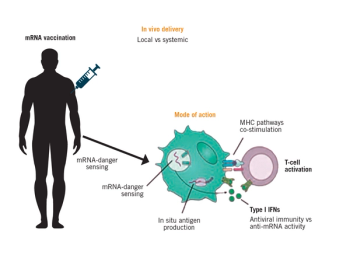
A review of mRNA vaccine technology by ONCOLOGY® editorial board member Mehmet Sitki Copur, MD, FACP, explains the basis for progress in this field and reviews a number of new trials using this technology.
CancerNetwork® spoke with Abdulraheem Yacoub, MD, during the American Association for Cancer Research Annual Meeting 2021 to discuss how predictors of response to therapy may be just as important as the development of new therapies for advancing outcomes in myelofibrosis and myeloproliferative neoplasms.

Advanced practice nurses and dieticians are encouraged to empower patients to improve their lifestyles through diet and exercise in a presentation at the Oncology Nursing Society’s 46th Annual Congress.

Improving patient care may be possible for institutions achieving Disease-Specific Care certifications with certified nurse specialists at the helm.
Data presented at the Oncology Nursing Society’s 46th Annual Congress reiterated positive results from the PROSPER trial with enzalutamide in the treatment of nonmetastatic castration-resistant prostate cancer and the key implications these have for nurses treating men with the disease moving forward.

Based on positive results of the phase 2 FIGHT trial, the FDA has granted the investigation antibody bemarituzumab plus FOLFOX6 breakthrough therapy designation for the treatment of locally advanced or metastatic gastric and gastroesophageal junction adenocarcinoma with FGFFR2b overexpression in the frontline setting.

Rana R. McKay, MD, reflects on a proposal from her colleagues regarding a new model for guiding the treatment of prostate cancer that focuses on a “transitional” disease state.
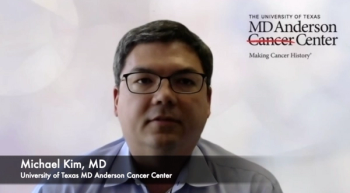
Kim detailed the specifics of his research from the American Association for Cancer Research Annual Meeting 2021 focusing on novel therapies to target mutations and upstream or downstream pathways.

Take a look back at some of the important news and notes from last week in the world of oncology, featuring articles about the virtual AACR Annual Meeting 2021, breast cancer, prostate cancer, and lung cancer.

ONCOLOGY® editorial board member E. David Crawford, MD, and colleagues, propose a new model for guiding the treatment of prostate cancer that focuses on a “transitional state,” which occurs during the interval of progression to metastatic castration-resistant prostate cancer.
Based on results from the EV-301 and EV-201 trials, 2 separate applications for enfortumab vedotin as therapy for certain patients with previously treated metastatic urothelial carcinoma were accepted by the FDA and granted priority review.

Patients treated in a multicenter trial experienced a median progression-free survival of 13.2 months with pembrolizumab versus 8.3 months in those receiving brentuximab vedotin.
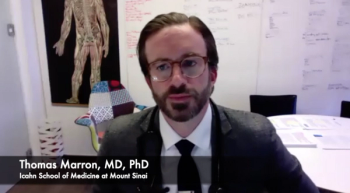
Marron detailed the research process for a phase 1 trial of PGV-001 presented virtually at the American Association for Cancer Research Annual Meeting 2021.

“It’s a time for great hope with breast cancer, given the number of agents being evaluated now.” –Sara A. Hurvitz, MD

CancerNetwork® spoke with Vivek Subbiah, MD, during the virtual American Association for Cancer Research Annual Meeting 2021 to discuss the most important data to come out of the meeting regarding therapy for tumors harboring KRAS mutations.

Twenty percent of patients with resectable hepatocellular carcinoma experienced significant tumor necrosis when treated with neoadjuvant cemiplimab-rwlc, according to data from a phase 2a open label.

In his "Letter to the Readers", co-editor-in-chief of the journal ONCOLOGY Howard S. Hochster, MD, reviews the development of mRNA technology, especially as it applies to vaccines against COVID-19.
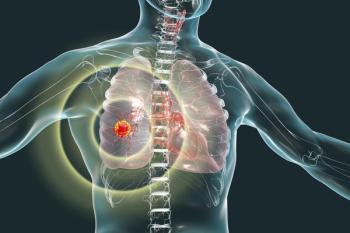
Patients with EGFR T790M-positive non–small cell lung cancer who progressed on prior treatment experienced a clinically meaningful efficacy when treated with D-0316.

The agency approved nivolumab in combination with certain types of chemotherapy for the initial treatment of patients with advanced or metastatic gastric cancer, gastroesophageal junction cancer and esophageal adenocarcinoma, making it the first approved first-line immunotherapy for this patient population.

Darovasertib as monotherapy for the treatment for patients with heavily pretreated metastatic uveal melanoma induced responses and promising rates of overall survival, according to preliminary data from a phase 1/2 trial.

A promising objective response rate and a tolerable safety profile were observed with telisotuzumab vedotin monotherapy to treat patients with previously treated c-Met–positive advanced non–small cell lung cancer.
CancerNetwork® spoke with Matthew D. Galsky, MD, during the American Association for Cancer Research Annual Meeting 2021 to discuss leading data to come out of the meeting and what it means for the future of cancer systemic therapy.
Patients with germline and/or homozygous tumor DNA damage response alterations among male patients with heavily pretreated metastatic castration-resistant prostate cancer were most likely to respond to treatment with the PARP inhibitor talazoparib.
In a phase 1 study of the innate cell engager AFM13, all 4 patients with CD30-positive, relapsed/refractory Hodgkin lymphoma treated with the therapy achieved at least a partial response.
The majority of independently adjudicated interstitial lung disease cases associated with the antibody-drug conjugate were low grade and occurred within the first 12 months of treatment.

A durable clinical benefit was seen from the dual inhibition of the MAPK pathway using BRAF and MEK inhibitors dabrafenib and trametinib, respectively, to treat patients with BRAF V600E mutant low- and high-grade glioma.

Interim analysis of the phase 3 LUNAR trial led to a data monitoring committee recommendation to reduce the trial sample size due to strongly positive results gathered from the current patient population treated with tumor-treating fields.