
Shared insight from expert hematologist-oncologists on the real-world application of teclistamab to improve the management of multiple myeloma.

Your AI-Trained Oncology Knowledge Connection!
Shared insight from expert hematologist-oncologists on the real-world application of teclistamab to improve the management of multiple myeloma.

Closing out their review of the metastatic colorectal cancer treatment paradigm, expert panelists consider how the treatment armamentarium will continue to evolve.

Focused discussion on the FRESCO-2 trial, which analyzed use of fruquitinib in the refractory setting of metastatic colorectal cancer.

The presence of several risk factors—such as age, race and mutation status—for contralateral breast cancer must be considered when making treatment decisions, according to an expert from the Mayo Clinic.
Recent study findings related to risk factors for developing contralateral breast cancer may better influence treatment decisions between patients and physicians, according to a Mayo Clinic expert.
A brief review of common adverse events inherent in the first-line management of advanced renal cell carcinoma and practical advice on how to mitigate treatment toxicity.
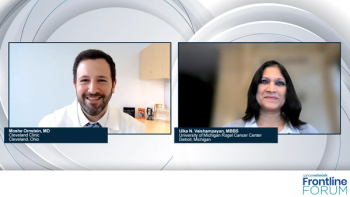
Opening their discussion on the advanced renal cell carcinoma treatment landscape, experts Ulka N. Vaishampayan, MBBS, and Moshe Ornstein, MD, identify cornerstone first-line regimens.
An expert from the Mayo Clinic discusses findings from a population-based study concerning germline genetic mutations as risk factors of contralateral breast cancer.
Thus far, findings from 2 trials show that treatment with bipolar androgen therapy is associated with several benefits in patients with castration-resistant prostate cancer, according to an expert from Sidney Kimmel Comprehensive Cancer Center.

A panel of expert oncologists highlight the use of the tucatinib, trastuzumab and capecitabine regimen that was investigated in the HER2CLIMB trial to manage patients with HER2+ breast cancer and brain metastases.

Expert perspectives on the respective role of radiation therapy to manage brain metastases in the setting of HER2+ breast cancer.
An expert from the Mayo Clinic explains why he and his colleagues are researching risk factors for contralateral breast cancer in carriers of moderate-risk genes such as ATM, CHEK2, and PALB2.
Investigators have observed that treatment with bipolar androgen therapy has suppressed at least one oncogene in patients with castration-resistant prostate cancer who derived a response to therapy.

A broad perspective on the development of BCMA-targeted bispecific antibodies for patients with relapsed/refractory multiple myeloma.

Centering discussion on two clinical cases of patients with relapsed/refractory multiple myeloma, expert panelists highlight the use of BCMA-targeted teclistamab in this setting.
Future research must address ways to improve the prediction of kidney cancer recurrence to better inform patients, says an expert from the Royal Free London NHS Foundation Trust.
Shared insight on the potential role for immunotherapeutic agents in the setting of microsatellite stable metastatic colorectal cancer.

Centering discussion on KRASG12C-mutated metastatic colorectal cancer, panelists highlight recent clinical studies of targeted agents in this subset of disease.
Despite the observed disease-free survival benefit associated with pembrolizumab in high-risk kidney cancer after surgery, the European Association of Urology guidelines maintain a weak recommendation for its use.
Kendra Sweet, MD, discussed several ongoing studies in chronic myeloid leukemia, with some initial results presented at the 2022 American Society of Hematology Annual Meeting and Exposition.
An expert from the University of Texas Southwestern Medical Center questions how providers are currently utilizing stereotactic radiation in the treatment of metastatic kidney cancer.
Patients with kidney cancer should be made aware of trials that have not read out positively in the adjuvant setting, according to an expert from the Royal Free London NHS Foundation Trust.
Kendra Sweet, MD, examined how the data surrounding asciminib in chronic myeloid leukemia will affect the standard of care treatment options.
Kendra Sweet, MD, discussed results of the the phase 2 OPTIC trial, which investigated ponatinib in a group of patients with resistant, chronic phase chronic myeloid leukemia.

Shared consideration on the factors that dictate selection of optimal therapy for patients with HER2+ breast cancer and brain metastases.
Switching to a patient case of brain metastases in HER2+ breast cancer, panelists highlight available therapeutic strategies in this setting.

Following the 2022 ASH Annual Meeting and Exposition, Peter Voorhees, MD; Amrita Krishnan, MD; and Josh Richter, MD, participated in a rapid-fire question-and-answer 2-Minute Drill program, hosted by CancerNetwork®. Topics ranged from most exciting data in blood cancer, as well as what research needs more follow-up.

The panel reviews the treatment approaches for HER2+ mBC with active brain metastases and the factors to consider during treatment decision-making.
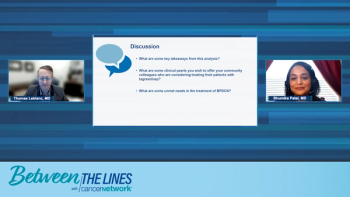
Centering discussion on a recent study, experts Thomas Leblanc, MD, and Bhumika Patel, MD, reflect on long-term data with tagraxofusp in BPDCN.
Expert hematologist-oncologists share their perspective on the broad diagnosis and management of blastic plasmacytoid dendritic cell neoplasm (BPDCN).