

CAR T-cell therapies or other agents that affect the immune system in the long term may be important to keep in mind for the management of SCLC.
CAR T-cell therapies or other agents that affect the immune system in the long term may be important to keep in mind for the management of SCLC.
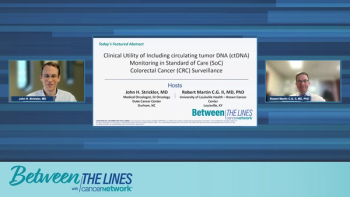
Experts emphasize that sustained ctDNA negativity beyond 18 to 24 months enables safely extending surveillance intervals, easing patient burden while improving personalized colorectal cancer follow-up despite ongoing challenges with interpretation and insurance coverage.
Panelists discuss how the COCOON trial design represents a straightforward approach using standard practice medications, though implementation challenges include patient compliance with the complex 4-drug regimen requiring significant education and support staff involvement.
Panelists discuss how the COCOON study randomly assigned patients to either standard care or proactive dermatologic management using prophylactic antibiotics, topical treatments, skin moisturization, and anticoagulation to reduce grade 2 or higher dermatologic adverse events.
Experts discuss how integrating ctDNA testing into standard colorectal cancer surveillance enhances early recurrence detection, improves eligibility for curative metastasis-directed therapies, and empowers more personalized, timely treatment decisions, ultimately improving both clinical outcomes and patient confidence.
Marc S. Raab, MD, PhD, details how agents such as carfilzomib may play a role in treatment after progression on teclistamab-based induction therapy.

Genetic testing information can be used to risk-stratify ovarian cancer survivors for breast cancer, particularly those with BRCA1 or BRCA2 mutations.
Patients with mantle cell lymphoma who are older and have less fitness may be eligible for regimens that include bendamustine/rituximab.
Employing patient-reported outcomes may help include those with small cell lung cancer in the shared decision-making process.
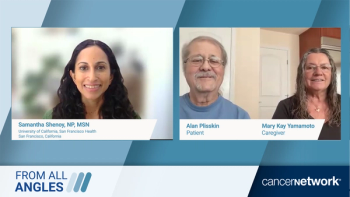
Panelists discuss how caregivers can navigate the initial shock of a myeloma diagnosis by seeking reliable information from trusted medical websites, connecting with local support groups, and accessing resources from organizations such as the International Myeloma Foundation (IMF), Multiple Myeloma Research Foundation (MMRF), and patient advocacy groups.
Panelists discuss how Alan Plisskin's multiple myeloma diagnosis began with severe back and hip pain, progressed through life-threatening complications, including seizures and vocal cord paralysis, and revealed extensive lytic lesions throughout his body that required immediate intensive treatment.
Genetic testing for ovarian cancer may help inform treatment decisions for patients with advanced disease, particularly regarding PARP inhibitor use.

Panelists discuss how the long-term COMMANDS data reveal impressive survival benefits and durable transfusion independence responses, particularly in patients with SF3B1 mutations, while debating whether the observed survival advantage stems from transfusion independence alone or represents true disease modification through broader systemic effects beyond just bone marrow changes.
Panelists discuss how the COMMANDS phase 3 trial data demonstrate long-term efficacy and safety benefits of a newer drug compared with ESA in patients with low-risk myelodysplastic syndromes (MDS), with improved 5-year overall survival rates (54% vs 42%) and sustained transfusion independence lasting over 6 months, while maintaining a well-tolerated safety profile with no new safety signals identified in extended follow-up.

Panelists discuss how toxicity considerations significantly influence treatment selection given multiple effective options, requiring personalized discussions about patient goals, comorbidities, and tolerance for different adverse effect profiles between immune therapy doublets and immunotherapy-tyrosine kinase inhibitor (IO-TKI) combinations.
Panelists discuss how favorable-risk patients may be candidates for active surveillance if their disease is indolent, while treatment decisions should consider the long-term survival benefits of ipilimumab plus nivolumab vs the higher response rates of immunotherapy-tyrosine kinase inhibitor (IO-TKI) combinations, with pseudoprogression being relatively rare in clinical practice.
In the SWOG S2409 PRISM trial, over 800 patients with small cell lung cancer will receive different treatment regimens based on their disease subtype.
Panelists discuss the nuanced approach to adverse effect management in non–clear cell renal cell carcinoma (nccRCC), highlighting a shift from aggressive toxicity management in the first-line setting aimed at prolonging survival to a patient-centered focus on quality of life and tolerability in later lines, emphasizing open communication and long-term treatment endurance.
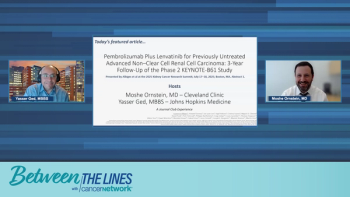
Panelists discuss how the KEYNOTE-B61 study population truly represents real-world clinical practice, with papillary renal cell carcinoma (RCC) being the most common subtype followed by chromophobe, unclassified, and translocation RCC as the top 4 subtypes typically encountered in clinic, while rarer variants comprise only 2% to 3% of non–clear cell cases.

Sally Werner, RN, BSN, MSHA, highlights the importance of using education, navigation programs, and caregiver support to help during CAR T-Cell Therapy treatment.
Panelists discuss the complex management of papillary renal cell carcinoma (RCC) after first-line progression, focusing on balancing effective second-line therapies like lenvatinib plus pembrolizumab with quality of life, the role of multidisciplinary care and surgery, the importance of close monitoring, and the critical need for clinical trial enrollment and genomic profiling to guide personalized treatment.
Panelists discuss how the KEYNOTE-B61 phase 2 single-arm study represents the largest prospective trial evaluating pembrolizumab plus lenvatinib as first-line treatment for advanced non–clear cell renal cell carcinoma (RCC), enrolling 158 patients across all major histological subtypes with an impressive median follow-up of 41.6 months and updated 3-year survival data.
The safety profile of teclistamab-based therapy in the MajesTEC-5 trial was expected based on the known compounds employed in each combination.
It may be critical to sequence BCL-2 inhibitors with BTK inhibitors for patients with mantle cell lymphoma in the relapsed/refractory setting.
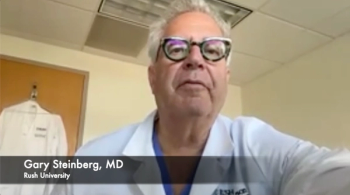
Gary Steinberg, MD, discusses the clinical significance of the new FDA-approved gemcitabine intravesical system for BCG-unresponsive NMIBC.
Panelists discuss first-line treatment strategies for metastatic non–clear cell renal cell carcinoma, highlighting the shift from broad, subtype-agnostic approaches to histology-specific and biomarker-driven therapies, including evolving combinations of TKIs and immunotherapy tailored to tumor biology.
Panelists discuss first-line therapy for non–clear cell renal cell carcinoma, emphasizing its diverse histologies, the challenges posed by limited clinical trial data, and the importance of molecular diagnostics and multidisciplinary strategies to guide personalized treatment.
Attitudes toward the use of AI in health care were split 50/50, according to a recent survey conducted by the Cancer Support Community.
Reducing the manufacturing time of CAR T-cell therapy may have a big impact on the treatment of patients with mantle cell lymphoma.
Sally Werner, RN, BSN, MSHA, discusses the crucial role of psychosocial oncology in cancer care, including how clinicians and administrators can advocate for these vital services.