
Panelists discuss how talquetamab’s unique skin and taste toxicities are manageable through dose modifications and supportive care, with IVIG prophylaxis being crucial for BCMA-targeted but not necessarily GPRC5D-targeted therapies.
Panelists discuss how talquetamab’s unique skin and taste toxicities are manageable through dose modifications and supportive care, with IVIG prophylaxis being crucial for BCMA-targeted but not necessarily GPRC5D-targeted therapies.
Better defining which patients with GI cancers are preferred candidates for adoptive cellular therapies may help optimize outcomes.
Panelists discuss how the LAURA trial demonstrated dramatic progression-free survival improvements with adjuvant osimertinib for EGFR-mutated stage III lung cancer, while the SINDAS, NORTHSTAR, and LONESTAR trials explore whether upfront local consolidative radiation therapy to oligometastatic sites can improve outcomes in both EGFR-mutated and nonmutated metastatic disease.
A consolidated database may allow providers to access information on a patient’s prior treatments and genetic abnormalities all in 1 place.
Experts at Yale Cancer Center highlight ongoing trials intended to improve outcomes across mantle cell lymphoma, T-cell lymphoma, and other populations.
Experts discuss the promising results of a SEQUOIA trial substudy evaluating Bruton tyrosine kinase (BTK) inhibitor plus venetoclax combination therapy in patients with chronic lymphocytic leukemia (CLL)—including those with TP53 mutations or deletion 17p—highlighting high progression-free survival (PFS), deep minimal residual disease (MRD)-driven remissions, and strong safety outcomes that support this doublet as a flexible, effective frontline option for high-risk disease.

Yale’s COPPER Center aims to address disparities and out-of-pocket costs for patients, thereby improving the delivery of complex cancer treatment.
Panelists discuss how the timing of treatment initiation in lower-risk MDS (LR-MDS) should be approached. Team Whataburger advocates for earlier intervention based on symptoms and hemoglobin levels around 9 to 10 g/dL (citing European practices and the upcoming ULTIMATE study), while Team In-and-Out argues for delayed treatment until transfusion dependence develops to maximize the therapeutic lifespan of drugs such as luspatercept, given that symptomatically reported anemia can be subjective in this older population with multiple comorbidities.
Panelists discuss how to manage luspatercept “super responders” with hemoglobin levels above 12 g/dL, with Team Whataburger advocating for dose reduction to maintain stable responses and avoid hemoglobin fluctuations that disrupt patients’ quality of life, while Team In-and-Out argues for holding doses due to lack of safety data at very high hemoglobin levels and cost considerations. However, both teams acknowledge the need for individualized approaches and question whether current hemoglobin ceiling limits are appropriate for patients with MDS.
A study presented at ASTRO 2025 evaluated the feasibility of using a unified cancer database to consolidate information gathered across 14 institutions.
Non-Hodgkin lymphoma and other indolent forms of disease may require sequencing new treatments for years or decades, said Scott Huntington, MD, MPH, MSc.
Fixed-duration therapy may be more suitable for younger patients, while continuous therapy may benefit those who are older with more comorbidities.
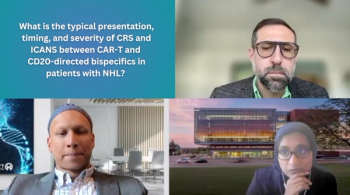
CRS and ICANS may affect patients with lymphoma regardless of whether they receive CAR T or bispecific antibodies, although severity and timing will vary.
Co-hosts Kristie L. Kahl and Andrew Svonavec highlight what to look forward to at the 2025 ESMO Annual Congress, from hot topics and emerging trends to travel recommendations.
Andrzej Jakubowiak, MD, PhD, prioritizes KRd-based regimens for the treatment of high-risk newly diagnosed disease in the posttransplant setting.
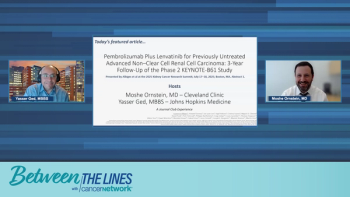
Panelists discuss how pembrolizumab plus lenvatinib has established a new benchmark and become the preferred first-line treatment option for more than 95% of patients with non–clear cell renal cell carcinoma (RCC), according to national guidelines, demonstrating activity across all major histological subtypes despite the heterogeneous nature of these diseases, while acknowledging that specific rare histologies may still require tailored approaches.
A new clinical trial aims to offer a novel allogenic CAR T-cell product for patients with lymphoma closer to home.
Although a similar proportion achieved MRD negativity at the 10 to the –6 power, not enough studies have analyzed MRD at this level for multiple myeloma.
Determining the molecular characteristics of one’s disease may influence the therapy employed in the first line as well as subsequent settings.
Unique toxicities presented with talquetamab tend to get progressively better as the treatment course continues, according to Prerna Mewawalla, MD.
Panelists discuss the rapidly evolving landscape of non–clear cell renal cell carcinoma, emphasizing the shift toward subtype-specific clinical trials, the critical role of next-generation sequencing and germline testing in guiding personalized treatment, and the importance of ongoing research collaborations to advance precision medicine and improve patient outcomes.
Panelists discuss the complexities of managing metastatic chromophobe renal cell carcinoma in a high-risk patient, emphasizing the role of molecular testing, limited but evolving therapeutic options including VEGF and mTOR inhibitors and immunotherapy, and the urgent need for subtype-specific clinical trials to guide personalized care.
Panelists discuss the case of a metastatic papillary kidney cancer patient, emphasizing the importance of balancing efficacy and tolerability in frontline therapy selection, incorporating molecular profiling, and considering immune-based combinations alongside targeted agents within a personalized, multidisciplinary care framework.
Modification of REMS programs may help patients travel back to community practices sooner, according to Suman Kambhampati, MD.
Kelly Dyckman, MSW, LCSW, offers advice for caregivers of patients with cancer, emphasizing the need for proactive self-care and recognizing burnout.

Dr. Husain discusses how anticipating resistance mechanisms and tailoring post-progression strategies based on initial therapy are key to optimizing sequencing in EGFR-mutant NSCLC.
Dr. Husain discusses how selecting between FLAURA-2, MARIPOSA, and other frontline regimens requires balancing efficacy, safety, and sequencing considerations to deliver the most personalized care in EGFR-mutant NSCLC.
Dr. Husain discusses how updated MARIPOSA and FLAURA-2 data highlight the growing role of combination regimens in improving both systemic and CNS outcomes for patients with EGFR-mutant NSCLC.
Symposiums and regional meetings may expand knowledge of how to adopt novel CAR T-cell therapies and bispecific antibodies, said Suman Kambhampati, MD.
Panelists discuss how health care providers and patients should understand that talquetamab's unique adverse effects are temporary and resolve over time, even while continuing treatment, emphasizing the drug's excellent efficacy and the importance of removing stigma around its manageable toxicity profile.