
Current findings from the phase 1/2 CaDAnCe-101 trial show no predictive factors of improved responses with BGB-16673 in patients with CLL or SLL.
Current findings from the phase 1/2 CaDAnCe-101 trial show no predictive factors of improved responses with BGB-16673 in patients with CLL or SLL.
Breast oncologist Jade E. Jones, MD, says she tries to send patients with HR-positive BRCA-mutant TNBC to clinical trials that use PARP inhibitors.

According to Benjamin Golas, MD, PIPAC is emerging as minimally invasive laparoscopic approach for patients with peritoneal carcinomatosis.

Panelists discuss how talquetamab demonstrates remarkable efficacy in patients previously exposed to T-cell redirecting (TCR) therapies, with response rates and duration comparable to treatment-naive patients.
Following progression on a CDK4/6 inhibitor, ascertaining the endocrine sensitivity of HR-positive/HER2-negative disease may inform sequential treatment.
Panelists discuss how the extended follow-up data show unprecedented overall survival outcomes, with the every-2-week dosing appearing more tolerable and leading to better long-term outcomes than weekly dosing.
Multiple mutations and gene alterations make targeted therapy development more difficult for patients with AML, according to Amir Fathi, MD.

Manojkumar Bupathi, MD, MS; and Benjamin Garmezy, MD, discuss abstracts from the 2025 ASCO Annual Meeting that may affect genitourinary cancer care.
T-DXd improved progression-free survival over standard chemotherapy among patients with HR-positive breast cancer/triple-negative breast cancer in DESTINY-Breast04.

Panelists discussed how maintenance therapy in HER2-positive metastatic breast cancer is evolving beyond traditional dual antibody approaches, with emerging strategies incorporating targeted agents like tucatinib and endocrine therapy to personalize care and potentially delay central nervous system progression.
Panelists discussed how evolving strategies in HER2-positive metastatic breast cancer are shifting toward more personalized maintenance approaches, including the integration of CDK4/6 inhibitors and endocrine therapy, with growing interest in chemotherapy-free options for select patients.

According to Ronan J. Kelly, MD, MBA, deciding whether to give nivolumab- or durvalumab-based regimens in gastric cancers may rely on a patient’s frailty.

**Sequencing and Patient Readiness for ADC Therapy:** Panelists discuss how ADC therapy approval has reshaped ovarian cancer treatment sequencing by prioritizing these agents over traditional regimens in platinum-resistant patients with high folate receptor alpha expression, while emphasizing the critical need for patient education about unpredictable novel side effects and continuous monitoring based on patient-reported symptoms.
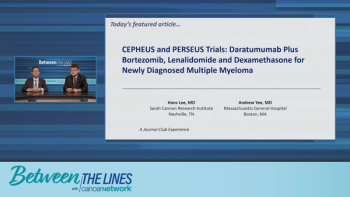
Panelists discuss how recent data support the use of quadruplet regimens—including anti-CD38 antibodies—even in older or moderately frail patients with newly diagnosed multiple myeloma, shifting treatment decisions from transplant eligibility to functional status and depth of response.
Panelists discuss how subcutaneous anti-CD38 monoclonal antibodies are reshaping frontline multiple myeloma treatment by improving efficacy, tolerability, and patient convenience across both transplant-eligible and ineligible populations.
Panelists discuss how the rapidly expanding ovarian cancer ADC pipeline offers promising therapeutic options with diverse payloads targeting folate receptor alpha and HER2, providing sequencing opportunities and personalized treatment approaches despite varying toxicity profiles.
More follow-up data will better elucidate the impact of frontline use of hypomethylating agents in patients with myelodysplastic syndromes.
Five-year follow-up revealed that patients treated with nivolumab vs placebo in the phase 3 CheckMate 577 trial experienced a “doubling” of survival.
Patients treated with nivolumab in the phase 3 CheckMate 577 trial were less likely to experience progression-related treatment discontinuation vs placebo.
Panelists discuss how talquetamab targets GPRC5D, which is heavily expressed on malignant plasma cells but not normal B cells, potentially explaining lower infection rates compared with B-cell maturation antigen (BCMA)–targeted therapies.
Panelists discuss how emerging advances in melanoma treatment include next-generation tumor-infiltrating lymphocyte therapy, oncolytic immunotherapy, bispecific antibodies, cancer vaccines, and neoadjuvant approaches that may allow de-escalation of both surgery and systemic therapy while improving treatment-free survival.
Panelists discuss the unmet need for effective therapies in early-relapse multiple myeloma, where patients have exhausted standard treatments but do not yet qualify for bispecific therapies or CAR T cells.
Panelists discuss how sequencing immunotherapy combinations strategically can maximize patient outcomes, noting that ipilimumab-nivolumab may work well after progression on relatlimab-nivolumab (an approximately 27%-30% response rate), while the reverse sequence is less effective (an approximately 12% response rate).
Considering which non–muscle-invasive bladder cancer cases may be cured by surgery alone may help mitigate overtreatment in this patient group.
Event-free survival benefit was observed among BCG-naive patients with carcinoma in situ undergoing treatment with sasanlimab plus BCG.

Tetiana Skrypets, MD, highlighted that older adults with PTCL may be treated as younger adults if they pass the geriatric assessment.

Panelists discuss how effective management of cytokine release syndrome and immune effector cell–associated neurotoxicity syndrome in complex extensive-stage small cell lung cancer (ES-SCLC) cases treated with tarlatamab enables patients to continue therapy and achieve meaningful clinical benefit despite early toxicities.
Panelists discuss how best practices for transitioning from inpatient to outpatient care involve clear communication, regular monitoring, and adjusted visit frequencies, while addressing challenges such as care coordination and patient adherence to follow-up plans.
Panelists discuss how future research priorities for tarlatamab focus on optimizing administration, improving toxicity management, and enhancing patient selection, with an emphasis on minimizing adverse events while maximizing efficacy and evaluating long-term safety.

Data from a study shared at the 2025 ASCO Annual Meeting showed that a microRNA-based model was able to predict irAEs in various cancers for those on anti–PD-1 therapy.