
Opinion|Videos|August 28, 2026
CELMoD Mechanism and Differentiation From IMiDs in Multiple Myeloma
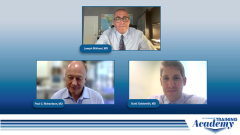
Dr. Mikhael begins the scientific foundation by asking Dr. Richardson to define CELMoDs and explain how they engage the cereblon E3 ubiquitin ligase complex to promote targeted degradation of Ikaros and Aiolos, key transcription factors involved in myeloma-cell biology.
Advertisement
Episodes in this series
Dr. Mikhael begins the scientific foundation by asking Dr. Richardson to define CELMoDs and explain how they engage the cereblon E3 ubiquitin ligase complex to promote targeted degradation of Ikaros and Aiolos, key transcription factors involved in myeloma-cell biology. Dr. Richardson contrasts CELMoDs with established immunomodulatory drugs (IMiDs), including lenalidomide and pomalidomide, emphasizing differences in molecular design and cereblon engagement. He describes how more pronounced engagement of the cereblon complex can result in deeper degradation of these substrates and discusses the potential relationship between this activity and antimyeloma effects, including activity observed in disease resistant to prior IMiD therapy. The discussion also touches on immune-mediated effects and the concept of on-target neutropenia associated with CELMoD activity. Together, the faculty establish the mechanistic rationale for considering CELMoDs as a next-generation class in multiple myeloma, while distinguishing their molecular properties from those of established IMiDs.
Advertisement
Related to this article

Robot-assisted radical hysterectomy reduced mostly low-grade intraoperative complications vs open surgery in early-stage cervical cancer.

Ralph V. Boccia, MD, FACP, explained why CAR T-cell therapy followed by bispecific antibodies may be the preferred sequence at first relapse in multiple myeloma.

The NCCN published its first guidelines for pediatric bone sarcoma, centering on Ewing sarcoma and other undifferentiated round cell sarcomas in youth for pediatric patients.
Investigators of the phase 3 ACTION-1 trial will continue to follow up with patients to assess overall survival outcomes with RYZ101.
Ralph V. Boccia, MD, FACP, details remote monitoring, ICE scoring, CRS prophylaxis, and IVIG strategies for patients receiving bispecifics.
An expert panel discusses the case for de-escalating antibiotic therapy for pediatric patients who undergo hematopoietic cell transplantation.
Ralph V. Boccia, MD, FACP, discusses step-up dosing workflows, REMS, staff training, caregivers, and hospital partnerships for bispecifics.
Ralph V. Boccia, MD, FACP, discusses CAR T and bispecific sequencing, fixed-duration therapy, MRD, and bispecifics in AL amyloidosis.
Advertisement
Advertisement
Trending on CancerNetwork
1
Larger Prostates Showed Post-Radiotherapy Urinary Symptom Normalization
2
Sequencing Bispecifics and CAR T-Cell Therapy in Myeloma and AL Amyloidosis
3
RYZ101 Improves Progression-Free Survival in Previously Treated GEP-NETs
4
Why CAR T-Cell Therapy Before Bispecifics May Be the Ideal Multiple Myeloma Sequence
5