Allen Khodab, MD discussed how patients with larger prostates had reduced IPSS scores that normalized to the same level as those with normal-sized glands.
Phase 2 PFLT-PC data revealed no significant disease was seen in 84% of patients treated with cooled laser focal therapy for prostate cancer at 3 months.
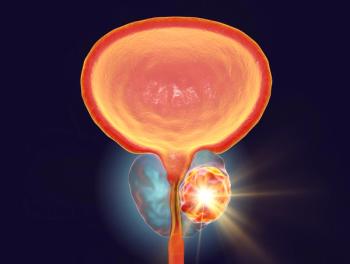
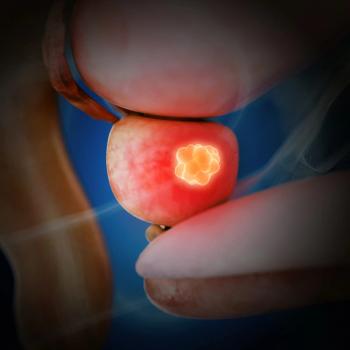
Early outcomes from the phase 2 ProFocal Laser Therapy for Prostate Tissue Ablation (PFLT-PC) trial evaluating ProFocal—a cooled laser focal therapy device—in patients with localized prostate cancer demonstrated promising local disease control and a favorable safety profile, according to findings from a prospective interventional study published in BJU International.
In the trial, treatment with the cooled laser therapy resulted in 84% of enrolled patients having no clinically significant prostate cancer, defined by an International Society of Urological Pathology (ISUP) score of less than 2, on in-field biopsy results 3 months after the procedure. Additionally, 77% of patients had no ISUP score of 2 or greater in any of their posttreatment biopsy results.
Regarding function, a 4.5% decrease in urinary function was found based on Expanded Prostate Cancer Index Composite (EPIC) urinary domains (P = .03), but there was no change in the International Prostate Symptom Score. No significant differences in bowel functional or quality-of-life outcomes were observed. Furthermore, 12% of patients experienced erectile dysfunction as an adverse effect (AE) of treatment and a mean reduction of 15% was observed in Sexual Health Inventory for Men scores (P < .001) and EPIC sexual domain scores (P < .001).
“The PFLT-PC trial demonstrates the safety and efficacy of [prostate cancer] treatment with the [ProFocal] device. Our study showed that [cooled laser focal therapy] provides similar oncological outcomes to existing literature on other [focal therapy] devices but with an improved safety profile with no fistulae and low rates of incontinence,” Jonathan Kam, MD, FRACS, urologist at Nepean Hospital in Kingswood, Australia, and Sydney Medical School in Australia, wrote in the publication with study coinvestigators. “Compared [with] previous studies on [robot-assisted radical prostatectomy, cooled laser focal therapy] has lower rates of incontinence and erectile dysfunction, but long-term follow-up is required to assess the long-term oncological and functional outcomes in patients treated with [cooled laser focal therapy].”
The single-center, open-label PFLT-PC trial enrolled 100 patients with prostate cancer who were eligible for focal therapy. Further inclusion criteria included a prostate-specific antigen (PSA) level of 15 ng/mL or less, clinical stage T2c disease or lower, ISUP grade 2 or 3 prostate adenocarcinoma, and at least 2 suspicious tumor regions with no evidence of extracapsular extension.
The median patient age was 66 years (IQR, 60-72), the median PSA level was 5.9 ng/mL (IQR, 3.9-7.6), and the median lesion volume was 0.84 mL (IQR, 0.57-1.2). Additionally, the median number of prostate biopsy cores taken was 26 (IQR, 21-34) and the median number of pretreatment cores within the target MRI area was 3 (IQR, 2-4). Most patients had ISUP grade 2 disease (78%), tumors on the posterior axial plane (64%), and tumors on the middle sagittal plane (67%).
The primary end point was the adequacy of tumor ablation. Safety end points included outcomes of functional and quality-of-life measures.
Safety data from the PFLT-PC trial indicated that the cooled laser focal therapy was well tolerated, with low rates of incontinence (1%) reported in the first 3 months after therapy. The most common AEs included hematuria (14%), erectile dysfunction (12%), and voiding dysfunction (11%). No deaths were observed in the trial, and 19 patients had indwelling catheters placed following the procedure, primarily as a precautionary measure, due to hematuria and retention in 1% and 2% of patients, respectively.
Kam J, Hanna B, Jackson S, et al. Focal therapy using a novel cooled laser device for prostate cancer: early trial results. BJU Int. Published January 28, 2026. doi:10.1111/bju.70150