

Opinion|Videos|January 5, 2026
Counseling Patients on PCR, Residual Disease, and the Role of Adjuvant Therapy After DFLOT
Oncologists discuss the significance of PCR and MPR rates in patient counseling, emphasizing treatment benefits and survival outcomes.
Advertisement
Episodes in this series

This segment focuses on how pathologic complete response, major response, and residual nodal disease inform postoperative counseling and decisions about completing a full year of adjuvant immunotherapy after DFLOT. The panel explains that PCR is an encouraging milestone that can support discussions about prognosis and may help guide decisions when patients experience significant toxicity. Even so, PCR is not a guarantee of long term disease control, and patients still require structured surveillance. The conversation then turns to the opposite scenario, when residual nodal disease remains after neoadjuvant therapy. The panel notes that node positive status after treatment is strongly associated with poorer outcomes, which is why clinicians often recommend completing the full planned course of adjuvant therapy whenever feasible. The discussion also highlights the growing interest in integrating tools such as ctDNA, although access varies. The segment concludes with the importance of accurate staging, including staging laparoscopy for appropriate patients, and summarizes key takeaways that support the emerging practice model for DFLOT should regulatory approval occur.
Advertisement
Related to this article
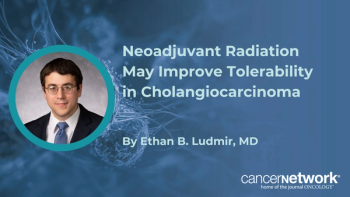
Ethan B. Ludmir, MD, explains the rationale for moving radiation into the neoadjuvant setting for borderline resectable cholangiocarcinoma.

An analysis of the BENEFIT trial supports isatuximab plus bortezomib, lenalidomide, and dexamethasone as a new standard of care in transplant-ineligible NDMM.

C. Ola Landgren, MD, PhD, discusses how MRD-driven strategies may eliminate the transplant-eligible vs transplant-ineligible framework in multiple myeloma.

Hans C. Lee, MD, discussed how community oncologists with limited access to MRD testing can think about the new IMS/IMWG definition of cure in myeloma.
A patient-reported outcomes analysis from the phase 3 IRAKLIA trial showed higher satisfaction with subcutaneous isatuximab via on-body injector.

The phase 3 EXCALIBER-RRMM trial supports iberdomide plus daratumumab and dexamethasone as a new standard of care in relapsed/refractory multiple myeloma.

C. Ola Landgren, MD, PhD, discusses disparities in myeloma care access between academic and community practices and how his center works to bridge that gap.

Hans C. Lee, MD, discussed how he monitors patients with multiple myeloma who achieve deep, sustained MRD negativity after coming off therapy.
Advertisement
Advertisement
Trending on CancerNetwork
1
Acting on a HER2 Result and Navigating Access to Therapy
2
The Case for Frontline Zongertinib in HER2-Mutant NSCLC
3
Emerging Endocrine Doublets and Serial ESR1 Testing in HR+/HER2− mBC
4
Patient-Centered Treatment Transitions in HR+/HER2− mBC
5