Opinion|Videos|December 23, 2024
EGFR-Targeted Therapies in NSCLC: IV vs Subcutaneous Administration
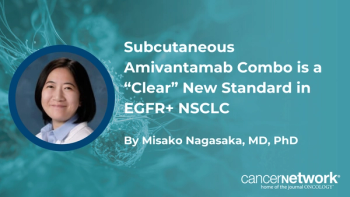
Panelists discuss how amivantamab’s dual targeting of EGFR and MET may address resistance mechanisms and unmet needs in EGFR-mutated advanced non–small cell lung cancer (NSCLC), with Dr Scott highlighting its potential clinical benefits, while Squires shares insights on managing the adverse event profile and strategies for managing adverse effects in patients receiving intravenous (IV) amivantamab.
Advertisement
Video content above is prompted by the following:
- Dr Scott addresses: How does amivantamab’s dual targeting of EGFR and MET potentially address resistance mechanisms and unmet needs in EGFR-mutated NSCLC?
- In your clinical experience, what makes a patient an ideal candidate for amivantamab?
- Dr Scott asks Squires: Based on your experience with patients receiving IV amivantamab, can you describe the typical adverse event profile and your strategies for managing these adverse effects?
Newsletter
Stay up to date on recent advances in the multidisciplinary approach to cancer.
Advertisement
Latest CME
Advertisement
Advertisement
Trending on CancerNetwork
1
FDA Approves Zenocutuzumab in NRG1+ Cholangiocarcinoma Post Systemic Therapy
2
FDA Clears AI Stratification Tool in HR+/HER2– Invasive Breast Cancer
3
Daraxonrasib Shows Anti-Tumor Activity in Pretreated RAS+ Pancreatic Cancer
4
TIP125 ReDiscover-2, a Phase 3 Study of Zovegalisib (RLY-2608) + Fulvestrant Versus Capivasertib + Fulvestrant as Treatment for Locally Advanced or Metastatic PIK3CA-Mutant HR+/ HER2- Breast Cancer Following Recurrence or Progression on or After Treatment With a CDK4/6 Inhibitor (Trial in Progress)
5