William A. Hall, MD, discussed the SOFT Preop study of preoperative SBRT vs conventional chemoradiation for pancreatic adenocarcinoma.
According to Nicholas Hornstein, MD, PhD, daraxonrasib is “the first ever effective systemic therapy" for pancreatic cancer that is not chemotherapy.
Since the
From that first reporting on April 13, exactly 135 days passed before August 26, 2026, when the FDA
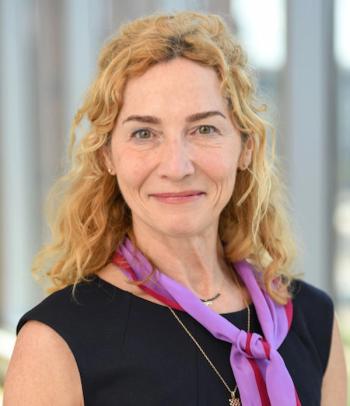
CancerNetwork® spoke with Nicholas Hornstein, MD, PhD, a gastrointestinal oncologist at Northwell Health and a 2024 ASCO Young Investigator Award winner, shortly after the approval to discuss the significance of the moment, what the FDA’s indication means, and what’s next for daraxonrasib and the pancreatic cancer space.
Hornstein: The first thing to say is that we [took] what was called an “undruggable” target for many, many years, and now we have an effective drug against it. We've had drugs against KRAS in the past that target specific isoforms—that is, one mutation on one gene. What the difference is now is that daraxonrasib was created in an effort to move away from that and toward an effective therapy for patients with KRAS-mutated disease, regardless of the specific mutation. That moves us from being able to treat a few percentages of patients with [for example] G12C mutations, to treating patients in general with KRAS, NRAS, and just RAS in general mutations. That’s a huge step forward. We’ve also now seen the first ever effective systemic therapy for pancreas cancer that is not a chemotherapy. Overall, some major advances in the field, and this is something that is very exciting.
It’s worth focusing on exactly what this approval was for. First off, pancreas cancer—this is what the study was in, and where we knew it was going to be coming. I know Revolution Medicines and some treating oncologists hoped that there would be an approval in a RAS-agnostic format. I just told you that this is a drug that targets RAS, and one might expect, “Oh well, the approval includes RAS.” Not true. You don’t need to have a RAS mutation, according to this approval, to get this drug. That is in line with the inclusion criteria of the original study that led to this approval, and it’s in part because at least 90% of pancreas cancers will have a RAS pathway mutation, and a lot of people think that in the remaining 10%, potentially [RAS] is still there—we just haven’t found it. This approval is for all comers with pancreas cancer. In the second line, it’s clear-cut. In the first line, if the treating oncologist feels like a patient in front of [them] is not a candidate for systemic therapy, this is also on the table. Offhand, I can say there are a number of patients who come into clinic with pancreas cancer that may be malnourished, deconditioned, and just not up for systemic chemotherapy. Well, now we have an option for them, and that in and of itself is something amazing.
We’re already having discussions about our clinical trial portfolio at Northwell Health, where we’re saying, you know, “We have these trials in the second-line setting. Potentially, we need to change [them] because the second line has already changed.” Overnight, the standard of care is now to move to KRAS-targeted therapy. There are some trials in that space, potentially combining with chemotherapy and other things. All I can say is that the landscape is shifting very, very quickly, and that's a huge change for a disease where we have not seen major advances. We’ve seen chemotherapy repackaged in different forms, like changing the toxicity and slightly changing the efficacy, but we haven’t seen this kind of movement. I expect both in pancreatic cancer as well as other RAS-driven diseases like colon cancer, we’re going to see things shift very quickly.
This approval has been out for less than 12 hours, and I already have half a dozen emails in my inbox from patients with colorectal cancer who are asking, “Hey, I know I have a KRAS mutation. Can I get this drug? It’s approved now. Can we try to get it?” There is still a lot of data we’re waiting for to look at how effective this is. We know that RAS pathway mutations are not one-size-fits-all. It depends on the cancer you have. Sometimes they’re a little bit more mercurial. Sometimes we need to add other drugs to ensure that we get the effect we want. For example, in KRAS G12C-mutated colon cancer, we have to add a second drug targeting EGFR. There are still things we don’t know. There are still things that we need to find out in other disease spaces, but this drug is coming to the market. I expect we’re going to see a number of treating oncologists and patients looking to this as an answer for the disease, especially if they’ve progressed on prior lines of therapy.
The next step is questioning how we can continue to target the RAS pathway. How can we take allele specific—G12C and G12D, and so on and so forth—and either combine it with chemotherapy or combine it with other agents? Revolution Medicines has an entire pipeline already built up to look at resistance mechanisms to try to cut things off at the pass, as it were. I expect that we’re going to continue to see major advances based on this technology. The space is going to continue to evolve, and the hope is that even though this drug promises less than a year, frankly, of additional time for patients with metastatic pancreas cancer, that we’re going to be able to take that advance and increase it. Because when you look back at the history of oncology, there are very few drugs or pathways where, when one of the first agents comes out, it truly is a game-changer. Using the knowledge we gain, we can move forward as a field, and we can help patients move from staving off disease to curing it. That’s the goal here.
In terms of allele-specific agents, there are a lot of companies in addition to Revolution Medicines involved. Verastem and Incyte—we could go on and on and list many companies, but those 2 have very good allele-specific drugs. There are others in development. There are companies looking beyond just targeted agents and are developing cancer vaccines as a strategy. We all just saw some data come out from Merck and Moderna regarding their
In this scenario, this is relatively clear-cut. Not all drugs and trials are as clear-cut, and sometimes you do need the time to review, to ask questions, and to go into the details of how a clinical trial was conducted and the outcomes, because the devil is in the details, and trials have an exceptional number of details. Time will tell how the voucher program will expand. Clearly, the FDA wanted a win. This is an easy win for them, and they’ve done the right thing in this scenario. We’ll need to see how the voucher program is applied as more come forward, and we have more examples of this pathway.
It’s been a huge year, but it makes us think of the progress we’ve made and the progress we need to continue to make. I still see patients every day in clinic who are not doing well, who are dying from their disease, and advances like this approval are a strong motivator to acknowledge that we are doing better and we're continuing to move forward.