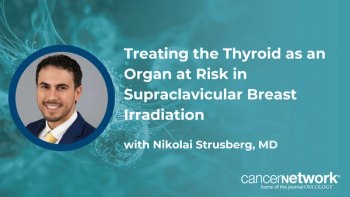
Nikolai Strusberg, MD, discussed other toxicities of proton vs photon breast RT, practice implications, and next steps in capsular contracture research.
Paul Nathan, MBBS, PhD, FRCP, highlighted the favorable 5-year OS results of tebentafusp for patients with HLA-A*02:01–positive uveal melanoma.
The 5-year survival data from the
Paul Nathan, MBBS, PhD, FRCP, professor and consultant medical oncologist at HCA UK at University College Hospital as well as lead author of this study, spoke with CancerNetwork® about the results of the study, which were presented at the
Nathan spoke about the durability of these data, as they further cement the use of tebentafusp into clinical practice for patients with HLA-A*02:01–positive uveal melanoma. Additionally, they build on the previously presented results, which showed the OS rate at 1 year was 73% in the tebentafusp arm vs 59% in the ICT arm (HR, 0.51; 95% CI, 0.37-0.71; P < .001).2
We’re presenting the 5-year OS data. The trial was a randomized phase 3 study in 378 patients with metastatic uveal melanoma who [were] previously untreated. We presented the initial analysis in 2021, and that showed a couple of important firsts. It was the first time that there was an agent that had been proven to have an overall survival benefit in uveal melanoma. It was also the first time that a T-cell receptor therapeutic had been shown to have an overall survival in any solid tumor. At that analysis, the HR for overall survival was 0.51. Now, a key question was the durability of that survival benefit, and that’s what we’re presenting with these 5-year data. What we can see is a continued, maintained separation of the survival curves with these 5-year landmark data. The HR for overall survival is 0.67. Importantly, at the 5-year landmark, twice as many patients were alive who were [randomly assigned] to tebentafusp as those who were [randomly assigned] to the comparator investigator choice arm, [with] the absolute numbers being 16% vs 8%. We’ve proved that there are patients who have long-term, durable benefit from this agent.