
Career Center
Trending on CancerNetwork
1
The Gynecologic Oncology Data to Watch at ESMO 2026: De-Escalation and ADCs
2
Cancer Vaccine Combinations Improve 1-Year Survival in Second-Line NSCLC
3
The Usefulness of Indocyanine Green in Cytoreductive Ovarian Cancer Surgery
4
Monitoring Anemia and Optimizing Regimen Selection in Resectable NSCLC
5
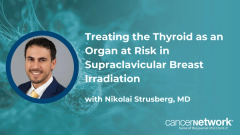
Treating the Thyroid as an Organ at Risk in Supraclavicular Breast Irradiation
Latest News



Advertisement
Shorts
0:35
I-SABR Trial Demands “Serious Attention” in Early-Stage NSCLC
a day ago
by
Brandon Mancini, MD, MBA, FACRO
0:50
How Does PACE-A Shift the Conversation for Localized Prostate Cancer Care?
2 days ago
by
Brandon Mancini, MD, MBA, FACRO
1:25
Addressing the Challenges of VEGF Inhibition in Tumor Vasculature
3 days ago
by
Jan Kitajewski, PhD
1:09
Advancing HIV-Associated Lymphoma Care Through Multi-Institutional Collaboration
11 days ago
by
Paul Rubinstein, MD

1:08
Can Robotic Systems Limit Ergonomic Injury for Interventional Radiologists?
13 days ago
by
Zachary L. Bercu, MD, RPVI, FSIR
1:07
Do Video Game Players Adapt Faster to Endovascular Robotics?
14 days ago
by
Zachary L. Bercu, MD, RPVI, FSIR
1:21
How Does the PEDRA Portable Endovascular Robot Work?
15 days ago
by
Zachary L. Bercu, MD, RPVI, FSIR
1:18
TALAPRO-3 Data Show Striking 52% Reduction in CRPC Progression Risk
21 days ago
by
Neeraj Agarwal, MD
1:15
Why Frontline Talazoparib/Enzalutamide Therapy Is Critical in Metastatic CSPC
21 days ago
by
Neeraj Agarwal, MD
1:19
How Can Health Systems Foster Psychedelic Literacy in Oncology?
23 days ago
by
Jason Konner, MD
Videos
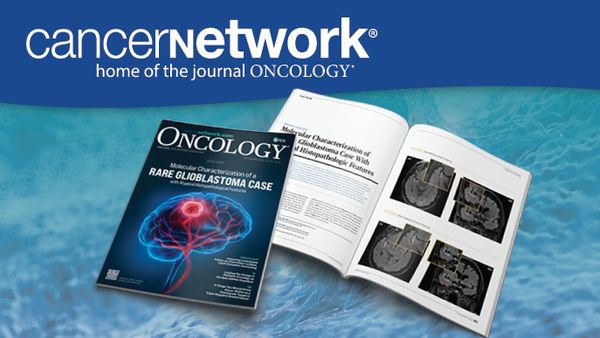
September ONCOLOGY Publication
The September issue of ONCOLOGY features a rare case study on glioblastoma, discussions on end-of-life care, and insights into the field of pediatric oncology.
ONCOLOGY On The Go Podcast
Listen to our latest episode of ONCOLOGY on The Go with insights from expert multidisciplinary professionals across the oncology space.

Find Us On YouTube
CancerNetwork in now on YouTube! We'll be discussing in-depth topics, and speaking with top leaders in the oncology space.

CancerNetwork® Oncology Career Center
Your next job in oncology is just a click away! Explore positions across the cancer care industry with CancerNetwork® Oncology Career Center.

Subscribe to Our eNewsletter Today!
Get comprehensive coverage for the multidisciplinary oncology community with accurate, credible, and timely news and expert insights.
























































Advertisement
All News
Advertisement
Experts highlight KEYNOTE-C93, TroFuse-005, and antibody-drug conjugate data in platinum-resistant ovarian cancer at the ESMO Congress 2026.
Nikolai Strusberg, MD, discussed other toxicities of proton vs photon breast RT, practice implications, and next steps in capsular contracture research.
Indocyanine green may be highly sensitive in the identification of ovarian cancer metastases, though with low specificity.
The therapeutic cancer vaccine OSE2101 combined with either docetaxel or nivolumab met the primary end point of 1-year overall survival in the Combi-TED trial.
In a phase 1 trial, CD19/CD20/CD22 CAR T cells produced complete responses in 83% of patients with relapsed/refractory B-cell non-Hodgkin lymphoma.
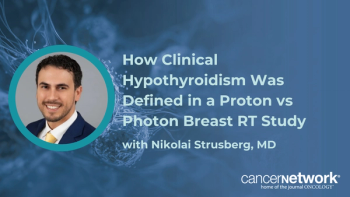
Nikolai Strusberg, MD, explained the clinical hypothyroidism endpoint and how thyroid dose should guide proton vs photon choice in breast cancer.
Leah Katz, MD, MPH, discusses IDEA, TARGIT-B, NeoORB, and other breast radiation data from ASTRO 2026, and why patient selection is the unifying theme.
Frederick Howard, MD, explored the evolving intersection of artificial intelligence (AI), computational pathology, and precision breast oncology.
“Vitamin C is a powerful epigenetic drug, which is not generally realized,” said Peter A. Jones, PhD, DSc (hon).

Findings from the AZUR-1 trial support the FDA approval of dostarlimab for patients with stage II/III locally advanced rectal cancer.
Advertisement

Investigators will share detailed findings from the phase 1a/b EMBOLD PanTumour-101 study at the European Society for Medical Oncology Congress 2026.

The anti–IL-1α antibody vilamakitug added to trifluridine/tipiracil met its prespecified 12-month overall survival threshold in refractory metastatic colorectal cancer.
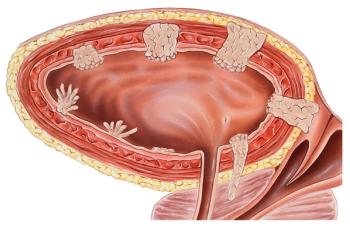
Long-term QUILT-3.032 data showed a 71% CR rate, with a median duration of 26.6 months with nogapendekin alfa inbakicept/BCG in BCG-unresponsive NMIBC.
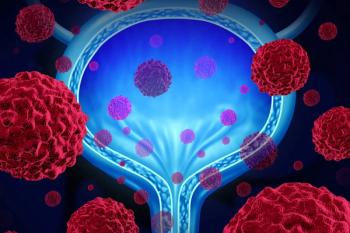
The FDA assigned a PDUFA date of June 14, 2027, to UGN-103 for the treatment of recurrent low-grade, intermediate-risk, non–muscle-invasive bladder cancer.
Leah Katz, MD, MPH, discussesed NeoORB data on neoadjuvant radiotherapy and why radiation timing may open new treatment paradigms in breast cancer.
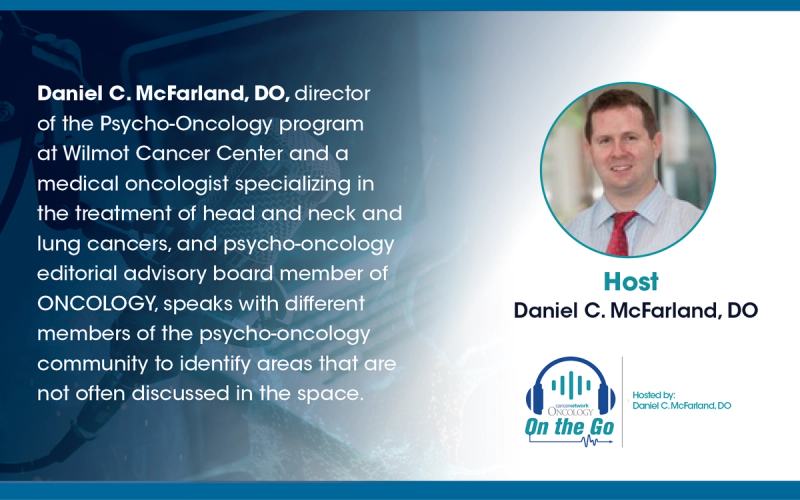
Daniel C. McFarland, DO, and Ramy Sedhom, MD, discussed co-located psycho-oncology and palliative care, warm handoffs, and proactive distress screening.
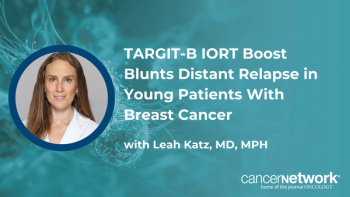
Leah Katz, MD, MPH, explained how an intraoperative tumor bed boost in TARGIT-B may reduce distant relapse in young patients with breast cancer.
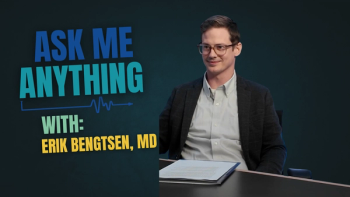
Erik Bengtsen, MD, discussed meaning-centered therapy at the bedside, framing psychiatry referrals, and a more humanistic approach to care.
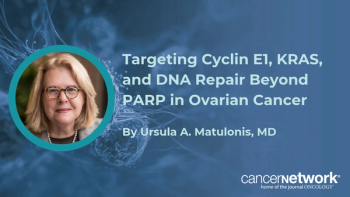
Ursula A. Matulonis, MD, surveyed the exploitable genetic changes driving the next wave of ovarian cancer trials, from CDK2 and WEE1 inhibitors to PARG inhibitors.
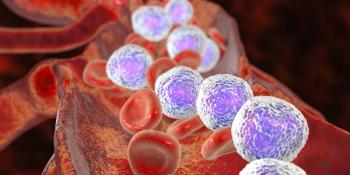
Ponatinib plus blinatumomab may help “a meaningful subset of patients” forego transplant for Ph-positive acute lymphoblastic leukemia.
Ursula A. Matulonis, MD, broke down the trial design, backbone regimen, and preclinical rationale that she believes made KEYNOTE-B96 a positive study.
Leah Katz, MD, MPH, discusses long-term IDEA trial data on omitting radiation and why endocrine therapy tolerance matters in this decision.
Erik Bengtsen, MD, described what sets psycho-oncology apart and how clinicians can open conversations on body image and sexual health.

Ursula A. Matulonis, MD, discussed how biomarkers, adverse effects, and patient preference guide choices among recent platinum-resistant ovarian cancer approvals.
Alexandra Dreyfuss, MD, MS, explains why CAR T and bispecific populations are her priority for prospective radiotherapy studies in multiple myeloma.
Dr. Andrew Pecora on leading the first IV oncolytic virus trial, building a top-50 cancer center, and using AI to fix the cost of cancer care.
Ralph V. Boccia, MD, FACP, explained how community practices can build the workflow and capacity to deliver bispecific step-up dosing in an outpatient setting.

There is a gap in prospective data for radiation use in multiple myeloma, according to Alexandra Dreyfuss, MD, MS.
Erik Bengtsen, MD, explained how antidepressants may improve quality of life and how he typically works with patients who decline favorable treatment.
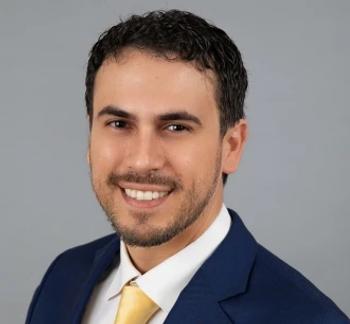
Nikolai Strusberg, MD, discussed how proton therapy and thyroid dose affect clinical hypothyroidism risk after supraclavicular breast radiation.
Ralph V. Boccia, MD, FACP, compared MRD data with Tec-Dara and Tal-Dara and explained how sustained MRD negativity is reshaping myeloma care.
Alexandra Dreyfuss, MD, MS, weighs bridging vs consolidative radiotherapy strategies around CAR T-cell infusion in myeloma.

In a phase 1 trial of patients with platinum-sensitive high-grade ovarian cancer, a personalized neoantigen vaccine plus nivolumab caused no unexpected safety signals.
Advertisement
Advertisement