Articles by Amrita Y. Krishnan, MD
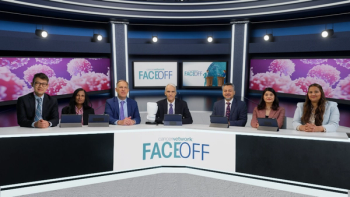
Relapsed/Refractory Multiple Myeloma: CARTITUDE-4 and the Evolving Role of BCMA CAR T-Cell Therapy
ByThomas G. Martin, MD,Saad Z. Usmani, MD, MBA, FACP,Surbhi Sidana, MD,Peter Voorhees, MD,Hans Lee, MD,Gurbakhash Kaur, MD,Amrita Y. Krishnan, MD Dr. Saad Usmani reviews key findings from the phase 3 CARTITUDE-4 trial and discusses the growing role of ciltacabtagene autoleucel (cilta-cel) in patients with second-line and earlier-relapse relapsed/refractory multiple myeloma. The discussion highlights the study population, including patients with lenalidomide-refractory disease and high-risk clinical features, as well as the significant progression-free survival benefit observed with BCMA-directed CAR T-cell therapy compared with standard triplet regimens. Dr. Usmani and the panel examine the depth and durability of response, including high rates of complete response and sustained MRD negativity, and discuss the concept of treatment-free remission as a unique advantage of CAR T-cell therapy. Faculty also explore practical considerations such as patient selection, manufacturing timelines, bridging therapy, disease burden control, and quality-of-life outcomes. The conversation further addresses important safety considerations, including cytokine release syndrome, neurotoxicity, Parkinsonism-like events, immune effector cell-associated enterocolitis, access challenges, and the logistical barriers associated with delivering CAR T-cell therapy in real-world multiple myeloma practice.
Relapsed/Refractory Multiple Myeloma: Setting the Stage for BCMA-Directed Treatment Strategies
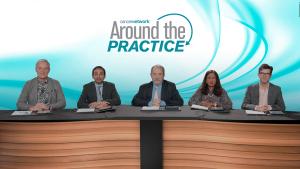
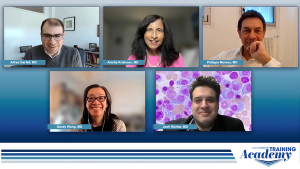
ByThomas G. Martin, MD,Saad Z. Usmani, MD, MBA, FACP,Surbhi Sidana, MD,Peter Voorhees, MD,Hans Lee, MD,Gurbakhash Kaur, MD,Amrita Y. Krishnan, MD Dr. Thomas Martin opens this Cancer Network FACE-OFF program by introducing a debate-style discussion focused on one of the most rapidly evolving areas in relapsed/refractory multiple myeloma: treatment selection between BCMA-directed CAR T-cell therapy and bispecific antibody-based approaches in second-line and earlier-relapse disease. He outlines the unique format of the program, which combines clinical data review, expert debate, and case-based discussion to explore real-world treatment decision-making. Dr. Martin introduces Team Myeloma Mavericks, led by Dr. Saad Usmani and featuring Dr. Surbhi Sidana and Dr. Gurbakhash Kaur, and Team Myeloma Masters, led by Dr. Peter Voorhees with Dr. Amrita Krishnan and Dr. Hans Lee. The segment concludes with an overview of the pivotal studies that will frame the discussion, including CARTITUDE-4, MajesTEC-3, and MajesTEC-9, highlighting how emerging efficacy, durability, safety, and sequencing data are reshaping treatment strategies for patients with relapsed/refractory multiple myeloma.
Panelists discuss how patients relapsing shortly after BCMA CAR T-cell therapy should receive GPRC5D-targeted bispecifics rather than repeat BCMA therapies, given the evidence that prior BCMA exposure reduces efficacy of subsequent BCMA-directed treatments.
Panelists discuss how a triple class–exposed patient with comorbidities like COPD represents an ideal candidate for BCMA-directed bispecific therapy over CAR T-cell therapy due to the ability to titrate dosing and manage respiratory infection risks.
Panelists discuss how community practices need clear protocols for after-hours fever management, adequate caregiver support assessment, and standardized algorithms for cytokine release syndrome treatment across multiple bispecific products.
Panelists discuss how step-up dosing has successfully transitioned from inpatient-only to hybrid and outpatient models using prophylactic tocilizumab and standardized protocols for managing cytokine release syndrome.
Panelists discuss how talquetamab’s unique skin and taste toxicities are manageable through dose modifications and supportive care, with IVIG prophylaxis being crucial for BCMA-targeted but not necessarily GPRC5D-targeted therapies.
Panelists discuss how real-world data consistently show bispecific efficacy matching clinical trial results despite treating higher-risk patients, and how prophylactic interventions have reduced cytokine release syndrome severity.
Panelists discuss how CAR T-cell therapy should generally precede bispecifics when possible due to T-cell exhaustion concerns, though they agree there are virtually no absolute contraindications to bispecific therapy.
Panelists discuss how bispecifics are reversing the historical paradigm of diminishing returns in relapsed/refractory multiple myeloma, achieving 60% to 70% response rates lasting over a year in heavily pretreated patients.
Panelists discuss how patient preferences for treatment-free intervals are increasingly important in therapy selection, with bispecifics offering potential for response-adapted dosing and early discontinuation while maintaining remissions.
The panel concludes its discussion with insights on practices for educating health care teams on CAR T-cell therapy administration, highlighting the evolving role of advanced practice providers.
Amrita Y. Krishnan, MD, and Binod Dhakal, MD, discuss the clinical implications of data from MajesTEC-1 and provide key takeaways on the evolving relapsed/refractory multiple myeloma treatment landscape.
Following a review of recent data from MajesTEC-1 investigating teclistamab, the panel provides clinical insights on dosing and adverse event prophylaxis practices.
Experts on multiple myeloma review the study design and results from MajesTEC-1, focusing on the efficacy and safety findings, and provide insights on adverse event management practices.
Amrita Y. Krishnan, MD, and Binod Dhakal, MD, provide an overview of the current treatment landscape in relapsed/refractory multiple myeloma.
Before closing out their program on bispecifics in multiple myeloma, expert oncologists consider the value of these agents in more challenging patient populations.
Following their review of non-BCMA-targeting bispecifics in multiple myeloma, panelists consider practical use of these agents and how they may fit into the real-world treatment paradigm.
A brief discussion on clinical trial data with cevostamab therapy followed by considerations for other non-BCMA-targeted agents being studied in the setting of multiple myeloma.
Switching its focus to non-BCMA-targeting therapies, a panel of experts consider the clinical data behind talquetamab in patients diagnosed with multiple myeloma,
Expert oncologists briefly review safety profiles of BCMA-targeted bispecifics in multiple myeloma and share practical insight on how to mitigate or address toxicities.
Shared insight on how experts select among the available BCMA-targeting bispecific antibodies and CAR T-cell therapies in patients with multiple myeloma.
Expert panelists reflect on other clinical trials aimed at defining the role for BCMA-targeting bispecifics in multiple myeloma and consider how they would utilize this class of agents in real-world practice.
Opening its discussion on BCMA-targeting bispecific antibodies in multiple myeloma, a panel of expert oncologists highlights key clinical data behind teclistamab.
Management of Bispecific Toxicities and Final Thoughts on Treatments in MM
ByRobert Z. Orlowski, MD, PhD,Amrita Y. Krishnan, MD,C. Ola Landgren, MD, PhD,Ajay K. Nooka, MD,Cesar Rodriguez, MD Closing out the panel discussion, experts review the management of bispecific-related toxicities and share their final thoughts on treating patients with multiple myeloma.
The Role of Belantamab Mafodotin and Its Impact on Future Treatment Options
ByRobert Z. Orlowski, MD, PhD,Amrita Y. Krishnan, MD,C. Ola Landgren, MD, PhD,Ajay K. Nooka, MD,Cesar Rodriguez, MD Expert oncologists discuss Belantamab mafodotin, its recent withdrawal from the U.S. market, and the clinical implications of the DREAMM trials for patients with R/R multiple myeloma.
Rationale for Bispecific-Based Combinations in MM
ByRobert Z. Orlowski, MD, PhD,Amrita Y. Krishnan, MD,C. Ola Landgren, MD, PhD,Ajay K. Nooka, MD,Cesar Rodriguez, MD Shared perspective on the potential role of ADCs, CAR T-cell therapy, and other agents in combination treatment with bispecifics for patients with multiple myeloma.
Treatment Selection of Bispecifics in Relapsed-Refractory MM
ByRobert Z. Orlowski, MD, PhD,Amrita Y. Krishnan, MD,C. Ola Landgren, MD, PhD,Ajay K. Nooka, MD,Cesar Rodriguez, MD Focusing their discussion on clinical data in R/R multiple myeloma studies, panelists highlight current and emerging bispecific antibodies for treating patients that have progressed after multiple lines of therapy.
Treatment Approaches for Patients with Relapsed-Refractory MM
ByRobert Z. Orlowski, MD, PhD,Amrita Y. Krishnan, MD,C. Ola Landgren, MD, PhD,Ajay K. Nooka, MD,Cesar Rodriguez, MD Expert panelists discuss treatment approaches for patient with multiple myeloma that have progressed and are relapsed and/or refractory (R/R).
Final Thoughts on Transplant-Ineligible Patients with MM
ByRobert Z. Orlowski, MD, PhD,C. Ola Landgren, MD, PhD,Amrita Y. Krishnan, MD,Ajay K. Nooka, MD,Cesar Rodriguez, MD Experts offer final thoughts on the treatment of newly diagnosed MM for patients that are transplant-ineligible.