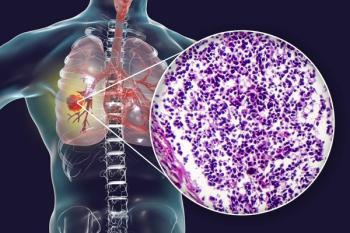
Patients with unresectable stage III non-small cell lung cancer derived the most benefit from durvalumab when combined with either oleclumab or monalizumab vs durvalumab alone.

Russ Conroy is an Associate Editor for CancerNetwork. He grew up in Hillsborough, New Jersey, and graduated from Rutgers University-New Brunswick in 2022.
On the weekends, he likes to unwind by playing video games with friends, tailgating at Rutgers football games with his family, or building his music collection with a visit to Princeton Record Exchange.

Patients with unresectable stage III non-small cell lung cancer derived the most benefit from durvalumab when combined with either oleclumab or monalizumab vs durvalumab alone.

According to findings from a biomarker analysis of the phase 2 TheraP trial, mean standardized uptake value of PSMA-PET predicted favorable responses to 177Lu-PSMA-617 compared with cabazitaxel in patients with metastatic castration-resistant prostate cancer.

A regimen consisting of personalized therapeutic cancer vaccine, GNOS-PV02, as well as plasmid-encoded IL-12 and pembrolizumab yielded an overall response rate of 20.9% among evaluable patients with unresectable or metastatic hepatocellular carcinoma.

The investigational imaging agent 89ZR-DFO-girentuximab met all primary and secondary end points, exceeding pre-determined sensitivity and specificity targets in clear cell renal cell carcinoma, according to findings from the phase 3 ZIRCON study.

Findings from a randomized phase 3 trial indicated that brentuximab vedotin plus chemotherapy yielded a higher event-free survival rate and lowered the risk of death compared with chemotherapy alone among patients with advanced-stage Hodgkin Lymphoma.

Real-world results from the retrospective SCHOLAR-2 study provided a benchmark for survival in patients with relapsed or recurrent refractory mantle cell lymphoma who received salvage therapy following failure of initial Bruton tyrosine kinase inhibitor therapy.

A conditioning regimen consisting of of Iomab-B prior to a bone marrow transplant met the phase 3 SIERRA trial’s primary end point of durable complete remission compared with conventional care in elderly patients with relapsed or refractory acute myeloid leukemia.

Among adult patients with low- or intermediate-risk myelodysplastic syndromes requiring red blood cell transfusions, luspatercept-aamt improved red blood cell transfusion independence with concurrent hemoglobin increase compared with epoetin alfa.

Quality of life data from the phase 3 ARASENS study highlighted how early treatment intensification with darolutamide plus standard androgen deprivation therapy and docetaxel improved patient-relevant end points compared with placebo in the management of metastatic hormone-sensitive prostate cancer.

Oral selective estrogen receptor degrader camizestrant elicited a statistically significant and clinically meaningful progression-free survival benefit compared with fulvestrant among patients with estrogen receptor–positive locally advanced or metastatic breast cancer.

Supplemental radiation doses delivered concomitantly with hypofractionated whole breast irradiation in 15 fractions demonstrated non-inferior ipsilateral breast recurrence and similar toxicity compared with sequential boosts following whole breast irradiation in high-risk early-stage breast cancer.

Among patients with advanced and/or metastatic hormone receptor–positive HER-2 negative breast cancer, complete estrogen receptor antagonist OP-1250 continued to yield clinical benefits such as reductions in target tumor lesions.

Rogaratinib showed similar efficacy and manageable safety compared with chemotherapy in the management of FGFR1/3 mRNA–positive locally advanced or metastatic urothelial carcinoma.

Stereotactic body radiation therapy is a new standard of care option for patients with locally advanced hepatocellular carcinoma, according to a presentation on the phase 3 NRG/RTOG 1112 trial assessing sorafenib combined with stereotactic body radiation therapy.

Based on findings from the phase 3 CABASTY trial, a fixed 16 mg/m2 dose of cabazitaxel every 2 weeks vs 25 mg/m2 every 3 weeks reduced neutropenic complications in elderly patients with mCRPC.

Quizartinib has received priority review from the FDA for the treatment of patients with newly diagnosed acute myeloid leukemia that is FLT3-ITD positive.

According to findings from the phase 3 PACE-B trial, genitourinary and gastrointestinal toxicities were similar among patients with prostate cancer receiving conventionally fractioned or moderately hypofractionated radiotherapy and stereotactic body radiotherapy.

A trial investigating seclidemstat for Ewing and FET-rearranged sarcomas has voluntarily paused enrollment following an unexpected death.

The European Commission based its approval of axicabtagene ciloleucel as a second-line therapy for patients with relapsed/refractory diffuse large B-cell lymphoma or high-grade B-cell lymphoma on the efficacy findings of the phase 3 ZUMA-7 trial.

Findings from the phase 3 KEYNOTE-048 study indicated that long-lasting improved survival benefit can be achieved with pembrolizumab plus chemotherapy compared with cetuximab and chemotherapy in patients with recurrent or metastatic head and neck squamous cell carcinoma.

Patients with completely resected stage IIB/C melanoma experienced significant and clinically meaningful improvements in recurrence-free survival following treatment with adjuvant nivolumab compared with placebo.

Switch treatment with palbociclib and fulvestrant from aromatase inhibitors plus palbociclib upon onset of ESR1 blood mutations and before progression yielded better progression-free survival among those with estrogen receptor–positive, HER2-negative advanced breast cancer.

Data from the phase 1 LuMIERE study highlighted that targeted radiotherapy agent 177Lu-FAP-2286 demonstrated a manageable safety profile and promising preliminary antitumor activity.

The FDA has given orphan drug designation to ET140203 ARTEMIS, an investigational therapy for hepatoblastoma, the safety and potential efficacy of which are being evaluated in the phase 1/2 ARYA-1 and ARYA-2 studies.

Results from a randomized controlled trial highlighted that the TissueCypher Barrett’s Esophagus Test heightened accuracy for assessing progression risk in high-grade dysplasia and esophageal adenocarcinoma among patients with Barrett’s esophagus.

As part of Breast Cancer Awareness Month, CancerNetwork® spoke with Deborah M. Axelrod, MD, about developments within the surgical breast cancer space, including decreasing the need for re-excision and full lymph node dissection.

Topline results from the phase 3 ALPINE trial’s final progression-free survival analysis highlighted that zanubrutinib yielded higher progression-free survival compared with ibrutinib in patients with chronic lymphocytic leukemia.

Results from a retrospective cohort study indicated that vaginal brachytherapy yielded less radiation exposure to the female urethra in patients with endometrial cancer than external beam radiation therapy for those with colorectal cancer.

Data from the phase 3 SUNLIGHT study highlighted the increased survival benefit of trifluridine/tipiracil plus bevacizumab compared with trifluridine/tipiracil alone for the treatment of metastatic colorectal cancer.

Findings of the phase 2 PERLA trial indicated that dostarlimab combined with chemotherapy achieved promising responses in patients with metastatic non-squamous non-small cell lung cancer.