

The FDA extends the Prescription Drug User Fee Act date to July 24, 2023 for quizartinib in the management of newly diagnosed FLT3-ITD mutation–positive acute myeloid leukemia.

Russ Conroy is an Associate Editor for CancerNetwork. He grew up in Hillsborough, New Jersey, and graduated from Rutgers University-New Brunswick in 2022.
On the weekends, he likes to unwind by playing video games with friends, tailgating at Rutgers football games with his family, or building his music collection with a visit to Princeton Record Exchange.
The FDA extends the Prescription Drug User Fee Act date to July 24, 2023 for quizartinib in the management of newly diagnosed FLT3-ITD mutation–positive acute myeloid leukemia.

The safety profile of tislelizumab plus chemotherapy in the phase 3 RATIONALE 305 trial appears to be manageable in the treatment of advanced gastric or gastroesophageal junction adenocarcinoma.

OTL78 appears to help in identifying prostate tumors, surgical margins, residual disease in the resection bed, and nodal metastases during PSMA-targeted fluorescence-guided surgery in those with PSMA-positive prostate cancer.
In older patients with hematologic malignancies undergoing hematopoietic stem cell transplantation, psychological distress at baseline was associated with worse quality of life outcomes.

Patients with previously untreated diffuse large B-cell lymphoma can now receive polatuzumab vedotin-piiq plus rituximab, cyclophosphamide, doxorubicin, and prednisone following the FDA’s approval of the regimen.

Despite an improvement in disease-free survival, patients 60 years or over with acute myeloid leukemia do not appear to have a survival benefit from allo-HCT during first complete remission compared with consolidation chemotherapy.

The addition of bevacizumab to FOLFIRI does not appear to improve overall survival over FOLFIRI alone in patients with gastroenteropancreatic neuroendocrine carcinoma.

Data from the phase 3 SUNLIGHT study support a supplemental new drug application for trifluridine/tipiracil with or without bevacizumab for metastatic colorectal cancer.
Investigators will assess botensilimab and balstilimab for non-microsatellite instability-high/mismatch repair deficient metastatic colorectal cancer in a randomized phase 2 trial.

The FDA expresses openness towards having protocol discussions with investigators on initiating a second clinical study evaluating synthetic hypericin sodium for cutaneous T-cell lymphoma.
Patients with hematologic malignancies who require allogenic hematopoietic stem cell transplant can now receive omidubicel following the FDA’s approval of the agent.
Data from the phase 3 KarMMA-3 trial support several applications for idecabtagene vicleucel in earlier use for triple-class exposed multiple myeloma in the United States, Europe, and Japan.

Findings from a prospective study suggest that circulating tumor DNA sequencing with a large panel may efficiently identify actionable alterations in patients with advanced solid tumors.

OM-301, which demonstrated preclinical anti-cancer activity in multiple myeloma, receives orphan drug designation from the FDA.

Adding pembrolizumab to chemotherapy with or without bevacizumab can help patients with persistent, recurrent, or metastatic cervical cancer “live longer and better,” according to an expert from the University of Arizona College of Medicine.

In addition to the benefit seen with hormone therapy plus metastasis-directed radiation in oligometastatic prostate cancer, use of intermittent hormone therapy may result in positive disease control and longer eugonadal testosterone intervals.

The FDA sets a Prescription Drug User Fee Act date of December 16, 2023 for pembrolizumab plus chemotherapy for managing metastatic gastric or gastroesophageal junction adenocarcinoma.

Data from the interim analysis of the phase 3 FLAMES study indicate that senaparib may lengthen progression-free survival in patients with advanced ovarian cancer.

CB-011, which received fast track designation from the FDA, is currently under investigation as a treatment for those with relapsed or refractory multiple myeloma in the phase 1 CaMMouflage trial.

Investigators behind a phase 1 trial investigating MT-0169 in relapsed or refractory multiple myeloma and non-Hodgkin lymphoma will pause enrollment of new patients following prior reports of cardiac adverse effects in 2 patients.

Tavokinogene telseplasmid plus pembrolizumab is reported to be well tolerated in patients with advanced, pre-treated melanoma based on data from the phase 2 KEYNOTE-695 trial.
Primary outcome data from phase 3 confirmatory studies evaluating ibrutinib in mantle cell lymphoma and marginal zone lymphoma are insufficient to support conversion to full FDA approval in these indications.

SynKIR-110, which received fast track designation from the FDA, is currently under investigation as treatment for patients with mesothelioma in the phase 1 STAR-101 trial.

Data from a phase 1/2 dose escalation study investigating BDC-10001 plus nivolumab in HER2-expressing tumors support the advancement of additional phase 2 trials evaluating the novel antibody conjugate.

Findings from 2 phase 3 trials support the recommendation to approve sodium thiosulfate to reduce the risk of cisplatin-related hearing loss in pediatric patients with solid tumors in Europe.

Factors including ARID1A mutations and tumor mutational burden appear to correlate with progression-free survival and overall survival following immunotherapy for advanced bladder cancer.

Findings from the phase 3 TRANSFORM study support the Committee for Medicinal Products for Human Use’s recommendation to approve lisocabtagene maraleucel for large B-cell lymphoma.

Supporting data for the biologics license application for trastuzumab biosimilar HLX02 in HER2-overexpressing cancers come from comparative analytical studies and a global phase 3 trial.
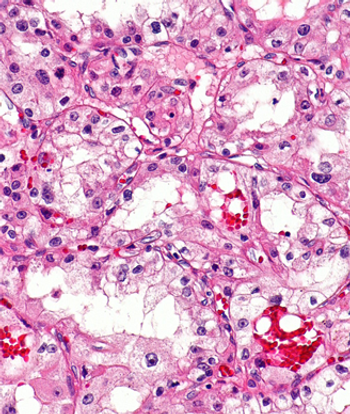
Progression-free survival and overall survival appear to be worse in patients with metastatic colorectal cancer who have a high- vs low-BRAF allele fraction after treatment with a BRAF inhibitor plus an anti-EGFR agent plus or minus a MEK inhibitor.

The FDA’s decision to lift a partial clinical hold on the phase 1/2 VELA trial follows reports of visual adverse effects in patients with advanced solid tumors in February 2023.