






Breast Cancer
Latest News
Advertisement
Latest Videos





















































Advertisement
More News

The BOOG 13-08 trial shows omitting sentinel lymph node biopsy is noninferior to performing it in select older patients with early-stage, HR+ breast cancer.

“The magnitude of clinical benefit was clinically meaningful and consistent, and was regardless of PIK3CA mutations or alterations in the PIK3CA pathway, duration of prior CDK4/6 inhibitors, including patients who progress within 6 to 12 months, and the choice of prior CDK4/6 inhibitors,” said Hope S. Rugo, MD.

Data from the EMBER-3 trial support imlunestrant alone or in combination with abemaciclib as a chemotherapy-free treatment option.

QOL improvements were observed among AYA breast cancer survivors after utilizing a mobile health intervention.

Data from the EPIK-B5 study support the use of alpelisib/fulvestrant in previously treated, HR-positive, HER2-negative, PIK3CA-mutated breast cancer.
Estrogen alone was associated with a lower risk of BRCA-mutated breast cancer, according to data from an ongoing study.

Real acupuncture vs sham acupuncture produced more meaningful cognitive outcomes among patients with breast cancer.

PRO data from the ASCENT-03 trial complement the meaningful PFS benefit observed with sacituzumab govitecan in advanced triple-negative breast cancer.

Data may support the strong oncologic outcomes of less invasive surgical options for patients with node-negative disease after neoadjuvant chemotherapy.

The 60-month local regional recurrence-free rate was 93.2% in the MRI arm vs 95.7% in the no MRI arm among patients with newly diagnosed breast cancer.

Findings from the P-RAD trial show encouraging rates of pathologic complete response among patients who received pembrolizumab plus radiotherapy.

“HER2CLIMB-05 has demonstrated that the addition of tucatinib to HP represents an enhanced frontline maintenance therapy option for patients with HER2-positive metastatic breast cancer,” said Erika Hamilton, MD.

The primary end point of PFS was not statistically significant with sacituzumab govitecan vs chemotherapy as first-line treatment in HR+/HER2– metastatic breast cancer.

Giredestrant’s safety in the lidERA BC trial was consistent with its known profile, with a lower discontinuation rate vs SOC endocrine therapy.

Axillary dissection was more likely to be omitted among patients in the ALTERNATE trial when there was one positive sentinel node compared with 2 or more.

Across different studies, the highest incidence of left ventricular ejection fraction decrease was seen with trastuzumab/pertuzumab plus chemotherapy.

Explore the latest advancements in antibody-drug conjugates for treating metastatic triple-negative breast cancer and their unique safety profiles.

The safety profile of nadunolimab in patients with triple-negative breast cancer was consistent with its known profile, and no significant signals emerged.

Breast cancer care providers make it a goal to manage the adverse effects that patients with breast cancer experience to minimize the burden of treatment.

According to Rachel Greenup, MD, MPH, some of the barriers to getting optimal treatment for breast cancer include access, insurance, and baseline understanding or knowledge.

Social workers and case managers may have access to institutional- or hospital-level grants that can reduce financial toxicity for patients undergoing cancer therapy.

Insurance and distance to a tertiary cancer center were 2 barriers to receiving high-quality breast cancer care, according to Rachel Greenup, MD, MPH.
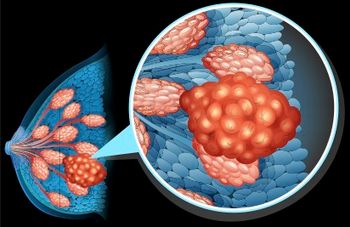
According to the developers, giredestrant is the first oral SERD to display beneficial DFS in early-stage breast cancer in the adjuvant setting.

The FDA has approved pertuzumab-dpzb (Poherdy) as a biosimilar to pertuzumab (Perjeta) in breast cancer, based on a review of various attributes, including safety and efficacy data.
Data from the ASCENT-07 trial show an early trend toward improved overall survival with sacituzumab govitecan vs chemotherapy.
Advertisement
Advertisement
Trending on CancerNetwork
1
FDA MCGP Panel Votes in Favor of the Galleri Multicancer Early Detection Test
2
Approaching Cardiovascular Risk in Prostate Cancer Hormonal Therapy
3
FDA Grants Approval to Lirafugratinib for Advanced Cholangiocarcinoma with FGFR2 Alteration
4
Emerging Endocrine Doublets and Serial ESR1 Testing in HR+/HER2− mBC
5