

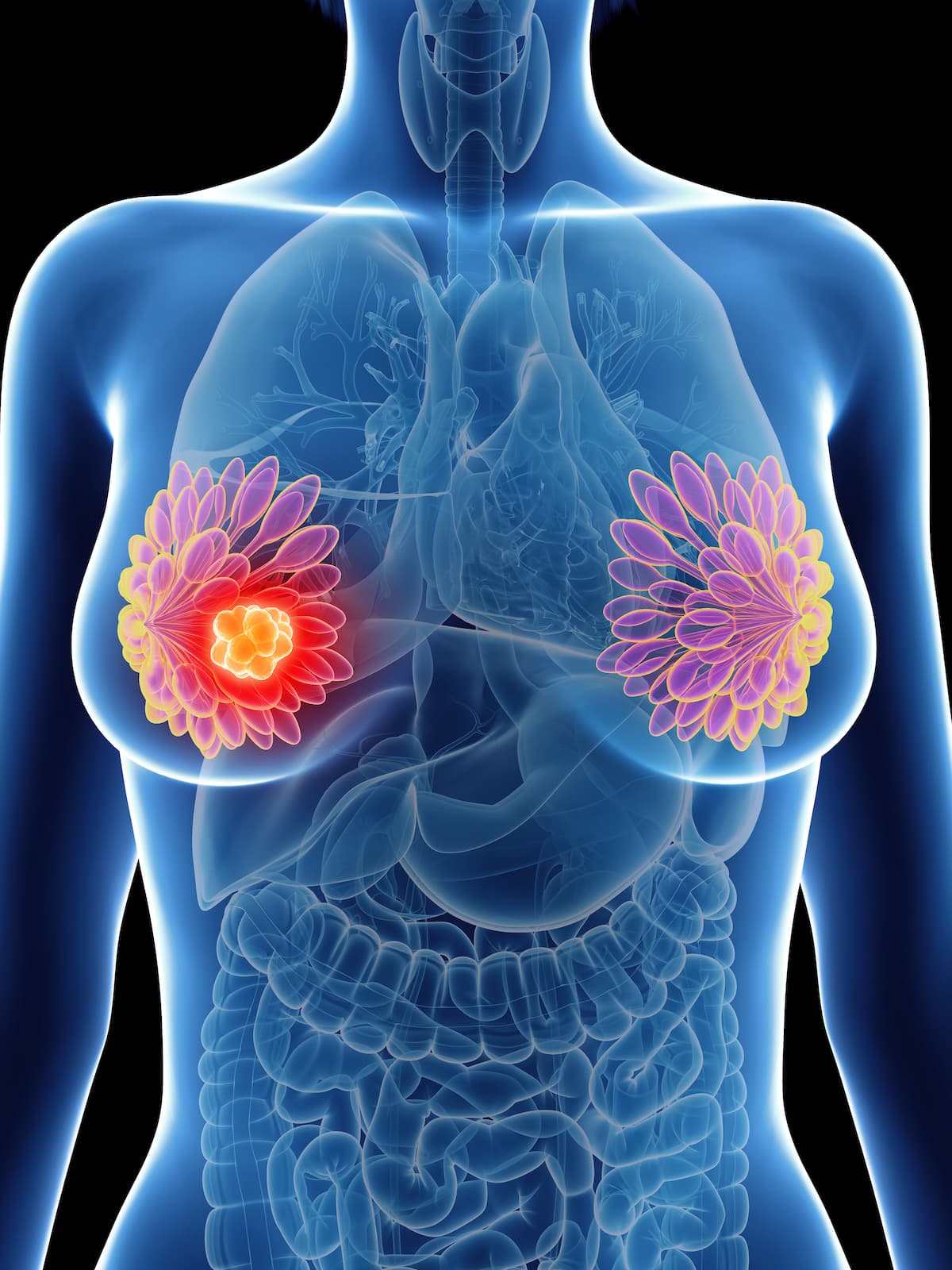



Breast Cancer
Latest News
Advertisement
Latest Videos




















































Advertisement
More News
In the phase 3 EMBER-3 trial, Guardant360 CDx was used to identify patients with ESR1-mutated advanced breast cancer who may benefit from imlunestrant.
The RadComp Consortium trial showed comparable HRQOL between proton and photon therapy for patients with non-metastatic breast cancer.
Planned interim results from the phase 3 DESTINY-Breast05 trial showed no new safety signals with T-DXd in the trial population.

Data from the phase 3 EMBER-3 trial support the approval of imlunestrant in this breast cancer population.

Results from the phase 3 DESTINY-Breast09 trial will support the FDA’s decision on whether to approve T-DXd plus pertuzumab in frontline metastatic breast cancer.

Read an expert-led article on the latest advancements in TROP2-targeted antibody-drug conjugates for treating triple-negative breast cancer and improving patient outcomes.
Data from the phase 3 evERA trial show a trend toward improved overall survival with giredestrant plus everolimus in this breast cancer population.

THERMAC trial results revealed that the ProSense® cryoablation system showed no complications, and the highest complete ablation rate in breast cancer.

Up-front risk stratification for additional cardiovascular testing may help mitigate cardiovascular toxicities in breast cancer treatment.
Trastuzumab pamirtecan’s developers plan to discuss next steps regarding a submission of a biologics license application for this breast cancer population.

Adjuvant chemotherapy with hormonotherapy in women at least 70 years of age with GGI-high risk HER2-negative breast cancer led to more AEs vs hormonotherapy alone.
The rolling submission is supported by data from the PIK3CA wild-type cohort of the phase 3 VIKTORIA-1 trial evaluating gedatolisib in advanced breast cancer.

Results from the monarchE study showed a statistically significant OS improvement with abemaciclib plus ET for patients with HR+/HER2– early breast cancer.

Tran Ho, DO, FSSO, FACS, discussed how she found her passion in breast surgical oncology and how her mentors helped her achieve success.
FLEX study findings show that the MammaPrint Index was predictive of 5-year DRFI for endocrine therapy with or without chemotherapy in early breast cancer.
Patients with breast cancer experience significant weight loss after using GLP-1 receptor agonists, highlighting potential benefits for obesity management in this population.
The decision is based on phase 3 VERITAC-2 trial data showing a significant PFS improvement vs fulvestrant in ESR1-mutant ER+/HER2– breast cancer.
Patients reclassified to high-risk clinicopathology with DCISionRT saw an absolute reduction in IBR rates of 11.6%; from 17.7% to 6.1%.

Priya Jayachandran, MD, FACP, spoke about her new position at El Camino Health as well as her career as a breast oncologist.
Results from the phase 3 VIKTORIA-1 trial showed gedatolisib plus fulvestrant with or without palbociclib improved progression-free survival.
Data from the phase 3 INAVO120 trial support the approval of inavolisib-based treatment for patients with PIK3CA+, ER+/HER2– disease in the EU.
Leading experts in the breast cancer field highlight the use of CDK4/6 inhibitors, antibody-drug conjugates, and other treatment modalities.

Leading experts in the breast cancer field highlight the use of CDK4/6 inhibitors, antibody-drug conjugates, and other treatment modalities.
Updated POSITIVE trial findings showed no significant breast cancer events in patients who breastfed following endocrine therapy for HR+ breast cancer.
The regulatory decision is based on data from the phase 3 DESTINY-Breast09 results presented at the 2025 ASCO Annual Meeting.
Advertisement
Advertisement
Trending on CancerNetwork
1
FDA MCGP Panel Votes in Favor of the Galleri Multicancer Early Detection Test
2
Approaching Cardiovascular Risk in Prostate Cancer Hormonal Therapy
3
FDA Grants Approval to Lirafugratinib for Advanced Cholangiocarcinoma with FGFR2 Alteration
4
Emerging Endocrine Doublets and Serial ESR1 Testing in HR+/HER2− mBC
5