
































































The clinical benefit rate of the neratinib plus fulvestrant combination treatment did not meet the predefined efficacy threshold, but was active in heavily pretreated patients with estrogen receptor-positive, metastatic breast cancer.
The clinical benefit rate of the neratinib plus fulvestrant combination treatment did not meet the predefined efficacy threshold, but was active in heavily pretreated patients with estrogen receptor-positive, metastatic breast cancer.

During a presentation at the American Association of Cancer Research Annual Meeting 2021, Ben L. Kong, PharmD, described the SMMART program, which pairs genetic and clinical information to find the best therapies for patients with breast cancer who progress on standard therapies.

TAS-117 showed limited clinical efficacy in treating patients with ovarian cancer harboring PIK3CA E545K mutations and in those with breast cancer harboring PIK3CA H1047R and Akt1E17K mutations.

An analysis of real-world outcomes in a cohort of patients treated in mostly community settings showed that palbociclib plus letrozole improved both progression-free and overall survival in women with hormone receptor–positive, HER2-negative metastatic breast cancer.

Following last year’s accelerated approval designation, the FDA granted regular approval to sacituzumab govitecan to treat patients with triple-negative breast cancer.

The next-generation cryoablation technology ProSense was granted breakthrough device designation to treat certain patients with T1 breast tumors.

A study from JAMA Oncology investigated the association between BRCA1/2 pathogenic variants and risk-reducing salpingo-oophorectomy for breast cancer, concluding that a benefit exists for women in the immediate 5 years post-surgery.

Data presented at the Society of Surgical Oncology 2021 International Conference on Surgical Cancer Care found that breast pCR was predictive of nodal pCR for patients with HER2-positive and triple-negative breast cancer treated with chemotherapy.
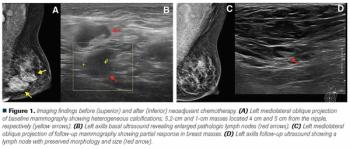
Experts examine the case of a previously healthy woman, aged 32 years, presented to the oncology clinic with a 6-month history of left-breast tumor, mastalgia, and swollen axillary nodes.

Data on male patients with hormone receptor–positive breast cancer found treatment options that included GnRHa sustained a decrease in estradiol levels, reducing quality of life for this patient subset.
Independent variables, such as the burden of disease prior to treatment, molecular prognosis, sensitivity to chemotherapy, sensitivity to endocrine therapy, and sensitivity to other treatments could be effective in predicting risk of recurrence in patients with breast cancer.
Kevin Kalinsky, MD, MS, discussed a number of antibody-drug conjugates, detailing the prevailing data and potential trials that may change the treatment paradigm for patients with breast cancer.

Mandar Aras, MD, PhD, discussed the management and prevention of cardiotoxicity in patients receiving systemic therapy for breast cancer at the 38th Annual Miami Breast Cancer Conference, hosted by Physicians’ Education Resource®, LLC.
Susan B. Kesmodel, MD, FACS, of the University of Miami, describes 3 methods by which breast surgical oncologists can strategize to reduce the incidence of lymphedema in patients undergoing surgery for breast tumors.
“Neoadjuvant endocrine therapy trials are feasible with relatively low toxicity,” Kelly K. Hunt, MD, FACS, FSSO, said during the 38th Annual Miami Breast Cancer Conference®.
Allowing for the use of antiemetic prophylaxis and anti-diarrheal medication in the phase 3 KX-ORAX-001 study reduced study drug-related gastrointestinal adverse events.

Data focusing on patients seeking breast surgical procedures determined that broad skill sets are valuable for general surgeons practicing in rural areas, as breast surgeries only represented a small proportion of total surgical procedures conducted.
The addition of neratinib to capecitabine improved progression-free survival and central nervous system outcomes in patients with HER2-positive metastatic breast cancer with central nervous system disease.
More patients with early-stage estrogen receptor–positive breast cancer with high recurrence scores received chemotherapy following radiation in a single-institution study, and this resulted in a low recurrence rate across all patients examined.
“Our results support further study of serial molecular imaging along with combined [histone deacetylase inhibitors; HDACi] and [aromatase inhibitor; AI] therapy (such as ECOG-ACRIN study E2112), to further delineate the role of HDACi and potential biomarkers in AI-refractory ER+ advanced breast cancer,” wrote the study authors.
The developers of an oral formulation of paclitaxel will have to revisit efficacy and safety data in order to provide sufficient evidence for FDA approval.
Data examining 4 low-value breast cancer procedures found an association between facility-level characteristics and the use of these procedures, suggesting a need for de-implementation targeting efforts in various facilities.
A retrospective, population-based cohort study in JAMA Oncology found Black women in the United States were more likely to have a high-risk recurrence score and die of axillary node-negative breast cancer than non-Hispanic White women who had similar scores.
In the OlympiA trial, patients with high-risk HER2-negative breast cancer were randomized 1:1 to receive either olaparib or placebo for 12 months.

CancerNetwork®’s podcast dissected a review article published in the journal ONCOLOGY® on the 21-gene recurrence score in patients with node-positive breast cancer.