






Kidney Cancer
Latest News
Advertisement
Latest Videos





Podcasts








CME Content


















































Advertisement
More News
Belzutifan plus adjuvant pembrolizumab conferred a 28% reduction in the risk of disease recurrence or death in those with high-risk ccRCC following nephrectomy.
Although older patients saw a greater rate of AE-related discontinuations, survival outcomes were similar between groups.

SBRT was considered safe among patients with advanced renal cell carcinoma when added to the immunotherapy combination.
Based on findings from LITESPARK-11, belzutifan/lenvatinib may represent a new option in previously treated renal cell carcinoma.
New biomarker data showed a correlation between magnitude and durability of serum erythropoietin suppression by casdatifan for this group.
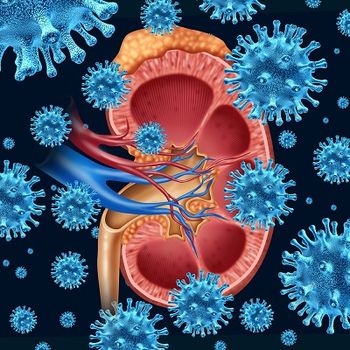
Structured exercise interventions may mitigate TRAE, such as fatigue, but data in metastatic RCC are limited.

Irpagratinib demonstrated superior survival among patients with hepatocellular carcinoma who were pretreated with ICIs and mTKIs.
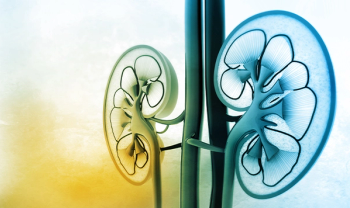
No differences in complication rate were observed between the MIXREAL and control groups among those treated for kidney cancer in the REALITATEM trial.
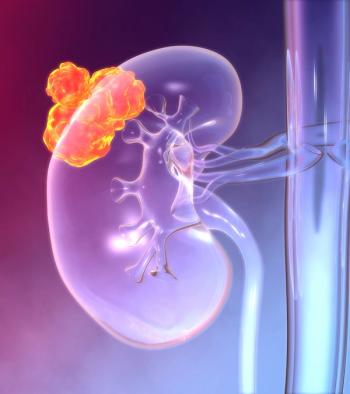
The median progression-free survival was significantly higher with donor vs placebo fecal microbiota transplantation in this RCC population.

Experts break down the clinical trial data and regulatory developments that made 2025 a “remarkable year” in kidney and bladder cancer management.
Experts highlight considerations for treating patients with oligometastatic kidney cancer, such as differentiating between de novo and recurrent disease.

A first-in-human phase 1/2 trial is evaluating the theranostic pair of ITM-91 and ITM-94 in patients with solid tumors.
Pembrolizumab plus belzutifan is the first combination therapy to improve DFS vs pembrolizumab monotherapy in the adjuvant treatment of those with RCC.
Belzutifan/lenvatinib also showed a favorable trend toward improvement for overall survival in this advanced renal cell carcinoma population.

Data from the FRUSICA-2 trial may support fruquintinib/sintilimab as a “valuable” option for patients with advanced renal cell carcinoma.
Casdatifan, administered at 100 mg once daily, achieved a confirmed ORR of 35% in patients with pretreated metastatic kidney cancer.
Changes in FKSI-15 scores from baseline indicated more favorable HRQOL outcomes with the benmelstobart combo vs sunitinib in advanced ccRCC.
External validation will be assessed in cohort 2 of the AURORAX-0087A trial to improve recurrence detection for clear cell renal cell carcinoma.

Additional correlative data and further prospective clinical investigations are needed to inform biomarker-directed advanced RCC treatment.
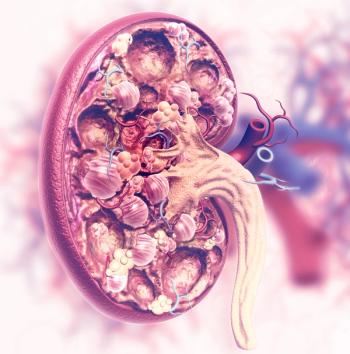
The biomarker analysis in KEYNOTE-426 showed that pembrolizumab plus axitinib therapy is associated with positive outcomes with angiogenesis in RCC.

Data from the LITESPARK-005 Q-TWiST analysis show belzutifan’s improved quality-adjusted survival time and favorable toxicity profile vs everolimus in RCC.
![“As a community, if we’re looking to help enroll and advocate for patients with rare [kidney cancers], we need to be aware of what is out there,” said A. Ari Hakimi, MD.](https://cdn.sanity.io/images/0vv8moc6/cancernetwork/a69f69efca1ade2e100fbb9cdf798d49ea5a0f94-2966x1684.png?w=350&fit=crop&auto=format)
“As a community, if we’re looking to help enroll and advocate for patients with rare [kidney cancers], we need to be aware of what is out there,” said A. Ari Hakimi, MD.

Treatment with the dual inhibitor displayed a short half-life and a manageable toxicity profile in patients with clear cell renal cell carcinoma.
The annual Kidney Cancer Research Summit was born from congressional funding for kidney cancer research, according to KidneyCAN president Bryan Lewis.
Combining renal vaccines with immune therapy may better target tumor cells while limiting harm to healthy tissue, according to David A. Braun, MD, PhD.
Advertisement
Advertisement
Trending on CancerNetwork
1
FDA Approves Topical Gel for Superficial Basal Cell Carcinoma
2
FDA Approves TLX101-Px for PET Imaging in Patients With Glioma
3
Debating CAR T-Cell Therapy Vs Bispecifics at First Relapse in Myeloma
4
FDA Extends Review of Zanzalintinib Combo in Pretreated Metastatic CRC
5