

The FDA granted platform technology designation to the immunotherapeutic platform for use in HPV-positive cancers such as head and neck, cervical, and anal.
The FDA granted platform technology designation to the immunotherapeutic platform for use in HPV-positive cancers such as head and neck, cervical, and anal.

An end-of-phase 1 meeting was supported by phase 1b data showing efficacy with LYT-220 among relapsed/refractory myelodysplastic syndrome groups.

Beth Erickson, MD, FACR, FASTRO, FABS, discussed pioneering MRI-guided brachytherapy at MCW and her priorities as incoming ASTRO president-elect.

The updated NCCN Guidelines for myeloproliferative neoplasms recommend rusfertide as a category 1 option across both low- and high-risk polycythemia vera.

As part of the ANDA pathway, Bravnetsa is the only radiopharmaceutical the FDA has determined to be bioequivalent and therapeutically equivalent to the reference product, Lutathera.
Xiuning Le, MD, PhD, explains how oncologists should approach HER2 biomarker testing following sevabertinib’s frontline approval in non–small cell lung cancer.

Peter Forsyth, MD, discusses a first-in-human trial of intrathecal dendritic cell therapy for leptomeningeal disease from breast cancer.

Adding radiotherapy to tislelizumab and chemotherapy also appeared to prolong progression-free survival in a real-world setting.
![“[E]ven if patients relapse following an allogeneic transplant, donor lymphocyte infusions can be incredibly helpful,” said Mary Jo Lechowicz, MD.](https://cdn.sanity.io/images/0vv8moc6/cancernetwork/06df696db42b151710c58727b1333ee098de6453-1200x800.jpg?w=350&fit=crop&auto=format)
“[E]ven if patients relapse following an allogeneic transplant, donor lymphocyte infusions can be incredibly helpful,” said Mary Jo Lechowicz, MD.

The Community Oncology Alliance is urging CMS and Congress to address Medicare Part B drug negotiation policies that threaten independent cancer practices and patient access.

In a phase 1 trial, the MVA-vectored neoantigen vaccine TG4050 produced no dose-limiting toxicities or relapses in those with resected HPV-negative HNSCC.

At SOHO 2026, experts highlighted new findings and advances across diseases including lymphoma, myelodysplastic syndrome, and leukemia.

Poster sessions at WCLC 2026 detail how surgery, nursing, and pathology can contribute to the multidisciplinary care of patients with lung cancer.
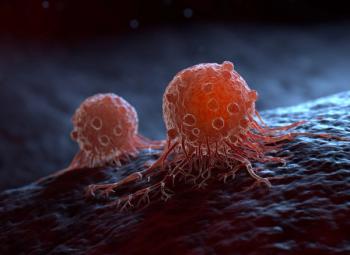
A positive CHMP opinion supports the perioperative use of pembrolizumab plus enfortumab vedotin in resectable MIBC regardless of cisplatin eligibility.
Jasmine Zain, MD, described how pre-existing CHIP mutations should inform pre-infusion risk counseling and treatment selection.

T-DXd and Dato-DXd are now approved treatments in Japan for patients with breast cancer.
Data from the phase 3 EMBER-3 trial support the full approval of imlunestrant plus abemaciclib in this breast cancer population.
!["Patients [with cancer] and physicians would rather have a fixed-duration treatment, if possible," said Julie M. Vose, MD, MBA, at SOHO 2026.](https://cdn.sanity.io/images/0vv8moc6/cancernetwork/1cfb57db416943d8f8690afb0bc0d13aa3d90683-400x400.jpg?w=350&fit=crop&auto=format)
"Patients [with cancer] and physicians would rather have a fixed-duration treatment, if possible," said Julie M. Vose, MD, MBA, at SOHO 2026.

Updated NCCN Guidelines for multiple myeloma add a dedicated MRD testing framework and expand recommended MRD assessment timepoints.

The European Medicines Agency’s CHMP recommended approval of relacorilant plus nab-paclitaxel for platinum-resistant ovarian cancer based on the ROSELLA trial.

Posters highlighted sex-based differences in aggressive B-cell NHL, third-line therapies in aggressive BCL, and real-world safety with CD20/CD3 bispecifics.
NICE recommended trastuzumab deruxtecan for reimbursement in England for HER2-low metastatic breast cancer, backed by DESTINY-Breast04 data.
Subcutaneous amivantamab is safer and more convenient for patients compared with the intravenous formulation, according to Misako Nagasaka, MD, PhD.
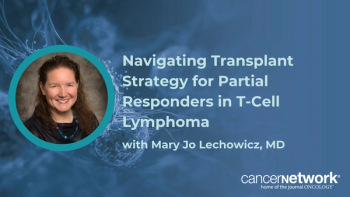
Mary Jo Lechowicz, MD, discussed how pre-transplant depth of response informs the choice between autologous and allogeneic HSCT in T-cell lymphoma.

Jasmine Zain, MD, described the molecular workup to determine whether a secondary malignancy after CAR T-cell therapy reflects direct insertional mutagenesis.
SOHO 2026 sessions covered chemoimmunotherapy in frontline DLBCL, treatment selection via molecular classifiers, and bispecific antibodies for unfit patients.

The FDA cleared the Triton 1 robotic endoscopy system for diagnostic and therapeutic procedures such as colorectal cancer screening and lesion removal.

ASTRO’s first standalone clinical practice guideline for bladder cancer recommends trimodal therapy vs radical cystectomy for select muscle-invasive disease cases.

Investigators are evaluating cesalatamig among patients with advanced cancer in the international phase 1/2 BiPAVE-001 trial.

The FDA granted fast track designation to the oral pan-KRAS inhibitor KST-6051 for patients with KRAS-mutant advanced or metastatic solid tumors.