

The August CancerNetwork Snap Recap takes a look back at key FDA news updates, as well as expert perspectives on the chemotherapy shortage.

Your AI-Trained Oncology Knowledge Connection!
The August CancerNetwork Snap Recap takes a look back at key FDA news updates, as well as expert perspectives on the chemotherapy shortage.

Across several clinical trials, Unfold AI appears to help in prostate cancer treatment selection and follow-up.

Prescribing information has been updated to include temozolomide as adjuvant treatment for adult patients with newly diagnosed anaplastic astrocytoma or refractory anaplastic astrocytoma.

Treatment with adagrasib appears to be particularly well tolerated in patients with KRAS G12C–mutated non–small cell lung cancer who receive it for more than 1 year.

Data from a phase 1/2 trial support the fast track designation for tulmimetostat as a treatment for patients with ARID1A-mutated advanced, recurrent or metastatic endometrial cancer.

Iruplinalib appears tolerable with no new safety signals among patients with locally advanced and metastatic ALK-positive non–small cell lung cancer in the phase 3 INSPIRE trial.

Co-editor-in-chief, Howard S. Hochster, MD, reviews the ongoing drug price negotiations and the effect it will have in the health care space.

Data from the phase 2 EVOKE-02 trial support further assessment of sacituzumab govitecan plus pembrolizumab as a frontline treatment for metastatic non–small cell lung cancer.

Investigators report acceptable morbidity and health-related quality of life with neoadjuvant chemotherapy plus surgery and concomitant chemoradiotherapy in those with cervical cancer.
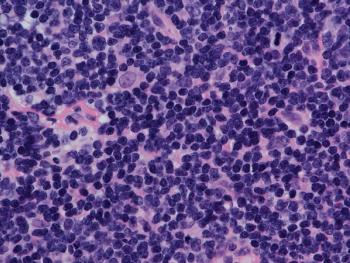
Allogeneic stem cell transplant should be strongly considered as a treatment for patients with mantle cell lymphoma who are adequately fit, according to Thomas E. Lew.

Benmelstobart plus anlotinib and chemotherapy produce survival benefits in extensive-stage small cell lung cancer across all patient subgroups in the phase 3 ETER701 trial.

Investigators report a progression-free survival benefit with osimertinib plus chemotherapy in EGFR-mutated non–small cell lung cancer across all subgroups in the phase 3 FLAURA2 study.

Investigators will assess AFM13 in combination with AB-101 as a treatment for those with relapsed or refractory Hodgkin lymphoma in the phase 2 LuminICE-203 trial.

Findings suggest the presence of different genetic pathways that may drive disparities in outcomes between Black and White patients with endometrioid endometrial cancer, according to Kristin Taylor, MD.

Characteristics including Ogata score and phenotypic aberrancies may correlate with mutational patterns that are predictive of treatment response in patients with myelodysplastic syndrome.

Findings from the phase 3 THOR study support the marketing authorization application for erdafitinib as a treatment for those with advanced or metastatic urothelial cancer harboring FGFR3 alterations.

Treatment with loncastuximab tesirine-lpyl in the safety run-in portion of the LOTIS-5 study appears to be promising, according to Michal Kwiatek, MD, PhD
A single dose of motixafortide results in achievement of stem cell collection goal in patients with multiple myeloma.

Bispecific antibodies may be more broadly applicable as treatment for patients with multiple myeloma in the short-term, according to Ajai Chari, MD.
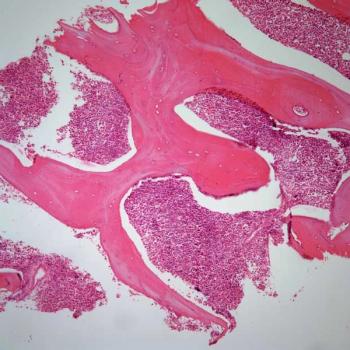
Asciminib may be more tolerable than bosutinib in the treatment of those with chronic myeloid leukemia, according to Michael Deininger, MD.

Data from previous studies demonstrate that pretreatment levels of circulating tumor DNA may be prognostic in diffuse large B-cell lymphoma, according to Mark J. Roschewski, MD.

Patients with multiple myeloma and enduring MRD-negativity are able to achieve the deepest responses with ciltacabtagene autoleucel, according to Yi Lin, MD, PhD.

It may be an optimal approach to improve first-line treatment options to prevent relapse in those with T-cell acute lymphoblastic leukemia, according to Kristen O’Dwyer, MD.

Investigators report no differences in rates of graft-versus-host-disease with intensive or non-intensive consolidation chemotherapy prior to transplantation for elderly patients with acute myeloid leukemia.
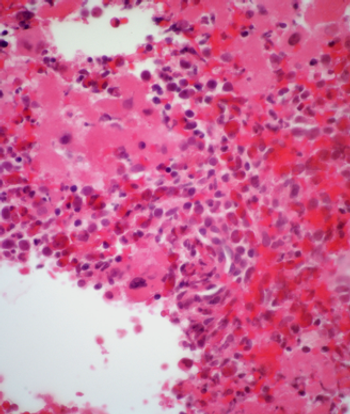
A major molecular response at 3 months appears to increase the probability of overall survival in patients treated with ponatinib for chronic-phase chronic myeloid leukemia in the phase 2 PACE trial.

Luspatercept may provide clinical benefit regardless of subgroup and baseline mutation burden in transfusion dependent patients with myelodysplastic syndrome with anemia, according to Guillermo Garcia-Manero, MD.
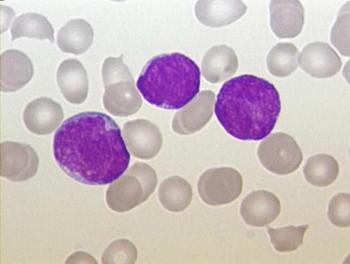
Ponatinib also produces an improvement in progression-free survival compared with imatinib among those with Philadelphia chromosome-positive acute lymphoblastic leukemia in the phase 3 PhALLCON trial.

Investigators report a higher recurrence-free survival rate for patients receiving a pediatric-inspired protocol regimen compared with an adult chemotherapy regimen in a retrospective review.
Mohammad Bakri Hammami, MD, highlights a need to address socio-racial disparities among Black and non-Black patients with primary myelofibrosis to ensure that everyone receives high-quality treatment.

A planned phase 1 trial will examine CDK12/13 inhibitor CT7439 in patients with several types of solid tumors, including breast and ovarian cancer, as well as Ewing’s sarcoma.