

The consolidation of oncologists and the transition to bispecific antibodies and CAR T-cell therapies are among factors that have led to increasing cancer care costs.

Your AI-Trained Oncology Knowledge Connection!
The consolidation of oncologists and the transition to bispecific antibodies and CAR T-cell therapies are among factors that have led to increasing cancer care costs.

Treatment with zanzalintinib plus atezolizumab led to improvements in OS and PFS vs regorafenib alone in patients with metastatic colorectal cancer.
CancerNetwork spoke with Arturo Loaiza-Bonilla, MD, MSEd, FACP, regarding his insights about recent advancements for AI in oncology.
Additional translational research may help inform the design of next-generation therapies for patients with multiple myeloma, said Manoj Bhasin, PhD, MS.

Real-world data presented at the 36th Annual IPCU build upon findings from the phase 3 TITAN trial evaluating apalutamide in this CSPC population.

Rivoceranib plus camrelizumab achieved a median OS of 23.8 months vs 15.2 months with sorafenib alone in patients with unresectable hepatocellular carcinoma.

IFx-2.0 showed a clinical benefit in an early phase 1 trial and has now been given orphan drug designation by the FDA for patients with stage IIB to IV cutaneous melanoma.

In palliative care, AI may serve as a supportive tool rather than a replacement of clinical judgment, said Ram Prakash Thirugnanasambandam, MBBS.

According to investigators of the phase 3 SCOT trial, most patients with colon and rectal cancer should be receiving only 3 months of adjuvant treatment.
Artificial intelligence may be used in CT scans to help detect early-stage disease in at-risk patients undergoing screening for cancer.

Intensive surveillance and surgical resection for hepatic metastases from uveal melanoma improved long-term remission in a retrospective study.
Kathie-Ann Joseph, MD, MPH, FACS, explored evolving surgical strategies for inflammatory breast cancer and phyllodes tumors.

One of the lesser-known costs of undergoing cancer treatment is the loss of work opportunities, according to Loretta Nastoupil, MD.

Soumen Das, MBBS, MS, FACS, details how the BC-RADS-2 study standardizes clinical breast examinations to combat diagnostic delays and improve early-stage detection in low-resource oncology settings.

Pembrolizumab administered before surgery in patients with desmoplastic melanoma led to high pathologic complete response rates in the SWOG S1512 trial.
Soumen Das, MS, FACS, discusses the BCRADS-2 study, a validated clinical scoring system designed to standardize breast cancer triage and downstage palpable lesions in low- and middle-income countries.

An unadjusted indirect comparison analysis of the SEQUOIA and AMPLIFY trials revealed improved PFS with zanubrutinib vs acalabrutinib plus venetoclax.

The median progression-free survival was significantly higher with donor vs placebo fecal microbiota transplantation in this RCC population.

In the phase 1/2 ReFocus trial, lirafugratinib demonstrated a median PFS of 11.3 months in the chemotherapy pretreated, FGR inhibitor-naïve CCA population.
Soumen Das, MBBS, MS, FACS, discussed the BC-RADS-2 study, a community-integrated approach to standardizing breast cancer detection in low-resource settings through a structured clinical reporting and data system.

PSMA-PET could be considered in selective cases, given its modest sensitivity and prognostic value in intermediate-risk prostate cancers.

Investigators are currently assessing QTX-2101 among patients with acute promyelocytic leukemia in a phase 3 trial.

Phase 2 PFLT-PC data revealed no significant disease was seen in 84% of patients treated with cooled laser focal therapy for prostate cancer at 3 months.

In the PATINA trial, adding palbociclib to maintenance therapy significantly improved progression-free survival in patients with HR+, HER2+ breast cancer.

The FDA has assigned a Prescription Drug User Fee Act date of November 14, 2026, for the ivonescimab-based combination.

The developer now plans to initiate a first-in-human clinical trial among patients with recurrent high-grade glioma.
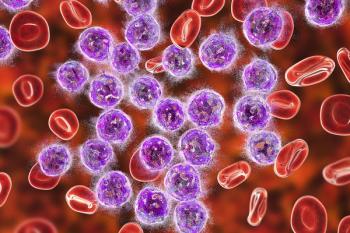
Approval of the larger vial size may offer more dosing flexibility for pediatric and adult patients with T-cell ALL or LBL.

A new guideline from ASCO and Ontario Health conditionally recommends the use of daratumumab for patients with high-risk smoldering multiple myeloma.

Any-grade treatment-emergent immune-mediated AEs occurred in 22% of patients with early-stage lymphoma treated with the ADC-based regimen.
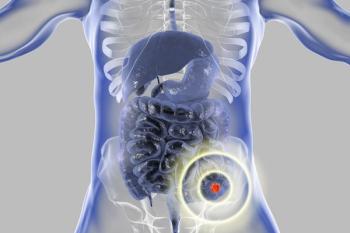
People who consumed 14 or more drinks per week experienced a higher risk of colorectal cancer compared with those who consumed one or fewer drinks.