
Results from the phase 1/2 ARROW trial showed robust and durable responses in patients with RET fusion–positive cancer treated with pralsetinib.

Your AI-Trained Oncology Knowledge Connection!
Results from the phase 1/2 ARROW trial showed robust and durable responses in patients with RET fusion–positive cancer treated with pralsetinib.
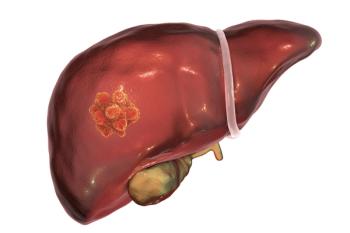
Khaled W. Kabbara, MD, and colleagues, research treatment options for cholangiocarcinoma.
Paul G. Richardson, MD, presented data from the phase 3 DETERMINATION study at 2022 ASCO and theorized how these findings could extend to similar regimens in newly diagnosed multiple myeloma.
A partial clinical hold placed on the phase 1/2 TakeAim Lymphoma trial was lifted after a strategy to identify and manage rhabdomyolysis was agreed upon.
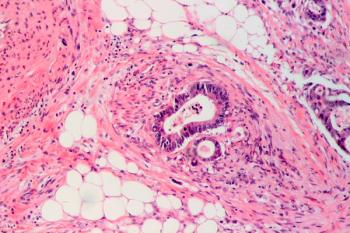
Investigators found that patients with non–gain-of-function TP53-mutant right-sided metastatic colorectal cancer and gain-of-function TP53-mutant left-sided tumors had poorer survival vs their counterparts.
P. Connor Johnson, MD, and Jeremy S. Abramson MD, MMSc, discuss available treatments for patients with Burkitt lymphoma and high-grade B-cell lymphoma.

Alexis A. Thompson, MD, MPH, spoke about the use of betibeglogene autotemcel for patients with β-thalassemia.
Based on results from the phase 3 MOMENTUM trial, the FDA has accepted a new drug application of momelotinib for patients with myelofibrosis.

Pediatric and adult patients who have β -thalassemia and need regular red blood cell infusions may now receive betibeglogene autotemcel, which has been approved by the FDA.

Positive trends in screening of patients at high risk of lung cancer may double survival in this malignancy, according to Giorgio V. Scagliotti, MD, PhD, at 2022 WCLC.
Patients with previously untreated diffuse large B-cell lymphoma may benefit from treatment with polatuzumab vedotin-piiq plus rituximab, cyclophosphamide, doxorubicin, and prednisone, for which a supplemental biologics license application was accepted by the FDA.

“...we don’t focus on survivorship enough. It’s important to understand the other factors involved in surviving besides just a treatment.”

Based on data showing that patients with metastatic castration-resistant prostate cancer may achieve benefit following treatment with olaparib plus abiraterone and prednisone or prednisolone regardless of homologous recombination repair mutational status, the FDA gave the combination priority review.

Findings from a recent study show that a neutrophil-to-lymphocyte ratio of less than 6 before treatment was correlated with improved overall survival for patients with endometrial cancer.

Results from the second interim analysis of the phase 3 TROPiCS-02 trial showed significantly improved overall survival among patients with hormone receptor–positive, HER2-negative metastatic breast cancer who were given sacituzumab govitecan vs physician’s choice of treatment.
Data from the PARADIGM trial that were presented at 2022 ASCO demonstrated that panitumumab plus FOLFOX should be standard of care for patients with left-sided, RAS wild-type colorectal cancer, according to Tanios S. Bekaii-Saab, MD.
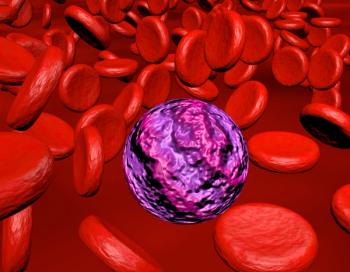
Patients with newly diagnosed acute myeloid leukemia had longer overall survival with a modified dosing schedule of venetoclax plus a hypomethylating agent.

The primary end point of improved progression-free survival was met in the phase 3 DESTINY-Breast02 trial when patients with HER2-positive unresectable and/or metastatic breast cancer were given trastuzumab deruxtecan vs physician’s choice of therapy.
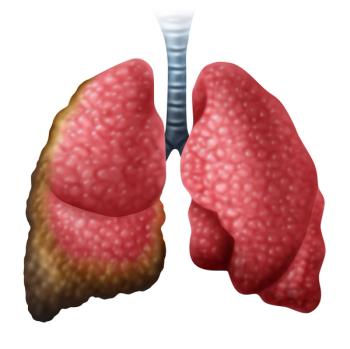
Results from the phase 2 PEMMELA trial revealed positive treatment benefits in patients with malignant pleural mesothelioma who were given pembrolizumab plus lenvatinib.
Valentina Boni, MD, PhD, spoke about numerous trials in the breast cancer space presented at 2022 ASCO.

The phase 3 JAVELIN Lung did not produce statistically significant overall or progression-free survival benefit with avelumab for non–small cell lung cancer.
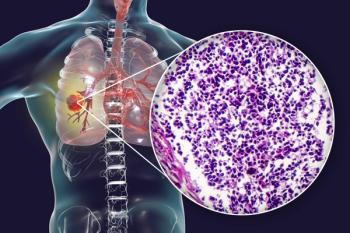
Ociperlimab plus tislelizumab showed promising antitumor activity in patients with treatment-naïve, metastatic, PD-L1–positive non–small cell lung cancer who were treated on the phase 1 AdvanTig-105 trial.
Tanios S. Bekaii-Saab, MD, discussed how data from clinical trials examining different targeted strategies in colorectal cancer will transform the way in which patients with this malignancy are seen and treated.
Results from the phase 3 RATIONALE-303 trial presented at 2022 WCLC showed an overall survival benefit when patients with non–small cell lung cancer were treated with second- or third-line tislelizumab compared with docetaxel.
Ian D. Davis, MBBS, PhD, spoke about the subgroup analysis of the ENZAMET trial which analyzed enzalutamide in metastatic hormone-sensitive prostate cancer.
Results from a phase 1b trial showed efficacy potential of sotorasib plus SHP2 inhibitor RMC-4630 for patients with pretreated or KRAS G12C inhibitor–naïve non–small cell lung cancer.

Follow-up to the phase 2 NAVIGATE and phase 1 LOXO-TRK-14001 trials showed durable responses and extended survival in patients with NTRK fusion–positive lung cancer who were treated with larotrectinib.

Regular approval has been granted to capmatinib for the treatment of patients with metastatic non–small cell lung cancer whose tumors harbor a MET exon 14 skipping mutation.
At ASCO 2022, Roy S. Herbst, MD, PhD, reviews a substudy of the phase 2 Lung-MAP trial which investigates ramucirumab plus pembrolizumab for patients with advanced non–small cell lung cancer who demonstrated resistance to previous immunotherapy.

Adults with previously treated unresectable or metastatic non–small cell lung cancer whose tumors harbor HER2 mutations may now be treated with fam-trastuzumab deruxtecan-nxki.