
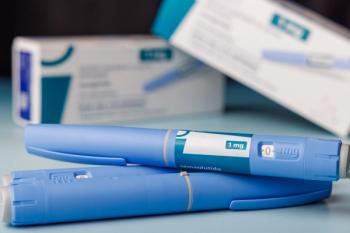
Retrospective data showed that GLP-1 receptor agonist use was associated with a 51% reduction in colorectal cancer odds among patients with inflammatory bowel disease.
Retrospective data showed that GLP-1 receptor agonist use was associated with a 51% reduction in colorectal cancer odds among patients with inflammatory bowel disease.

Findings from the phase 3 PATINA trial support the FDA approval of palbociclib plus trastuzumab with or without pertuzumab in this breast cancer population.
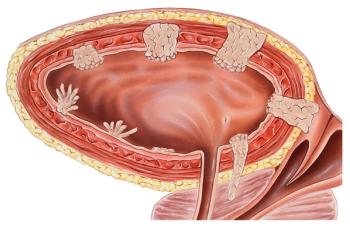
Findings from the phase 3 EV-303 trial evaluating the enfortumab-based regimen vs surgery alone in this MIBC group supported the regulatory decision.

Sherry Shen, MD, broke down early data from MSK evaluating the role GLP-1s play in survival and helping to manage long-term outcomes in breast cancer.

The latest conversation in RadOnc on the Run explores patient and provider considerations for navigating cancer diagnosis, treatment, and recovery.

PREDICT II is a prospective 30-site observational registry enrolling 3000 women with DCIS to evaluate how a 7-gene biosignature (DCISionRT) impacts treatment recommendations for surgery, radiation, and hormonal therapy.
In this randomized trial, adding a pictorial COPE photo guide to standard verbal counseling for breast cancer patients receiving adjuvant RT led to the only statistically significant improvement in post-treatment skin change scores, with modest non-significant trends toward reduced anxiety.

An informed multiplex PCR circulating tumor DNA–based molecular residual disease test could inform adjuvant treatment following cystectomy.
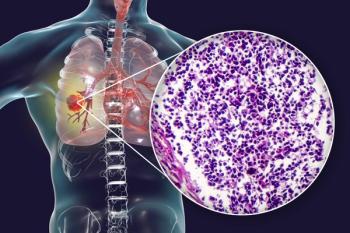
Investigators will share detailed results from the phase 3 SigVie-002 trial assessing sigvotatug vedotin in NSCLC at a future medical meeting.

Zanzalintinib plus atezolizumab did not elicit a statistically significant overall survival advantage over regorafenib in patients with non–MSI-H mCRC without active liver metastases.

Sherry Shen, MD, explained the compounding factors behind weight gain during breast cancer care and why managing cardiometabolic health is vital for survival.

Kim Stravers, an INELDA-certified death doula and educator, explains how end-of-life doulas provide nonmedical emotional, practical, and relational support to patients with cancer and their families.
This narrative review summarizes existing literature and clinical trial data on metastasis-directed and locoregional therapy for oligometastatic and oligoprogressive metastatic breast cancer, highlighting special scenarios where MDT may improve outcomes.
A streamlined clinical research team workflow at a Columbia University–affiliated community hospital achieved 5% to 8% annual trial enrollment, surpassing the Commission on Cancer benchmark and earning a National Cancer Institute Silver Award.
Data from the SPEARHEAD-1 study support the full FDA approval of afami-cel in this synovial sarcoma population.

“I love that our field is taking an ambitious swing at how best to take care of patients who are older and less fit with large cell lymphoma,” said Matthew Matasar, MD, chief in the division of Blood Disorders, Rutgers Cancer Institute/Jack & Sheryl Morris Cancer Center, and professor of medicine at Rutgers Robert Wood Johnson Medical School.
Eric Miller, MD, discussed the evolving role of immunotherapy, antibody-drug conjugates, and sequential therapeutic strategies for bladder preservation.

Binimetinib tablets at 45 mg received tentative FDA approval for patients with melanoma and NSCLC.

The European Commission has approved encorafenib plus cetuximab and FOLFOX as the first BRAF-targeted regimen authorized in the EU for first-line BRAF V600E–mutant metastatic colorectal cancer.

Experts discussed the integration of GLP-1 agonists and lifestyle interventions to mitigate obesity-related cancer risks and improve long-term survival.

Chinmay Jani, MD, discussed work he presented at the 2026 ASCO Meeting and future directions for precision medicine and clinical trials in lung cancer care.
Qualitative interviews with 43 patients on capivasertib plus fulvestrant found the 4-on/3-off dosing schedule broadly acceptable, while identifying gaps in hyperglycemia recognition and willingness to use supportive medications.
This 13-case pictorial review from the University of Rochester Medical Center illustrates the variable mammography, ultrasound, and MRI presentations of pleomorphic invasive lobular carcinoma to support timely interdisciplinary diagnosis.

A panel of exerts discussed key takeaways happening in the field of HER2+ metastatic breast cancer.

Those with TP53-mutated disease may benefit from continuous BTK inhibitor therapy, although limited-duration therapy is worthy of discussion.
This pictorial case series of 5 intramammary spindle-cell lesions demonstrates characteristics that support confident benign diagnosis after biopsy without surgical excision.
This prospective study found that diffuse optical spectroscopy identified elevated collagen as a significant biomarker for breast cancer malignancy, supporting further investigation of DOS as a noninvasive complement to biopsy.
A panel of exerts discussed key takeaways happening in the field of HR+/HER2– breast cancer.
Using spatial proteomics and nanomechanical profiling across two clinical cohorts, investigators identified hypoxia-driven epithelial-to-mesenchymal transition as a biological signature linking aggressive biomechanical phenotypes to poor breast cancer outcomes.
A theory-driven paper planner combined with a digital AI companion demonstrated high acceptability and improved treatment confidence among patients with metastatic TNBC initiating ADC therapy.