





Brain Cancer
Latest News
Advertisement
Latest Videos
![According to John Henson, MD, “What we need are better treatments to control the [brain] tumor once it’s detected.”](https://cdn.sanity.io/images/0vv8moc6/cancernetwork/e0d29c38bb732429ae370e4ef7d1829a10c96446-2992x1684.png?w=320&fit=crop&auto=format)




Shorts
0:54
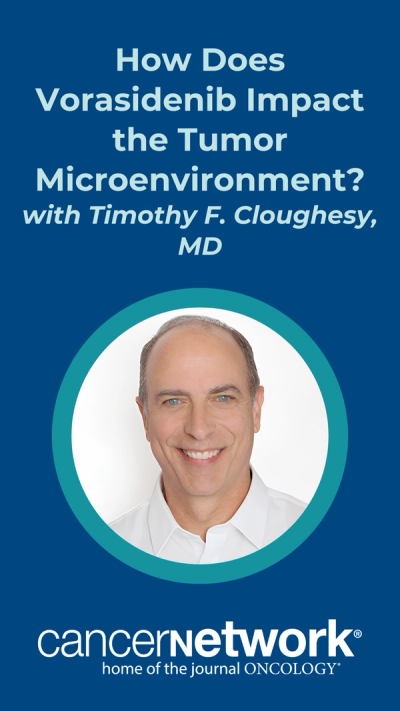
How Does Vorasidenib Impact the Tumor Microenvironment?
14 days ago
by
Timothy F. Cloughesy, MD

0:55
Personalized Vaccine/Pembrolizumab: The ASCO Abstract to Watch in Glioblastoma
19 days ago
by
Sonikpreet Aulakh, MBBS, MD
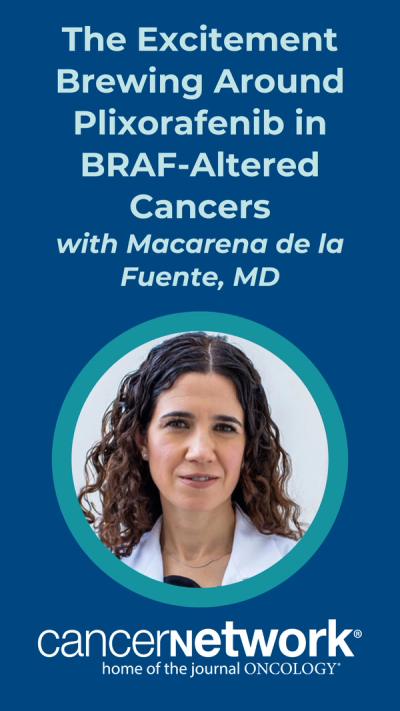
0:56
The Excitement Brewing Around Plixorafenib in BRAF-Altered Cancers
a month ago
by
Macarena de la Fuente, MD

1:01
Exploring The Applicability of Scorpion Venom in Glioblastoma Treatment
7 months ago
by
Michael Barish, PhD

0:54
EVA1-Targeting ADCs May Reduce AEs vs Anti-CD133 Agents in Glioblastoma
7 months ago
by
Toru Kondo, PhD
Podcasts





























































Advertisement
More News

The ASPHO Conference brings together the world’s leading experts in pediatric oncology and hematology, and this collection of posters detail new findings in care.
The conditional marketing authorization for tovorafenib in pediatric patients with low-grade glioma harboring a BRAF alteration is based on data from the FIREFLY-1 trial.

The FDA has granted FTD and cleared an IND application for daretabart, an anti-GD2 monoclonal antibody, for the treatment of high-risk neuroblastoma.

The FDA has set a Prescription Drug User Fee Act date of September 11, 2026, for TLX101-Px for patients with brain cancer.

Treatment with Rhenium-186 Obisbemeda for pediatric malignant gliomas and ependymomas is being assessed in the ReSPECT-PBC trial.

Results from a phase 1/2a trial and the ongoing FORTE basket study support the FDA’s regulatory decision for these patients with recurrent or progressive glioma.

The FDA has cleared an investigator-initiated investigational new drug application for a first-in-class AAV immuno-gene therapy in recurrent high-grade glioma.

FG001 is an investigational uPAR-targeting fluorophore designed to provide real-time illumination of aggressive brain tumors during surgical resection.
The irinotecan-based ChemoSeed delivery mechanism is currently under investigation for patients with malignant glioma in a registrational phase 2 trial.
The updated NDA submitted to the FDA included additional data and statistical analyses from existing clinical trials for pediatric and adult patients with glioma.
SRN-101, an AAV-based immuno-gene therapy, has received fast track designation for the treatment of recurrent high-grade glioma.

The FDA has cleared an IND application for FG001, allowing the developer to initiate its first US registration trial in patients with high-grade glioma.

Charlotte Ivey Rivers, MD, discussed the importance of rare CNS tumor research, upcoming trial data in meningioma, and the role of functional radiosurgery.
Findings from a phase 2 study demonstrate the feasibility of conducting genomically driven trials among patients with meningiomas.
The developer now plans to initiate a first-in-human clinical trial among patients with recurrent high-grade glioma.
Researchers have found that engineering CAR T cells to target Tenascin-C, an extracellular matrix protein enriched in glioblastoma, can shrink tumors and prolong survival in preclinical brain tumor models while sparing healthy tissue.

With a median follow-up of 6 months, the median OS was not yet reached in patients with recurrent glioblastoma with the nogapendekin alfa inbakicept-based regimen.

The submission of an investigational new drug application for a uPAR-targeted imaging agent, FG001, supports a planned phase 2 trial in glioma.


Among the 12 patients with suspected brain metastases treated with RAD 101, the images showed metabolic activity in brain metastases compared with MRI findings.
Treatment with IGV-001 demonstrated a 45% increase in overall survival compared with standard of care in patients with newly diagnosed glioblastoma.

Edward Chu, MD, a member of the gastrointestinal editorial advisory board, died of glioblastoma in November.

One patient with newly diagnosed glioblastoma multiforme reached 3 years of survival following treatment with temferon in a phase 1/2a trial.
Data from a phase 1 trial demonstrate the safety and feasibility of administering chlorotoxin-based cellular therapy to those with recurrent glioblastoma.

While more work must be done to minimize toxicity, antibody-drug conjugates have demonstrated benefits for patients with glioblastoma.
Advertisement
Advertisement
Trending on CancerNetwork
1
Analyzing ADC Options Across Metastatic TNBC
2
Arlo-Cel Produces Deep Responses in Pretreated R/R Multiple Myeloma
3
64 A Phase I/II Study of Pembrolizumab and Anti-CD3 x Anti-HER2 Armed Activated T-Cells in Metastatic Breast Cancer
4
Pembrolizumab Combo Shows Efficacy in Pediatric High-Risk Hodgkin Lymphoma
5