
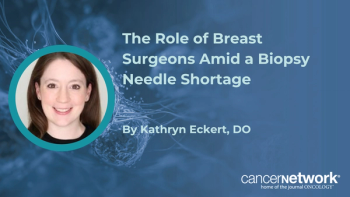
Kathryn Eckert, DO, discussed her role of bridging surgery and radiology teams as breast biopsy needle shortages continue nationwide.
Kathryn Eckert, DO, discussed her role of bridging surgery and radiology teams as breast biopsy needle shortages continue nationwide.

Megan Melody, MD, says it could be “years” before data clarify how to sequence bispecific antibodies and CAR T-cell therapy.
This closing segment addresses how first-line choice shapes later options and how to approach progression.
This segment presents a contrasting case: an older patient with a classic sensitizing mutation, lower disease burden, no central nervous system involvement, reduced renal function, a prior thromboembolic event, and meaningful access and support constraints.
This segment applies the preceding data to a higher-risk patient: a fit, newly diagnosed individual with a classic sensitizing mutation, a co-occurring high-risk alteration, high disease burden, and small asymptomatic brain metastases.
This segment turns from data to the patient conversation, focusing on the preconceptions people bring to treatment decisions.
This segment addresses the chemotherapy-free combination of amivantamab and lazertinib as a first-line option and its distinct safety profile.
This segment focuses on combining osimertinib with platinum-pemetrexed chemotherapy as a first-line intensification strategy.
This segment examines single-agent osimertinib as the foundation of first-line EGFR-mutated NSCLC therapy and the benchmark against which combination strategies are measured.
With the molecular picture established, the discussion turns to how a confirmed EGFR mutation translates into a first-line treatment decision.
This opening segment frames how first-line management of EGFR-mutated advanced non-small cell lung cancer has shifted from a single-agent standard to several guideline-preferred regimens, each carrying distinct efficacy, safety, and administration considerations.
Explore evolving CML therapy choices, from mutation-guided second-line switches to asciminib, as clinicians aim for durable, treatment-free remission.
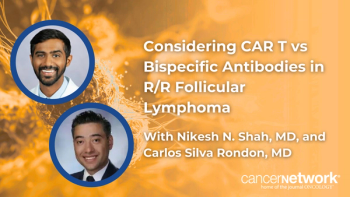
Two hematologic oncologists debated the clinical trade-offs of CAR T-cell therapy vs bispecific antibodies in relapsed/refractory follicular lymphoma.
Megan Melody, MD, says acute CAR T-cell toxicities are well managed, but delayed neurotoxicity remains a challenge.

Kathryn Eckert, DO, described how her breast surgery practice and imaging partners responded on day 1 of the Hologic Brevera needle recall.
Dr. Shadman introduces pirtobrutinib, the non-covalent BTKi currently approved as second-line therapy after covalent BTKi exposure.
Dr. Shadman introduces an important practical consideration from Flatiron real-world data examining BTKi discontinuation rates in elderly patients, challenging the notion that older patients with CLL need only one line of therapy.

Learn how to spot T-DXd lung toxicity early, manage fatigue and nausea, and tailor HER2+ breast cancer care with emerging biomarker insights.
Courtney D. DiNardo, MD, MSCE; and Michael R. Savona, MD, weigh whether ASCERTAIN-V data make oral HMA therapy the frontline default in AML.
Dr. Binod Dhakal, Dr. Prerna Mewawalla, and Dr. Carol Ann Huff discuss practical strategies for managing the safety profile of BCMA-directed bispecific antibodies in relapsed/refractory multiple myeloma (RRMM).

Explore new cutaneous SCC strategies: neoadjuvant PD-1, combo regimens, intralesional RP1, and early multidisciplinary referral.
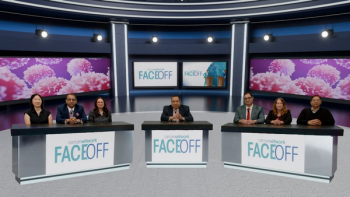
Two clinical scenarios illustrated shared decision-making in practice: a 58-year-old woman with TP53 mutation, L858R, and asymptomatic brain metastases drew unanimous consensus for treatment intensification with either FLAURA2 or MARIPOSA, given her high-risk features and flexible schedule.
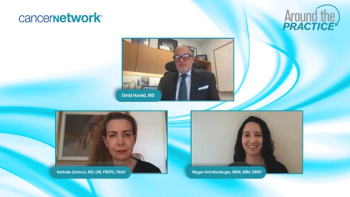
NP Schollenberger addresses the particularly challenging and understudied population of immunocompromised patients with advanced CSCC.
Explores why PD-L1 falls short in skin SCC and how TMB and transplant-safe immunotherapy may shape personalized care.
Both panelists describe multidisciplinary care coordination models.
The debate examined whether amivantamab-lazertinib or osimertinib-chemotherapy more favorably reshapes resistance biology, with the MARIPOSA team citing data showing lower rates of MET amplification (7.3% vs. 13.1%) and secondary EGFR mutations (1.4% vs. 7.6%) compared to osimertinib monotherapy, alongside a potential immune-activating effect of amivantamab and a possible curve-flattening signal suggesting disease course modification.
Dr. Binod Dhakal, Dr. Carol Ann Huff, and Dr. Prerna Mewawalla discuss how differences in patient populations across the MajesTEC clinical program may influence treatment decisions in relapsed/refractory multiple myeloma (RRMM).
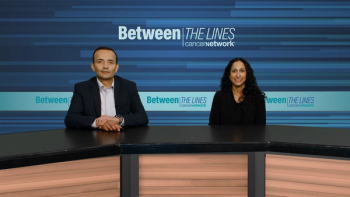
Dr. Ajai Chari and NP Samantha Shenoy conclude the program by summarizing the key clinical insights surrounding the management of newly diagnosed multiple myeloma (NDMM) and the evolving role of daratumumab-based treatment strategies. The faculty reflect on the importance of achieving deep and durable responses, the growing clinical relevance of minimal residual disease (MRD) assessment, and the value of long-term follow-up data in informing frontline treatment decisions. They discuss how contemporary evidence from studies such as MAIA and CEPHEUS has contributed to current treatment paradigms while emphasizing the need for individualized care based on patient characteristics, treatment goals, and tolerability. Dr. Chari and NP Shenoy reinforce the importance of multidisciplinary collaboration, patient engagement, and ongoing evaluation of emerging evidence to optimize long-term outcomes. The discussion concludes with practical perspectives on integrating clinical trial findings into routine management of patients with NDMM.
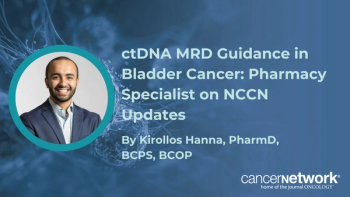
A pharmacist explored how recent NCCN guideline updates leverage ctDNA MRD testing to guide adjuvant immunotherapy and improve EFS in bladder cancer.
Michael R. Savona, MD, and Courtney D. DiNardo, MD, MSCE, explained how an all-oral AML regimen impacts infusion center logistics and patient visits.