
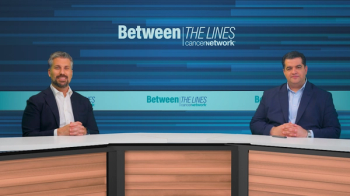
Dr. Shadman presents a case of a 68-year-old woman with symptomatic CLL requiring treatment.
Dr. Shadman presents a case of a 68-year-old woman with symptomatic CLL requiring treatment.
Dr. Shadman addresses when to switch within the BTKi class versus changing mechanism of action.
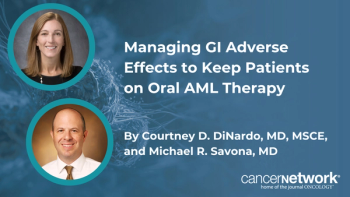
Courtney D. DiNardo, MD, MSCE, and Michael R. Savona, MD, shared antiemetic strategies for GI AEs with oral AML regimens.
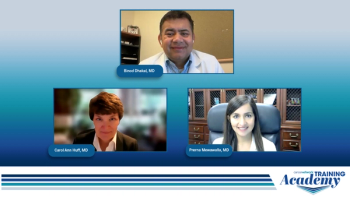
Dr. Binod Dhakal, Dr. Carol Ann Huff, and Dr. Prerna Mewawalla discuss the growing number of BCMA-directed bispecific antibody options available for patients with relapsed/refractory multiple myeloma (RRMM) and the practical considerations that influence treatment selection.
Dr. Binod Dhakal and Dr. Prerna Mewawalla discuss how evolving dosing strategies are helping improve the real-world use of BCMA-directed bispecific antibodies in relapsed/refractory multiple myeloma (RRMM).
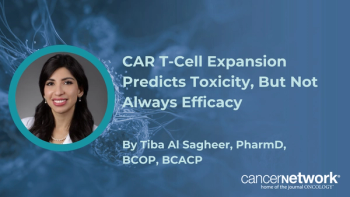
Tiba Al Sagheer, PharmD, BCOP, BCACP, said CAR T-cell expansion signals toxicity risk differently across cilta-cel and ide-cel.

Michael R. Savona, MD, and Courtney D. DiNardo, MD, MSCE, discussed ARC initiative data on venetoclax dose modifications in AML.
Kathryn Eckert, DO, spoke about diversifying breast imaging technology after the Hologic Brevera needle recall.
Herbert Lepor, MD, outlines NYU Langone’s long-term PSA and MRI surveillance protocol following focal cryoablation for prostate cancer.

Paul Oberstein, MD, discusses how RASolute 302 may be the most significant advance in pancreatic cancer treatment in more than a decade.
Differentiating between CRS and IEC-HS remains a challenge in mitigating toxicity associated with cellular therapy, said Tiba Al Sagheer, PharmD, BCOP, BCACP.
Kathryn Eckert, DO, shared how her team communicates with patients and keeps referral guidelines unchanged during the shortage.
The panel discusses ipilimumab dosing and the management of immune-related toxicity with nivolumab plus ipilimumab in advanced hepatocellular carcinoma (HCC).
Dr. Ajai Chari and Dr. Rahul Banerjee conclude the discussion by exploring future opportunities to further improve outcomes for patients with relapsed/refractory multiple myeloma (RRMM).
Dr. Ajai Chari and Dr. Rahul Banerjee discuss the increasingly complex treatment sequencing decisions facing clinicians in relapsed/refractory multiple myeloma (RRMM) as the number of highly active immunotherapy options continues to expand.
Ronan W. Hsieh, MD, presents the CheckMate 9DW trial for Team Chicago Hot Dog, reviewing the phase 3 study of nivolumab plus ipilimumab versus investigator's choice of lenvatinib or sorafenib in first-line unresectable hepatocellular carcinoma (HCC).
Kathryn Eckert, DO, discussed her role of bridging surgery and radiology teams as breast biopsy needle shortages continue nationwide.

Megan Melody, MD, says it could be “years” before data clarify how to sequence bispecific antibodies and CAR T-cell therapy.
This closing segment addresses how first-line choice shapes later options and how to approach progression.
This segment presents a contrasting case: an older patient with a classic sensitizing mutation, lower disease burden, no central nervous system involvement, reduced renal function, a prior thromboembolic event, and meaningful access and support constraints.
This segment applies the preceding data to a higher-risk patient: a fit, newly diagnosed individual with a classic sensitizing mutation, a co-occurring high-risk alteration, high disease burden, and small asymptomatic brain metastases.
This segment turns from data to the patient conversation, focusing on the preconceptions people bring to treatment decisions.
This segment addresses the chemotherapy-free combination of amivantamab and lazertinib as a first-line option and its distinct safety profile.
This segment focuses on combining osimertinib with platinum-pemetrexed chemotherapy as a first-line intensification strategy.
This segment examines single-agent osimertinib as the foundation of first-line EGFR-mutated NSCLC therapy and the benchmark against which combination strategies are measured.
With the molecular picture established, the discussion turns to how a confirmed EGFR mutation translates into a first-line treatment decision.
This opening segment frames how first-line management of EGFR-mutated advanced non-small cell lung cancer has shifted from a single-agent standard to several guideline-preferred regimens, each carrying distinct efficacy, safety, and administration considerations.
Explore evolving CML therapy choices, from mutation-guided second-line switches to asciminib, as clinicians aim for durable, treatment-free remission.
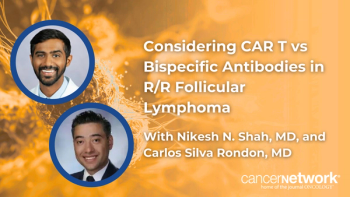
Two hematologic oncologists debated the clinical trade-offs of CAR T-cell therapy vs bispecific antibodies in relapsed/refractory follicular lymphoma.
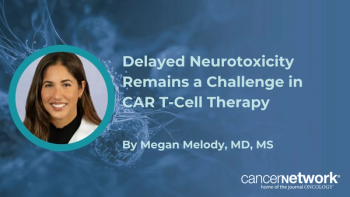
Megan Melody, MD, says acute CAR T-cell toxicities are well managed, but delayed neurotoxicity remains a challenge.