
Opinion|Videos|January 23, 2025
Future of HER2-Directed Tumor-Agnostic Therapies
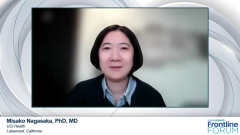
Author(s)Misako Nagasaka, MD, PhD
Panelist discusses how HER2-directed tumor-agnostic treatments are likely to see expanded applications across multiple cancer types, driven by improved biomarker testing and emerging clinical evidence. This approach may become increasingly personalized through enhanced molecular profiling, potentially leading to more precise patient selection and combination strategies.
Advertisement
Episodes in this series
Video content above is prompted by the following:
- Where do you see the field of HER2-directed tumor-agnostic therapies evolving in the next 5 years?
Advertisement
Related to this article

Chinmay Jani, MD, describes how he counsels patients with and without a smoking history on a lung cancer diagnosis.

Chinmay Jani, MD, discusses ASCO 2026 data on lung cancer trends in younger adults and why this group has been overlooked.

Chinmay Jani, MD, explains how air pollution and asbestos contribute to lung cancer deaths beyond tobacco.

Chinmay Jani, MD, highlights non-smoking risk factors, the impact of lung cancer on younger populations, and the value of comprehensive molecular testing.

Dwight H. Owen, MBBCh, MS, discussed why severe immune-related toxicities remain hard to predict as immunotherapy combinations expand in lung cancer.
Presentations at ESMO Congress 2026 detailed how surgery, radiation oncology, and supportive care can contribute to the treatment of patients with NSCLC.

"As we combine more treatments…they have overlapping toxicities, and they may have the ability to synergize in a negative way," said Dwight H. Owen, MBBCh, MS.
Advertisement
Advertisement
Trending on CancerNetwork
1
What Separates a Next-Generation Liver Tumor Board From the Traditional Model?
2
Weighing Immunotherapy for Bridging and Downstaging Before HCC Transplant
3
BOT+BAL Yields Long-Term Survival in Patients With Refractory MSS mCRC
4
MASLD Raises Liver and Other Cancer Risks, Supporting Selective HCC Surveillance
5