“Those of us who work with NK cells have no doubt that they are incredibly powerful at killing cancer cells,” said Veronika Bachanova, MD, PhD.
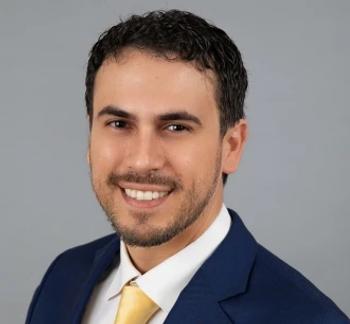
Hua-Jay Cherng, MD, explored how ctDNA and MRD are shifting from theoretical markers to actionable clinical tools in DLBCL.
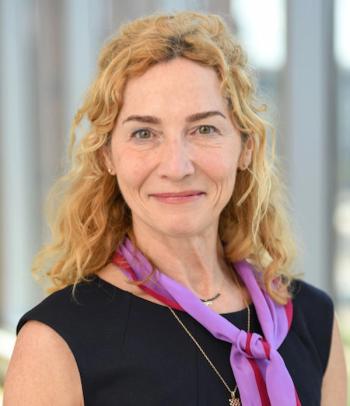
The management of diffuse large B-cell lymphoma (DLBCL) and other non-Hodgkin lymphomas is standing at the precipice of a shift toward precision medicine. Although standard-of-care regimens such as rituximab (Rituxan) plus cyclophosphamide, doxorubicin, vincristine, and prednisone (R-CHOP) have remained the cornerstone of treatment for decades, the integration of molecular biomarkers may redefine how clinicians assess response and select therapies. In this conversation, CancerNetwork® spoke with Hua-Jay Cherng, MD, who discussed the vital transition of minimal residual disease (MRD) and circulating tumor DNA (ctDNA) from the laboratory to the bedside.
Cherng, an assistant professor of medicine in the Lymphoma Program in the Division of Hematology and Oncology at Columbia University Irving Medical Center, highlighted the potential for these noninvasive tools to guide treatment de-escalation, thereby minimizing unnecessary adverse effects, or inform consolidation strategies for high-risk patients who show suboptimal molecular responses.
Beyond the technicalities of molecular monitoring, he emphasized the critical role of collaborative research networks and mentorship in fostering the next generation of clinical investigators. As the field moves toward leveraging specific genetic features to replace traditional chemotherapy with targeted agents, the necessity for prospective trials and standardized guidelines remains a top priority, according to Cherng. He provided a comprehensive look at the dual nature of precision oncology: using biomarkers to monitor treatment in real time and employing genotyping to dictate personalized up-front therapeutic choices for patients with lymphoma.
Cherng: That is a great question and a large focus of my research. I’ll use DLBCL as an example. There is a myriad of hypothetical scenarios where testing for MRD with ctDNA sequencing would be useful.
For example, if we were to test during treatment, we could potentially use that to guide either de-escalation of treatment to reduce toxicity or to increase treatment and add agents for patients who might be higher risk because of a suboptimal molecular response. At the end of treatment, patients who are still positive for MRD might, in the future, benefit from consolidation treatments to prevent relapse. In the surveillance setting, the hope is that a minimally invasive blood draw would be less onerous and more effective than conventional imaging, like PET scans, and maybe even replace the need for repeat biopsies in certain scenarios.
I say hypothetical because these potentials are not quite ready for prime time yet, but with a bit more time and data, we should be able to move ctDNA and MRD from the bench to the bedside to affect patient care.
Now more than ever, academic medicine––including oncology––is [unable] to exist in a silo. Particularly for junior investigators such as myself, the benefits of taking part in these training opportunities are 3-fold.
One, you get structured training on how to [conduct] clinical research and run clinical trials; this is not a structured curriculum for medical school or residency. To learn from seasoned researchers who have been doing it for decades is invaluable. Potentially even more so is the opportunity to find external mentors beyond your own institution as well as external collaborators. We cannot do research alone anymore; no one institution has enough resources or patients.
To get perspectives and advice from people outside of where you work as well as make these connections that will one day potentially be lifelong collaborations and friendships are important. You will see these [colleagues] when you do collaborative research or [go to] conferences. Establishing these connections is vital for building the foundation of your own clinical research program for the future.
That job falls on researchers. The problem is 2-fold. One is that we ultimately need prospective studies in many scenarios to prove that guiding treatment decisions based on biomarkers like MRD leads to improved patient outcomes––be that improved survival, decreased toxicity, or a combination of the two. That is going to require prospective clinical trials, which take time and cannot answer every single question about every single scenario.
For the rest of the use cases, it is very important for experts and leaders in the field to make the effort and establish guidelines for when it is best to send these tests for MRD and what we do with that information. These tools are available or going to be available for routine use for clinicians, but without instruction on how exactly to use them, it is going to be a black box and the Wild West. We need consortiums and working groups to better establish how we should be using this new technology to benefit patients.
I have touched on the first half of precision medicine––or oncology, at least my interpretation of it for lymphoma––which is using molecular biomarkers to make on-treatment or posttreatment decisions for patients based on their response to treatment.
The other half of precision oncology, as it relates to lymphoma, is how we can leverage specific molecular or genetic features about a patient’s own disease to help pick targeted treatments for them up front. Over the last 10-plus years, we have known about molecular subtypes of DLBCL. It is a remarkably heterogeneous umbrella disease. These patients [perform] differently, and their diseases might preferentially respond to different targeted treatments. However, over [approximately] the last 3 decades, we have been treating them [nearly] exactly the same with cycles of combination immunochemotherapy.
How can we leverage molecular genotyping to pick different treatments for different patients, either to improve outcomes for higher-risk subgroups or even replace chemotherapy with less toxic and more targeted treatments for patients who might already do well with standard chemotherapy? This is doubly important for our patients who are [older] or frail with lymphoma who might not be able to tolerate full-dose combination chemotherapy. Can we introduce novel targeted treatments to replace chemotherapy up front for those patients? This is the other half that I am excited about, and we are going to see more of a replacement of the standard R-CHOP immunochemotherapy for patients in the next 5 years.