




Breast Cancer
Latest News
Advertisement
Latest Videos

























































Advertisement
More News

Expert panelists elucidate the mechanisms of ctDNA and MRD testing, providing a broad perspective on how they are used in cancer care.

Treatment with adjuvant radiotherapy in the prone position lowered the odds of desquamation in patients with breast cancer and large breast size.

Mark Pegram, MD, spoke the most important data from the IDEAL trial he believes his colleagues should take away.

Valentina Boni, MD, PhD, spoke about the safety profile observed of lurbinectedin monotherapy and future analyses for patients with BRCA1/2-associated metastatic breast cancer.
Hope S. Rugo, MD, FASCO, gave an overview of ribociclib plus aromatase inhibitor use vs abemaciclib plus aromatase inhibitors for patients with hormone receptor-positive, HER2-negative advanced breast cancer.

Findings from the phase 1/2 FAKTION trial indicated that survival had increased following the addition of capivasertib to fulvestrant for patients with aromatase inhibitor–resistant, estrogen receptor–positive, HER2-negative advanced breast cancer.
Hope S. Rugo, MD, FASCO, reviewed data from a matching-adjusted indirect comparison study which analyzed quality of life in patients with hormone receptor–positive, HER2-negative advanced breast cancer treated with ribociclib- or abemaciclib-based regimens.

Investigators reported a reduction in racial and ethnic disparities among patients with de novo stage IV breast cancer following implementation of Medicaid expansion, and included a decreased risk of death for patients in a racial/ethnic minority compared with White patients.
Valentina Boni, MD, PhD, spoke about the rationale behind using lurbinectedin monotherapy for pretreated BRCA1/2-associated metastatic breast cancer.
Mark Pegram, MD, discussed the highlights from ASCO 2022, regarding antibody drug conjugates.
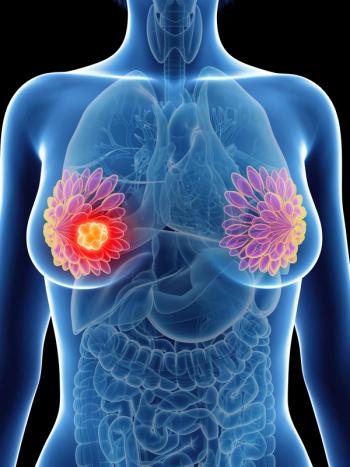
The phase 2 CTMX-2009-002 trial met its primary end point of confirmed objective response greater than 10% for patients with hormone receptor–positive, HER2–non-amplified breast cancer being treated with praluzatamab ravtansine.

Steven J. Chmura, MD, PhD, discussed recent findings from the phase 2R/3 NRG-BR002 trial in patients with newly diagnosed oligometastatic breast cancer.

Paolo Tarantino, MD, and Sara M. Tolaney, MD, MPH, spoke with CancerNetwork® about highlights from 2022 ASCO in breast cancer research.
Mark Pegram, MD, spoke about predictive and prognostic factors used to determine which patients with early-stage hormone receptor–positive breast cancer benefit from extended vs standard adjuvant endocrine therapy.
Mark Pegram, MD, spoke about using the Breast Cancer Index and Clinical Treatment Score post-5 years to determine outcomes for patients with early-stage hormone receptor–positive breast cancer treated with adjuvant endocrine therapy.

Patients with hormone receptor–positive, ERBB2-negative high-risk early breast cancer who received neoadjuvant chemotherapy and adjuvant abemaciclib plus endocrine therapy experienced invasive disease-free survival and distant relapse-free survival benefit vs those with adjuvant endocrine therapy alone.

After identifying several factors independently associated with the risk of breast cancer–related lymphedema following axillary lymph node dissection, investigators recommend further studies to examine biologic mechanisms behind racial and ethnic disparities within this space.
Steven J. Chmura, MD, PhD, spoke about interesting findings from a phase 2R/3 trial of patients with newly oligometastatic breast cancer who were given standard of care systemic treatment with or without stereotactic body radiotherapy and/or surgical resection.
Independent factors such as the integrated clinical radiomics model and 18F-FDG PET/CT radiomics signature may be predictive of progression-free survival in breast cancer.
Hope S. Rugo, MD, FASCO, spoke about future analyses of the phase 3 TROPiCS-02 trial that examined sacituzumab govitecan vs physicians’ choice chemotherapy in patients with hormone receptor–positive, HER2-negative advanced breast cancer.
Hope S. Rugo, MD, spoke about results of the phase 3 TROPiCS-02 trial examining sacituzumab govitecan vs physicians’ choice chemotherapy for patients with hormone receptor–positive, HER2-negative advanced breast cancer presented at ASCO 2022.
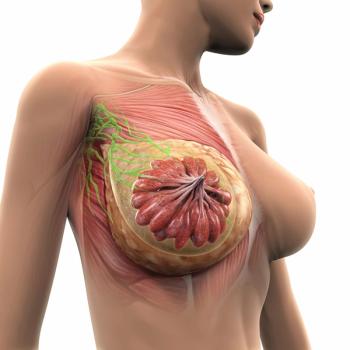
Dose reductions of ribociclib administered during the phase 2 MONALEESA-2 trial did not have an impact on overall survival for patients with hormone receptor–positive, HER2-negative advanced breast cancer.
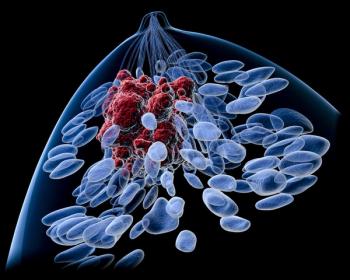
Radiotherapy can be avoided after surgery in certain patients with low-grade luminal A breast cancer who have low Ki67 expression and no positive lymph nodes, according to data from 2022 ASCO.

Patients with acquired ESR1 mutations after disease progression and post-treatment for locally advanced or metastatic estrogen receptor–positive, HER2-negative breast cancer may benefit from treatment with lasofoxifene in combination with abemaciclib.

Results of a matching-adjusted indirect comparison study showed that patients with HR-positive/HER2–negative advanced breast cancer treated with ribociclib and an aromatase inhibitor were more likely to have better symptom-related quality of life than patients who received abemaciclib and an aromatase inhibitor.
Advertisement
Advertisement
Trending on CancerNetwork
1
FDA MCGP Panel Votes in Favor of the Galleri Multicancer Early Detection Test
2
Approaching Cardiovascular Risk in Prostate Cancer Hormonal Therapy
3
Belzutifan Combo Receives FDA Approval in Advanced Clear Cell RCC
4
FDA Grants Approval to Lirafugratinib for Advanced Cholangiocarcinoma with FGFR2 Alteration
5