




Breast Cancer
Latest News

Tumor Microenvironment of Metastasis Shows Racial Disparity in ER+/HER– Breast Cancer After Chemotherapy
By Wayne Kuznar
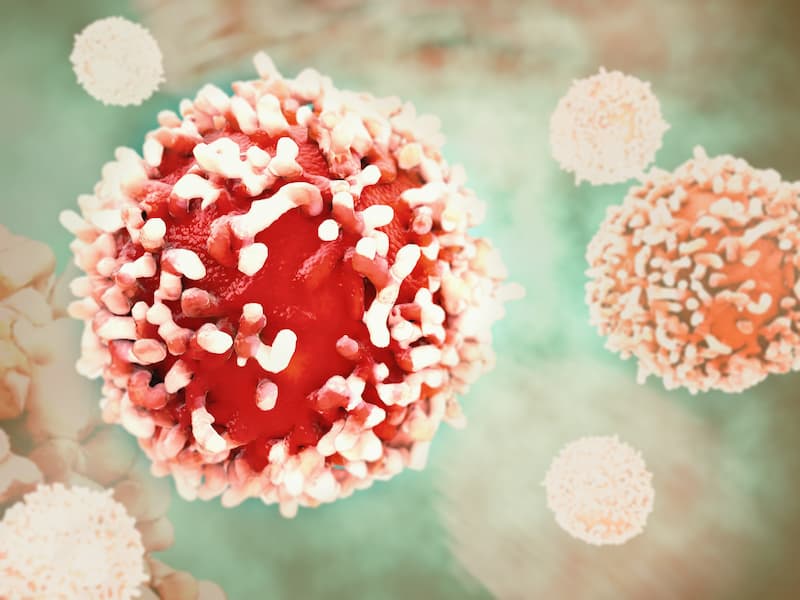
Despite Similar Recurrence Scores, Black Patients With HR+ Breast Cancer Have Worse Outcomes
By Ryan Scott
Advertisement
Latest Videos






















































Advertisement
More News

Pre- and postmenopausal women with breast cancer may experience cognitive impairment with chemotherapy and endocrine therapy, which may return to baseline after 36 months.
Expert oncologists highlight remaining unmet needs in the setting of metastatic triple-negative breast cancer and look toward future evolutions in care.
Centering discussion on sacituzumab govitecan use in metastatic triple-negative breast cancer, expert oncologists reflect on results from the phase 3 ASCENT study.
Centering discussion on sacituzumab govitecan use in metastatic triple-negative breast cancer, expert oncologists reflect on results from the phase 3 ASCENT study.
Key opinion leaders Aditya Bardia, MD, MPH, and Alison Conlin, MD, provide a broad view of the current metastatic triple-negative breast cancer treatment landscape.

From shortening treatment duration without compromising efficacy in breast and prostate cancer to improving quality of life, experts share the main takeaways from the 2022 ASTRO Annual Meeting.

Income- and race-related disparities concerning supportive therapies for hormone receptor–positive breast cancer require further study to ensure equitable care and access for all patients, according to Melanie Wain Kier, MD, MBA.

Yancey Warren, Jr, MD, MAT, and colleagues investigate the use of integrative oncology services among young women with breast cancer.
A commentary on key takeaways from TROPiCS-02, remaining questions and unmet needs in the field, and the clinical implications of using SG and other Trop-2–directed ADCs in patients with HR+/HER2- mBC.
Drs Dietrich, Tolaney, and Vidal comment on PFS subgroup analyses, response rates, and common adverse events (AEs) observed in the TROPiCS-02 trial.

Findings from a retrospective cohort study indicated that radiotherapy treatment for breast cancer appeared to be a significant risk factor in developing thoracic soft tissue sarcoma.

Oral selective estrogen receptor degrader camizestrant elicited a statistically significant and clinically meaningful progression-free survival benefit compared with fulvestrant among patients with estrogen receptor–positive locally advanced or metastatic breast cancer.

Supplemental radiation doses delivered concomitantly with hypofractionated whole breast irradiation in 15 fractions demonstrated non-inferior ipsilateral breast recurrence and similar toxicity compared with sequential boosts following whole breast irradiation in high-risk early-stage breast cancer.
ER Antagonist OP-1250 Demonstrates Continued Anti-Tumor Activity in Advanced ER+ HER2– Breast Cancer
Among patients with advanced and/or metastatic hormone receptor–positive HER-2 negative breast cancer, complete estrogen receptor antagonist OP-1250 continued to yield clinical benefits such as reductions in target tumor lesions.

Dr. Joyce O’Shaughnessy closes the discussion with considerations for clinicians on monitoring patients with HER2-psotive breast cancer.
Experts discuss progression-free survival (PFS) and overall survival (OS) data from the TROPiCS-02 trial on SG versus treatment of physician’s choice.
Dr Tolaney discusses the TROPiCS-02 study design and comments on the key baseline characteristics of the patients with HR+/HER2- mBC who were enrolled in the trial.
Switch treatment with palbociclib and fulvestrant from aromatase inhibitors plus palbociclib upon onset of ESR1 blood mutations and before progression yielded better progression-free survival among those with estrogen receptor–positive, HER2-negative advanced breast cancer.
Dr Vidal elaborates on the role of trophoblast cell-surface antigen 2 (Trop-2) in metastatic breast cancer and discusses the rationale for using Trop-2–directed antibody-drug conjugates (ADCs), including sacituzumab govitecan (SG), in patients with the disease.
Sara Tolaney, MD, MPH introduces the 2022 Journal of Clinical Oncology preprint publication, “Sacituzumab Govitecan in Hormone Receptor–Positive/ Human Epidermal Growth Factor Receptor 2–Negative Metastatic Breast Cancer” and invites Martin Dietrich, MD, PhD and Gregory Vidal, MD, PhD to comment on the typical patients with hormone receptor–positive (HR+)/human epidermal growth factor receptor 2–negative (HER2-) metastatic breast cancer (mBC) who they see in their clinical practice.

After a median of 50 months of follow-up, palbociclib plus adjuvant endocrine therapy did not improve invasive disease-free survival in a subgroup of patients with stage IIA estrogen receptor–positive breast cancer

Many communities face persistent and tenacious issues surrounding the treatment of patients with breast cancer, according to the founder of the Missing Pink Breast Cancer Alliance.
As part of Breast Cancer Awareness Month, CancerNetwork® spoke with Deborah M. Axelrod, MD, about developments within the surgical breast cancer space, including decreasing the need for re-excision and full lymph node dissection.

During Breast Cancer Awareness Month, CancerNetwork® spoke with Megan May, PharmD, about her role as a pharmacist on a multidisciplinary cancer care team.
Dr. Joyce O’Shaughnessy briefly reviews and provides insights into the FeDeriCa and the PHranceSCa studies.
Advertisement
Advertisement
Trending on CancerNetwork
1
FDA MCGP Panel Votes in Favor of the Galleri Multicancer Early Detection Test
2
Approaching Cardiovascular Risk in Prostate Cancer Hormonal Therapy
3
Belzutifan Combo Receives FDA Approval in Advanced Clear Cell RCC
4
FDA Grants Approval to Lirafugratinib for Advanced Cholangiocarcinoma with FGFR2 Alteration
5