

Multiple Myeloma
Latest News
Advertisement
Latest Videos

























































Advertisement
More News
Focused discussion on the advent of cytokine release syndrome in MajesTEC-1 and how it compared to the benefits derived from teclistamab therapy.

Experts from Ochsner Health close out their panel on multiple myeloma management by identifying unmet needs and sharing excitement for future evolution in the treatment landscape.
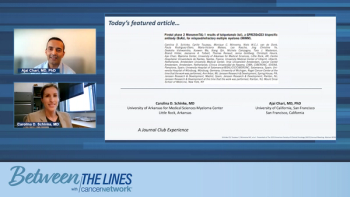
Expert hematologist-oncologists identify long-term data from MonumenTAL-1 regarding infection rates in patients with relapsed/refractory multiple myeloma.
Following their review of data from MonumenTAL-1, Ajai Chari, MD, and Carolina Schinke, MD, share practical considerations for real-world use of talquetamab in relapsed/refractory multiple myeloma.
Focused discussion on how patients receiving bispecific therapy for multiple myeloma are transitioned into and managed within the community setting.
Expert panelists share insight on transitioning patients on bispecific therapy from an academic or specialty center to the community setting.

Catherine Wei, MD, and David Witt, MD, explain some of the reasons they would recommend treatment with bispecific antibodies to their patients with multiple myeloma.

Syed S. Ali, MD, and Noffar Bar, MD, share their practical experience with bispecific antibodies in the treatment of patients with multiple myeloma.
Experts on multiple myeloma discuss how to select treatment options in later lines of therapy.
Leyla O. Shune, MD, reviews the MAIA trial, which looked at DRd vs Rd in patients with transplant-ineligible multiple myeloma.
The expert panel presents the case of a patient with multiple myeloma and discusses evaluating transplant eligibility in patients with MM.
Before closing out their module on relapsed/refractory multiple myeloma, key opinion leaders reflect on the role of CAR T-cell therapy and patient access to care.
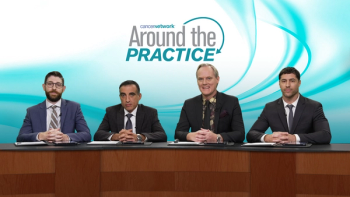
A panel of experts discuss unmet needs in multiple myeloma and offer perspectives on the future treatment landscape.
Centering discussion on bispecific therapy, panelists consider dosing strategies and adverse event management in relapsed/refractory multiple myeloma.
An expert panel compares bispecific antibodies with CAR T-cell therapy and discusses treatment sequencing.
Focused discussion on the safety and efficacy data from MonumenTAL-1, which utilized talquetamab monotherapy in patients with relapsed/refractory multiple myeloma.
Following a brief review of the relapsed/refractory multiple myeloma treatment landscape, Carolina Schinke, MD, provides an overview of the MonumenTAL-1 study design.
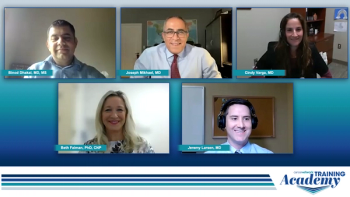
The panel closes their discussion by highlighting crucial takeaways about the use of bispecific antibodies in the treatment of multiple myeloma.
Doctors discuss the potential of bispecific therapies being used in earlier lines of treatment for multiple myeloma, and the need for understanding and reducing toxicities as much as possible.
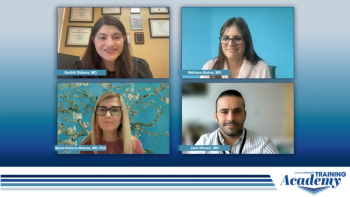
The panel looks to the future of relapsed/refractory multiple myeloma treatment and the remaining unmet needs for patients.
The standard of care for high-risk multiple myeloma remains unsettled, according to an expert panel from Kansas City.
Closing out their panel on bispecifics in relapsed/refractory multiple myeloma, key opinion leaders share closing thoughts and hopes for the future treatment landscape.
Long-term considerations for the detection and treatment of CRS and other adverse events when managing patients with multiple myeloma.
Expert panelists from Mayo Clinic discuss their approach for the use of BCMA and non-BCMA targeting bispecifics, respectively, in patients with relapsed/refractory multiple myeloma.
Expert perspectives on ensuring the early detection and treatment of CRS and other adverse events when initiating bispecific therapy in patients with multiple myeloma.
Advertisement
Advertisement
Trending on CancerNetwork
1
Meaning-Centered Therapy, Psychiatry Referrals, and Humanistic Cancer Care
2
How Psycho-Oncology Addresses Existential Distress, Body Image, and Intimacy
3
How to Work With a Patient Who Declines Cancer Treatment
4
Targeting Cyclin E1, KRAS, and DNA Repair Beyond PARP in Ovarian Cancer
5