


Multiple Myeloma
Latest News
Advertisement
Latest Videos


























































Advertisement
More News
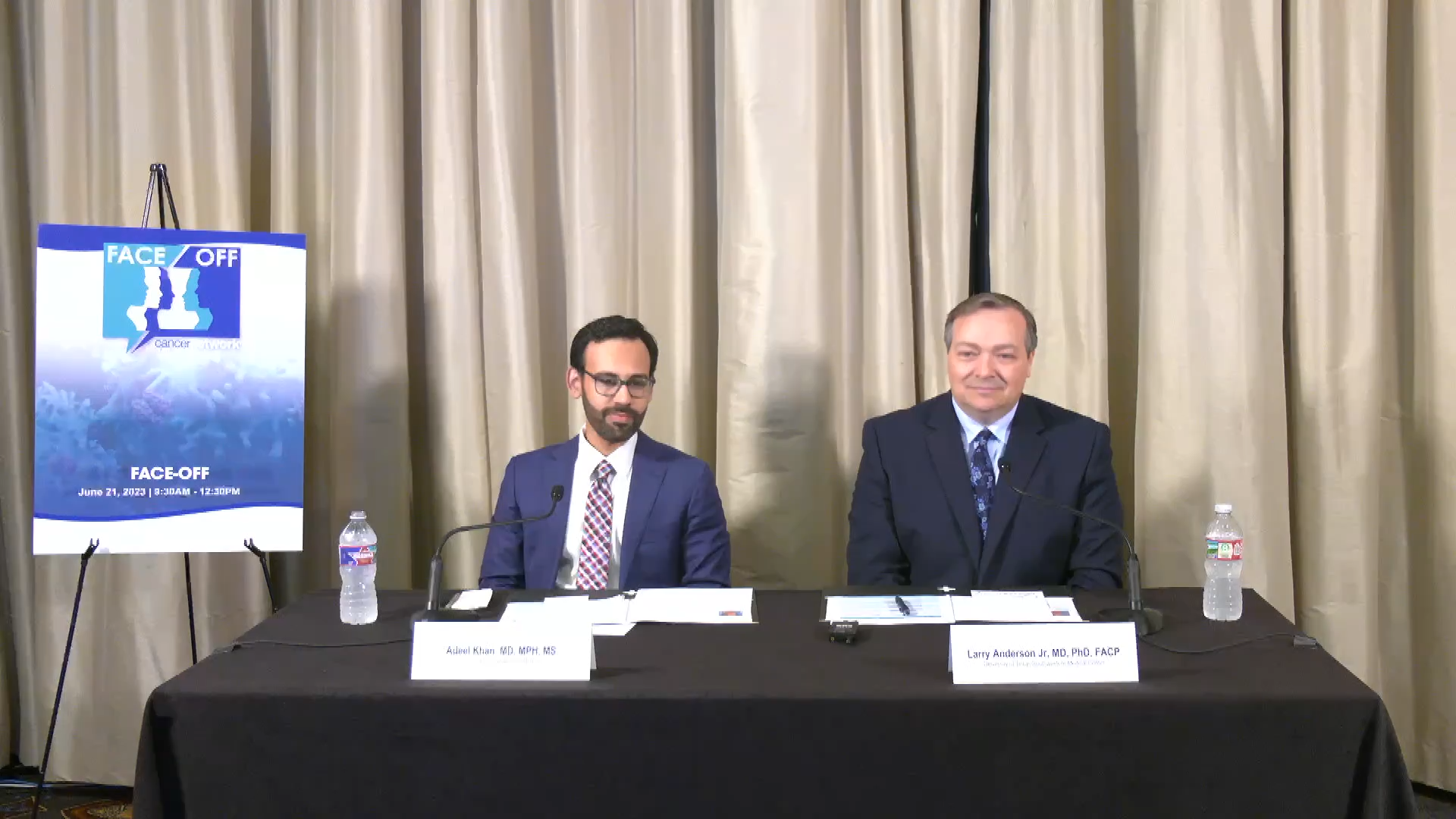
Adeel Khan, MD, MPH, MS, expert in multiple myeloma management, reviews data from the ALLIANCE A061202 trial of isatuximab + pomalidomide + dexamethasone in relapsed/refractory disease.
The expert panel overviews factors to consider with bispecific antibodies and offers closing insights on unmet needs in the multiple myeloma treatment space.
Experts from the Mayo Clinic and UT Southwestern share insight on the CARTITUDE-4 study and ciltacabtagene autoleucel in the second cross Q&A session.
Thomas Martin, MD; Ajay Nooka, MD; and Jeremy Larsen, MD, share closing thoughts on the evolving landscape of cytokine release syndrome management in relapsed/refractory multiple myeloma.
Closing out their program on relapsed/refractory multiple myeloma, Ajai Chari, MD, and Carolina Schinke, MD, consider optimal treatment strategies in the current landscape and look toward future directions in care.
Experts in the multiple myeloma space discuss recent developments and how to implement new practices in real-world settings.
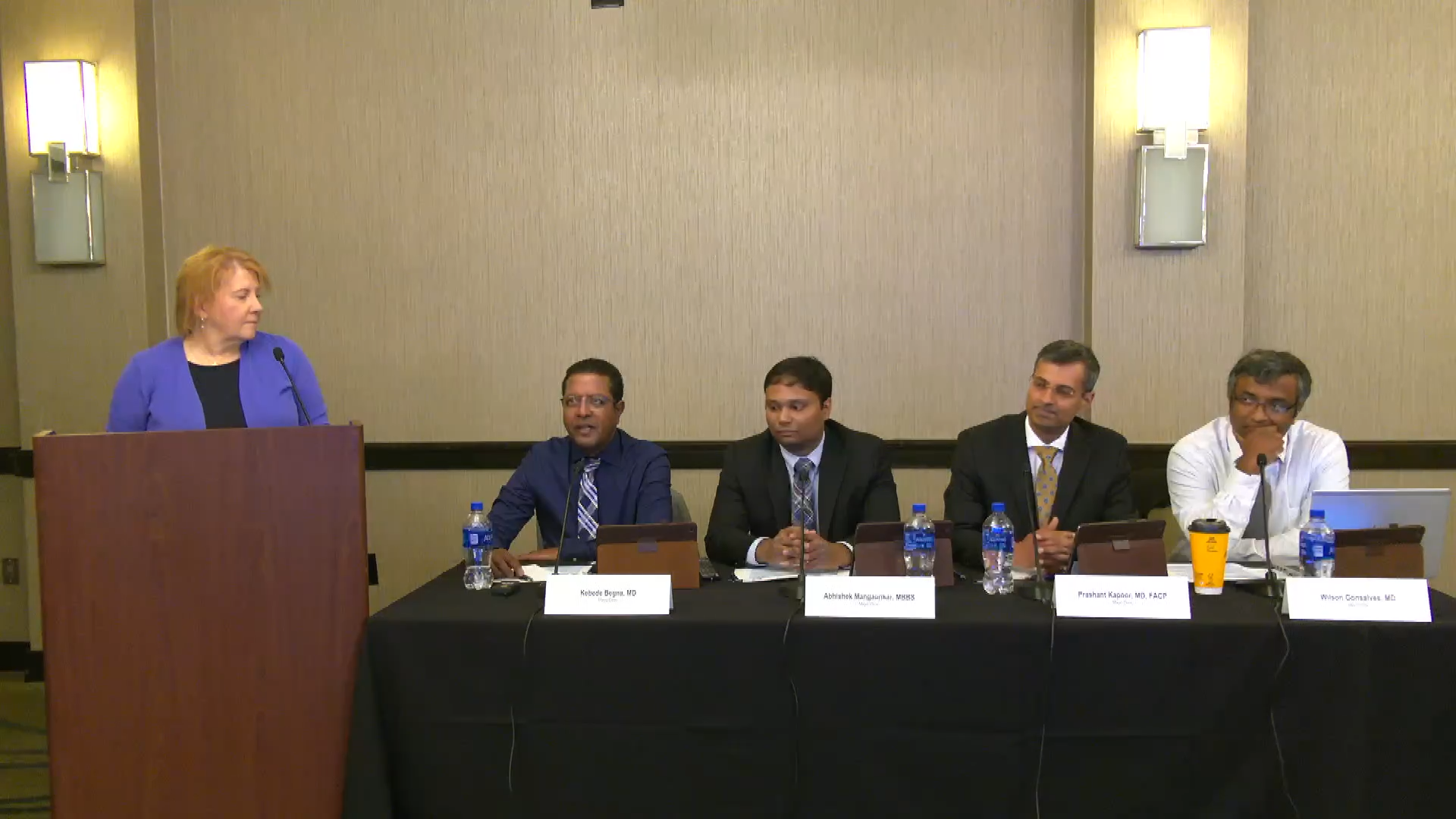
Key opinion leader Prashant Kapoor, MD, FACP, shares data from the CARTITUDE-4 study of ciltacabtagene autoleucel in patients with relapsed/refractory multiple myeloma.
Nausheen Ahmed, MD, gives an overview of BCMA bispecific T-cell engagers used in the treatment of multiple myeloma.
Panelists follow up with questions and comments on the KarMMa-3 study in relapsed/refractory multiple myeloma and consider how idecabtagene vicleucel might fit into real-world practice.
Following their review of data from MajesTEC-1, panelists consider how they manage patients with cytokine release syndrome in the real-world setting.
Experts on multiple myeloma discuss the mechanism of action and adverse events for teclistamab and compare CAR T-cell therapy with bispecific T-cell engagers (BiTEs).
In the context of other clinical trials for patients with relapsed/refractory multiple myeloma, Ajai Chari, MD, and Carolina Schinke, MD, review data from TRiMM-2.
Expert perspectives on the real-world use of combination teclistamab and talquetamab in patients with relapsed/refractory multiple myeloma.

Key points from a discussion of the role of bispecific antibodies in the treatment of multiple myeloma.
Before closing out their discussion with key takeaways, expert panelists highlight novel non-BCMA targeting bispecifics in the setting of multiple myeloma.
Key points from a discussion of the clinical data behind both BCMA- and non–BCMA-targeting bispecifics in multiple myeloma.

The expert panel discusses CAR T-cell therapy options and treatment considerations for patients with multiple myeloma.
Al-Ola Abdallah, MD, presents the case of a patient with multiple myeloma treated with CAR T-cell therapy and teclistamab.
Expert Larry Anderson, Jr, MD, PhD, FACP, reviews data from the KarMMa-3 study of idecabtagene vicleucel in patients with relapsed/refractory multiple myeloma.
Expert panelists from UT Southwestern and the Mayo Clinic introduce themselves and prepare for a team-vs-team debate surrounding recent clinical trial data in relapsed/refractory multiple myeloma.
Key opinion leaders Thomas Martin, MD; Ajay Nooka, MD; and Jeremy Larsen, MD, reflect on the use of tocilizumab in patients experiencing cytokine release syndrome on MajesTEC-1.
Centering discussion on RedirecTT-1, expert hematologist-oncologists consider safety and efficacy data with the combination of teclistamab and talquetamab in patients with relapsed/refractory multiple myeloma.
Shared perspective on available novel therapies in relapsed/refractory multiple myeloma and how best to sequence these agents.
Panelists reflect on the evolving landscape of BCMA targeting bispecifics and how additional agents will impact the management of multiple myeloma.
Advertisement
Advertisement
Trending on CancerNetwork
1
Meaning-Centered Therapy, Psychiatry Referrals, and Humanistic Cancer Care
2
How Psycho-Oncology Addresses Existential Distress, Body Image, and Intimacy
3
How to Work With a Patient Who Declines Cancer Treatment
4
Targeting Cyclin E1, KRAS, and DNA Repair Beyond PARP in Ovarian Cancer
5