



Multiple Myeloma
Latest News
Advertisement
Latest Videos
































































Advertisement
More News
Leading experts discuss the potential benefits and challenges of using ixazomib pomalidomide-dexamethasone as a treatment option for relapsed myeloma patients, considering factors like efficacy, overall survival, and patient demographics.
Rahul Banerjee, MD, FACP, discusses the Alliance A061202 trial, presenting the potential benefits and red flags of using ixazomib-pomalidomide-dexamethasone combination in relapsed myeloma treatment.
Data suggest a role for TIGIT blockade or CD25-positive cell depletion to enhance teclistamab’s efficacy in relapsed/refractory multiple myeloma.

Investigators of a phase 1a trial report high objective response rates in patients receiving forimtamig for relapsed/refractory multiple myeloma, including those with high-risk cytogenetics and extra medullary disease.

BCMA and GPRC5D loss in patients with multiple myeloma may lead to resistance to continuous treatment with anti–BCMA and anti–GPRC5D agents.
Pomalidomide plus bortezomib and dexamethasone confers a larger progression-free survival benefit than bortezombib plus dexamethasone among patients with relapsed/refractory multiple myeloma in the phase 3 OPTIMISMM trial.
APOBEC mutational activity appears to be prognostic in patients with newly diagnosed multiple myeloma or precursor diseases who receive daratumumab quadruplets, according to Kylee Maclachlan, MBChB, PhD.
When teclistamab was evaluated in a real-world setting, investigators determined that efficacy was similar between that and the phase 2 MajesTec-1 trial for patients with relapsed/refractory multiple myeloma.

Investigators report a low rate of high-grade hematologic adverse effects following treatment with induction Dara-KRd and consolidation double transplant in patients with high-risk, newly diagnosed multiple myeloma.

Many patients with relapsed/refractory multiple myeloma appear to remain on treatment with mezigdomide-based regimens for more than 1 year, according to Albert Oriol, PhD.

Durcabtagene autoleucel shows robust expansion in vivo followed by persistence in approximately half of patients with relapsed/refractory multiple myeloma enrolled on a phase 1 trial.

Talquetamab appears to produce the highest overall response rates vs other types of bispecific antibody monotherapy among patients with relapsed/refractory multiple myeloma in a systematic review.

Investigators report no grade 3 or higher adverse effects in patients with multiple myeloma assigned to undergo strength building or walking as part of a study.
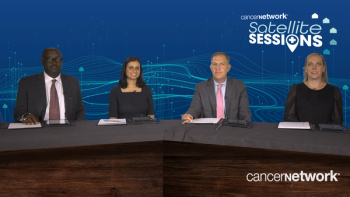
Specialists in the field of multiple myeloma discuss bispecific antibodies, with a focus on the MajesTEC-1 study on teclistamab.
The panel discusses how the emergence of CAR T-cell therapy has changed clinical care for patients with multiple myeloma.

Findings from the phase 2 GMMG-CONCEPT trial suggest that elevated lactate dehydrogenase levels correlated with worse survival in patients with newly diagnosed, high-risk multiple myeloma.

Experts explain strategies for toxicity management in patients receiving treatment for multiple myeloma, including monitoring risk of CRS.
Shared insight on the factors to consider when choosing between a bispecific therapy and CAR T-cell therapy for a patient with multiple myeloma.
Key insights on real-world applications of the REMIX study, which evaluated real-world effectiveness and tolerability of the ixazomib-based regimen in relapsed/refractory multiple myeloma.
Outcomes of the REMIX study investigating the effectiveness and tolerability of ixa-len-dex in real-world relapsed/refractory myeloma patients, exploring progression-free survival, overall response rate, and safety.
A comprehensive overview of emerging data from the KarMMa-3 and CARTITUDE-4 studies on CAR T-cell therapy in relapsed/refractory multiple myeloma.
A panel of experts discuss treatment and CAR T-cell therapy options for patients with relapsed/refractory disease who have limited treatment choices.

Michael Rosenzweig, MD, MS, presents the clinical scenario of a 61-year-old woman with relapsed/refractory multiple myeloma for panel discussion.
Expert panelists discuss the options for preventing bone disease in patients with multiple myeloma, including osteonecrosis of the jaw.
Expert insights into tailoring treatment for biochemical relapse in multiple myeloma patients, considering disease progression and the impact of various therapy lines on treatment decisions.
Advertisement
Advertisement
Trending on CancerNetwork
1
Meaning-Centered Therapy, Psychiatry Referrals, and Humanistic Cancer Care
2
How Psycho-Oncology Addresses Existential Distress, Body Image, and Intimacy
3
How to Work With a Patient Who Declines Cancer Treatment
4
Targeting Cyclin E1, KRAS, and DNA Repair Beyond PARP in Ovarian Cancer
5