


Multiple Myeloma
Latest News
Advertisement
Latest Videos


























































Advertisement
More News

A summary of key discussion points and an overview of the evidence presented to inform the dialogue.
Sagar Lonial, MD, and Ellen Marin, PA-C, discuss the impact and key takeaways from their study as well as study limitations and future directions.
Joshua Richter, MD, of Mount Sinai, and other hematologic cancer experts join CancerNetwork following the 2023 ASH Annual Meeting & Exposition to share their closing thoughts before the 2-Minute Drill winner is announced.
Joshua Richter, MD, of Mount Sinai, and other hematologic cancer experts join CancerNetwork following the 2023 ASH Annual Meeting & Exposition to provide shameless plugs from this year's conference.

Joshua Richter, MD, of Mount Sinai, and other hematologic cancer experts join CancerNetwork following the 2023 ASH Annual Meeting & Exposition to discuss the biggest winner from the 2023 meeting.
Three medical oncologists explore the influence of MRD negativity rates on treatment decisions and discover the ideal patient profile for quadruplet regimen.
Larry Anderson, MD, goes over the recent data from the IsKia trial which investigated IsaKRd in pre-transplant induction and post-transplant consolidation in TE NDMM.
Three physicians explore the criteria for determining an adequate or successful response during the induction phase in patients with TE NDMM and uncover the intricate considerations shaping the choice of maintenance regimens.
Ellen Marin, PA-C, presents the study conclusions and discusses its implications on managing CRS associated with teclistamab with Dr. Lonial.
Study results show that prophylactic tocilizumab reduces CRS incidence and severity in patients receiving teclistamab.

A population of patients with multiple myeloma describes experiencing challenges including confusion regarding the complexities of their diagnoses and managing chronic treatment-related adverse effects in a qualitative study.
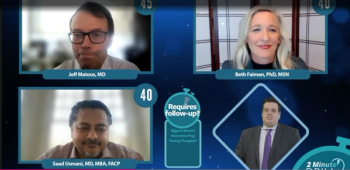
Joshua Richter, MD, of Mount Sinai, and other hematologic cancer experts join CancerNetwork following the 2023 ASH Annual Meeting & Exposition to discuss data from the conference that require the most follow-up.
Joshua Richter, MD, of Mount Sinai, and other hematologic cancer experts join CancerNetwork following the 2023 ASH Annual Meeting & Exposition to discuss data from the conference that are most likely to lead to an FDA approval.

GPRC5D may be a promising therapeutic pathway in the treatment of those with relapsed/refractory multiple myeloma, says Susan Bal, MD.

Data from the phase 1b MonumenTAL-2 trial support pomalidomide plus talquetamab as a promising treatment option in relapsed/refractory multiple myeloma, says Jeffrey Matous, MD.
Following a review of MonumenTAL-1, experts on multiple myeloma discuss the conclusions from the clinical trial and provide their impressions of the findings.
A panel of experts on multiple myeloma discuss dermatologic adverse effects seen in patients receiving talquetamab, including nail toxicities.
An overview of teclistamab in RRMM and the study methodology of using prophylactic tocilizumab to mitigate CRS associated with teclistamab
Sagar Lonial, MD, and Ellen Marin, PA-C, discuss cytokine release syndrome (CRS) and the strategy to manage CRS in their clinic.
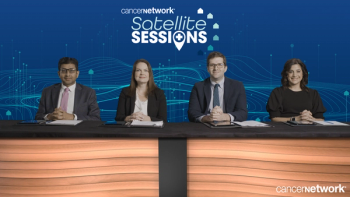
The expert panel concludes their discussion by examining the unmet needs and future for the treatment landscape in multiple myeloma.
Clinical insights on selecting the right bispecific antibody for the right patient and an overview of barriers seen in community practice.

A panel of experts spoke about the armamentarium of bispecific antibody therapies for patients with relapsed/refractory multiple myeloma and discussed step-up dosing considerations for these approved agents.
Multiple myeloma specialists discuss patient education approaches regarding the management of oral toxicity stemming from talquetamab treatment and outline potential research approaches.
Following a review of oral adverse events, the expert panel discusses how to manage oral toxicities seen in patients with multiple myeloma who are treated with talquetamab.

Clinicians discuss treatment options for advanced-stage multiple myeloma and consider the effects of renal disfunction.
Advertisement
Advertisement
Trending on CancerNetwork
1
Meaning-Centered Therapy, Psychiatry Referrals, and Humanistic Cancer Care
2
How Psycho-Oncology Addresses Existential Distress, Body Image, and Intimacy
3
FDA Approves Dostarlimab in Previously Untreated Locally Advanced Rectal Cancer
4
Targeting Cyclin E1, KRAS, and DNA Repair Beyond PARP in Ovarian Cancer
5